
Comet's Secret Edge Revealed!
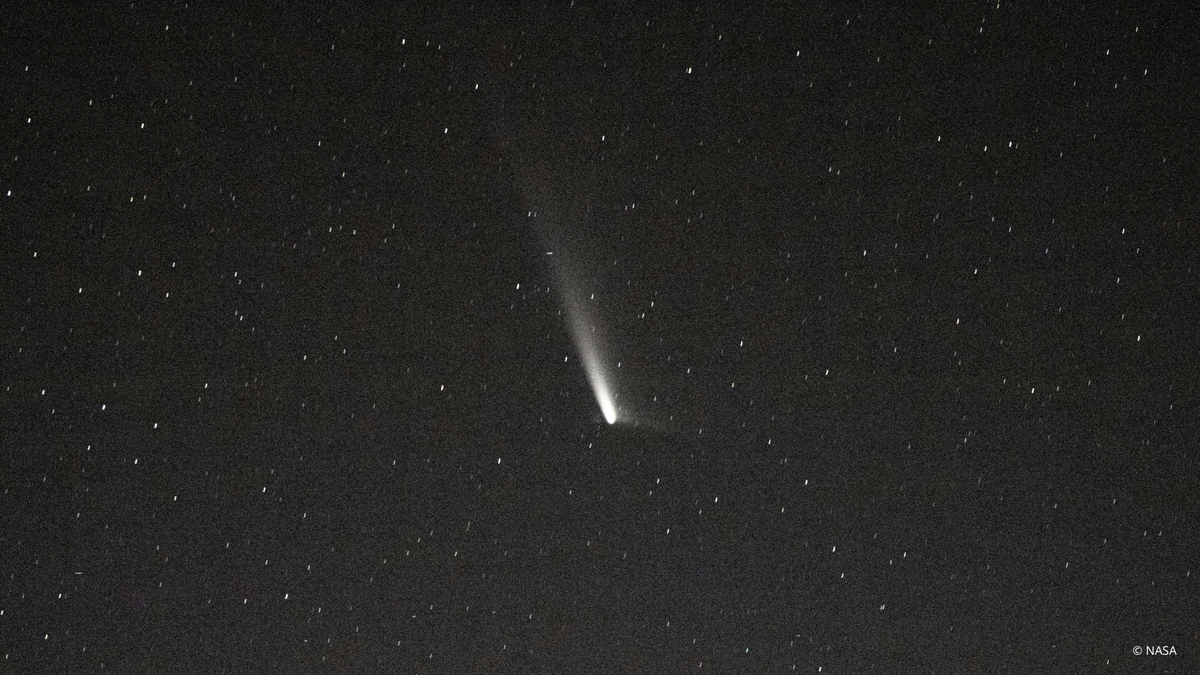
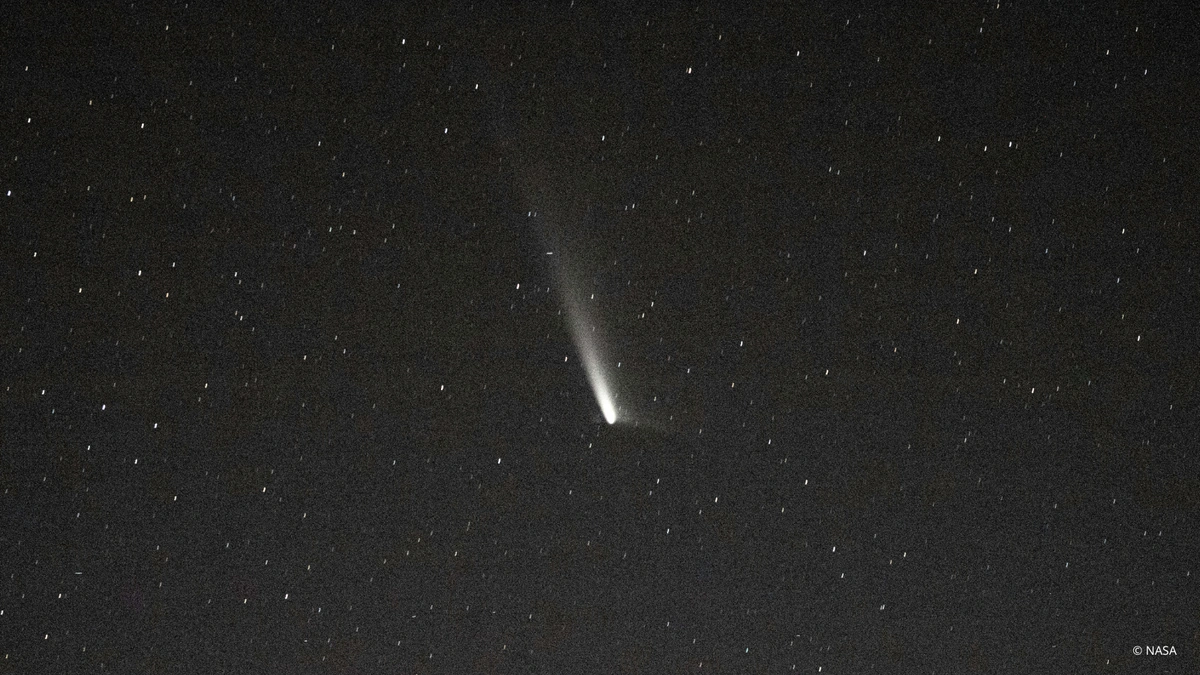
Okay, folks, let’s be honest. When you hear “telescope,” do you immediately picture something costing as much as a small car? I know I do! But here’s the thing: a recent image of comet 3I/ATLAS, sporting an almost impossibly sharp edge and a beautiful blue halo, was captured using a low-cost telescope. I initially thought it was some kind of joke or elaborate hoax, but it wasn’t. The implications of this are huge! The image, stunning in its clarity, throws open the doors for amateur astronomers and citizen scientists across India. It proves that you don’t need NASA-sized budgets to contribute to our understanding of the cosmos.
Why This Comet Image Matters – Especially for India
So, why should you care that some telescope on a budget snapped a great picture? Let me tell you. It’s not just about pretty pictures, though those are definitely a perk. It’s about accessibility. Astronomy, for too long, has felt like the playground of institutions with endless funding. But this discovery democratizes access to space exploration. Think of the brilliant young minds in Tier 2 and Tier 3 cities, eager to explore the universe. Now, they can, without needing a fortune. Plus, the fact that it is comet 3I/ATLASmakes it even more special, as it is an interstellar comet.
But beyond the pure science, it’s about inspiration. The image acts as a visual reminder that wonders still await discovery, even with tools readily available. What fascinates me is how this challenges the perceived barriers to entry in scientific fields. It’s a powerful message for students, educators, and hobbyists alike.
The “How” | Capturing Celestial Wonders on a Budget
The question that arises naturally is – how do you get started? How can aspiring stargazers replicate this feat? Well, it’s not magic. It involves some basic equipment, a bit of know-how, and a lot of patience. First, you’ll need a telescope. Now, “low-cost” is relative, but there are excellent beginner telescopes available for a few thousand rupees. Do your research, read reviews, and don’t be afraid to start small. Secondly, get familiar with astrophotography techniques. This involves learning how to capture long-exposure images and stack them together to reduce noise and enhance detail. Plenty of online tutorials and communities can guide you. One thing you must be aware of is light pollution. Choose your location wisely, away from city lights, or use filters to minimize its impact. There are some great apps that you can use to help you identify areas with the least amount of light polution.
The Emotional Connection | Awe and Wonder in a Pixelated World
Let’s be honest, the universe is overwhelmingly vast, and we’re just tiny specks on a pale blue dot. That can be a bit daunting, right? But images like this comet , taken with humble equipment, bridge that gap. They bring the cosmos down to Earth, making it tangible and relatable. It sparks a sense of awe, a feeling of connection to something larger than ourselves. I mean, think about it – light from that comet has travelled potentially for years, maybe even centuries, to reach your eyes. That, my friends, is mind-blowing.
And there’s something uniquely human about the desire to capture these fleeting moments. To freeze a piece of the universe in time, even with a budget telescope, is profoundly satisfying. It’s a testament to our curiosity and our drive to explore the unknown.
Decoding the Blue Halo | What Does It Mean?
Okay, so the image is stunning, but what’s with the blue halo around the comet ? Here’s the science: the blue color typically indicates the presence of ionized gas, specifically carbon monoxide, fluorescing due to ultraviolet radiation from the sun. When sunlight hits the comet , it causes these gases to glow. The sharpness of the comet’s edge suggests a recent outburst of activity, where fresh material is being ejected into space. This material gets ionized by the sun, creating the blue glow. It is not everyday that you get to capture a sharp blue halo, so this is definitely something special that this photograph was able to capture. This makes this discovery all the more intriguing.
Impact on Indian Astronomy and STEM Education
India has a rich history of astronomy, dating back to ancient times. But, in recent years, the focus has shifted towards more practical applications of science. Images like this comet can reignite that spark of curiosity and inspire a new generation of astronomers and scientists. By demonstrating that impactful discoveries can be made with relatively simple tools, it encourages students to pursue STEM fields. Many of our most well-known astronomical research organizations were started by private citizens. This may pave the way for new scientists to emerge in India. The hope would be that private citizens get involved.
The accessibility factor is crucial in a country as diverse as India. It allows students from all backgrounds, regardless of their socio-economic status, to participate in scientific exploration. This can lead to a more inclusive and representative scientific community, which benefits everyone.
Check out Mars Water Search and Earth Theia Moons Origin.
LSI Keywords
- Interstellar comet
- Astrophotography
- Citizen science
- Telescope
- Blue halo
- Budget astronomy
- Cometary activity
FAQ
What makes this comet 3I/ATLAS special?
3I/ATLAS is an interstellar comet , meaning it originated from outside our solar system. This makes it a rare and valuable object for study, offering clues about the composition of other star systems.
Can I see this comet from India with a small telescope?
While 3I/ATLAS may be faint, under ideal dark sky conditions, it might be observable with a small telescope or even binoculars. Consult astronomy apps and charts to find its current location in the sky.
What if I don’t have a telescope? Can I still participate in astronomy?
Absolutely! There are many ways to get involved. You can join local astronomy clubs, attend stargazing events, or contribute to citizen science projects that analyze astronomical data.
Where can I learn more about astrophotography?
Numerous online resources, forums, and tutorials are available. Websites like Astropixand Cloudy Nights offer valuable information and guidance.
What are some good starter telescopes for beginners in India?
Brands like Celestron, Sky-Watcher, and Orion offer beginner-friendly telescopes at various price points. Research online reviews and compare models to find one that suits your needs and budget.
Is light pollution a big problem for astronomy in India?
Yes, light pollution is a growing concern, especially in urban areas. To mitigate this, try to observe from darker locations away from city lights or use light pollution filters with your telescope.
The capture of this sharp-edged comet with a budget telescope represents more than just a beautiful image; it embodies the spirit of exploration, accessibility, and the democratization of science. It is proof that the next major discovery could come from anyone, anywhere, armed with curiosity and a bit of ingenuity. And that, my friends, is an incredibly exciting thought.
About the Author