
Interstellar Comet Secrets NASA Just Revealed!
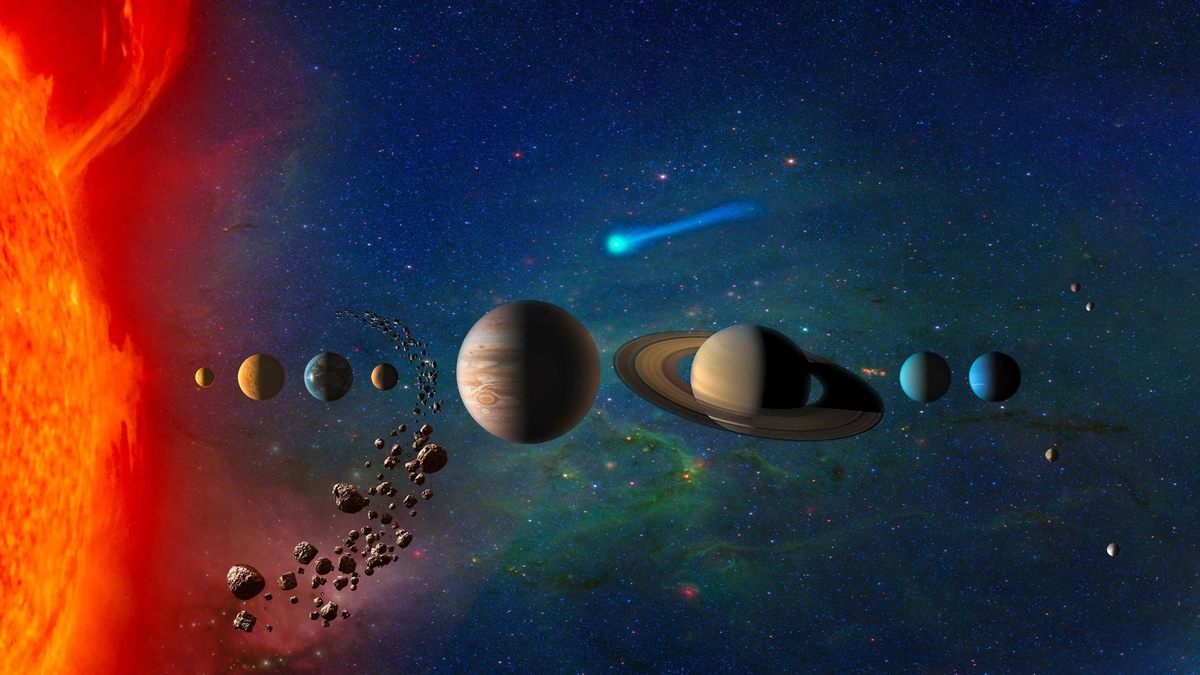
Okay, let’s be real. Space stuff can sometimes feel a bit…distant. But every once in a while, something zooms into our cosmic neighborhood that makes you sit up and pay attention. This time, it’s Comet 3I/ATLAS , an interstellar comet . What fascinates me is that this isn’t just another icy rock; it’s a time capsule from another star system. Seriously cool.
What Makes 3I/ATLAS So Special? (The “Why” Angle)
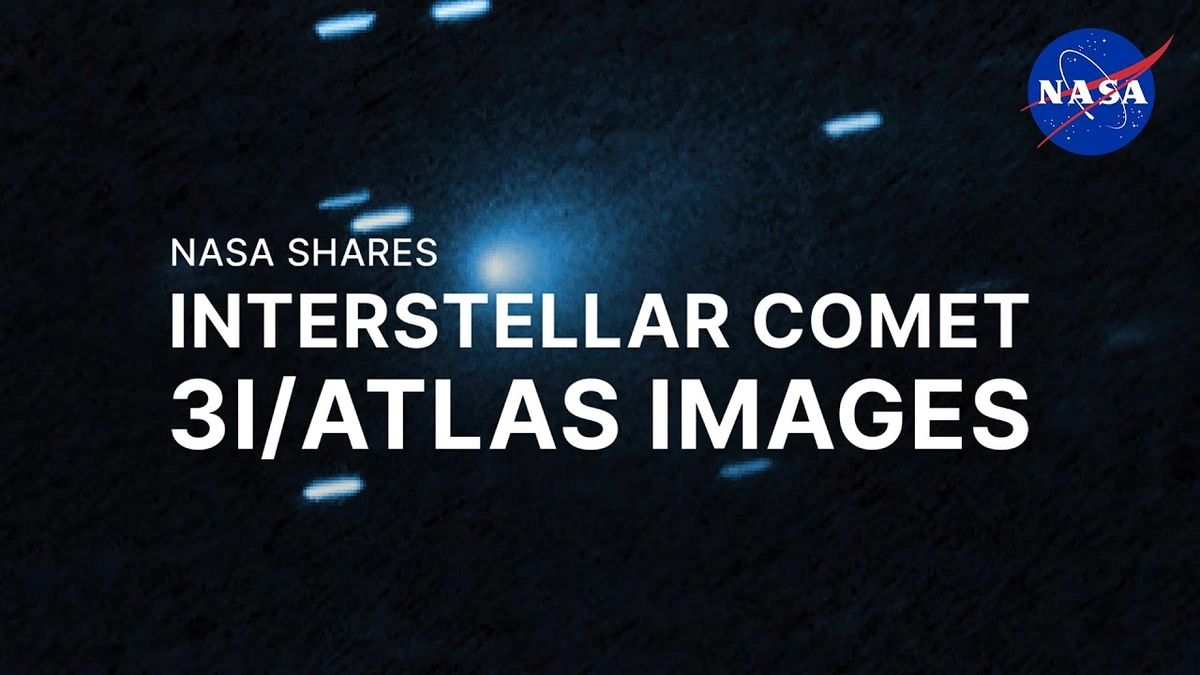
Here’s the thing: most comets we see originate from our own solar system’s Oort Cloud or Kuiper Belt. But 3I/ATLAS? It’s an immigrant! It came from somewhere else entirely. Think of it as a cosmic tourist, and scientists are trying to figure out where its original “home” was. This alone makes it scientifically important. Consider this definition of Interstellar object on Wikipedia. The “why” behind studying it is that it offers a glimpse into the conditions and building blocks of other star systems. Were they similar to ours? Radically different? 3I/ATLAS might hold the answers.
But, beyond the thrill of the chase for knowledge, there’s a deeper reason why scientists are so keen on understanding these interstellar visitors. It’s about understanding our place in the universe. And perhaps, about finding life beyond Earth. Think about it – comets like 3I/ATLAS could potentially seed other planets with water and organic molecules, the very building blocks of life. A common mistake I see people make is assuming all comets are the same. They aren’t! Each one, especially an interstellar one, has a unique story to tell.
Decoding 3I/ATLAS | What Can We Learn?
So, what are scientists hoping to glean from studying 3I/ATLAS? Well, its composition is key. By analyzing the comet’s dust and gas, researchers can get a sense of the materials present in its parent star system. This includes things like the types of elements, the abundance of water, and even the presence of organic molecules. What’s particularly exciting is comparing this data to what we know about our own solar system. Does 3I/ATLAS have a different ratio of certain elements? Does it contain organic molecules that are rare or absent in our comets? These differences could provide clues about the formation processes that occurred in other star systems. And, as ISRO continues its important observations of these interstellar objects ISRO Observes Interstellar Comet .
But there’s another crucial aspect: the comet’s trajectory. By carefully tracking its path through our solar system, scientists can work backward to determine where it came from. This isn’t as simple as drawing a straight line, though. The gravitational influence of the Sun and planets can alter the comet’s course, so complex calculations are needed to reconstruct its original trajectory. If successful, this could lead us back to the comet’s parent star system, potentially revealing new information about its characteristics and history.
The Challenges of Studying an Interstellar Comet
Let’s be honest – studying an ancient interstellar comet like 3I/ATLAS isn’t a walk in the park. There are some serious challenges involved. The biggest one? Time. These comets are only passing through our solar system for a relatively short period. So, scientists have to act fast to gather as much data as possible before the comet disappears back into interstellar space. This requires careful planning and coordination, as well as access to powerful telescopes and instruments. According to the latest reports, the clock is ticking!
And then there’s the distance factor. Interstellar comets are incredibly faint, making them difficult to observe. They’re also moving at tremendous speeds, which further complicates the observation process. To overcome these challenges, scientists rely on a combination of ground-based and space-based telescopes. Each type of telescope offers unique capabilities, allowing researchers to study the comet from different angles and at different wavelengths.
Why Should India Care About a Distant Comet?
Now, you might be thinking, “Okay, this is cool and all, but why should I, sitting here in India, care about some comet zipping through space?” That’s a fair question. Firstly, astronomy is a global science. Discoveries made anywhere benefit everyone. Knowledge is universal, right? Secondly, India is making huge strides in space exploration. ISRO’s missions are pushing boundaries, and studying objects like 3I/ATLAS contributes to our overall understanding of the universe. And that understanding can lead to technological advancements and inspire future generations of scientists and engineers. Think of it: today we study a comet; tomorrow, maybe we’re exploring other star systems ourselves. It is worth noting that NASA images can offer a more clear vision of comets Comet NASA Images .
But beyond the grand ambitions, there’s a more immediate benefit. Space weather, which is influenced by solar activity and other cosmic events, can affect our satellites and communication systems. By studying comets and other celestial objects, we can improve our ability to predict and mitigate these effects, safeguarding our infrastructure and technology.
Looking Ahead | The Future of Interstellar Comet Research
So, what’s next for the study of interstellar comets ? Well, the field is just getting started. As technology improves, we’ll be able to observe these objects with greater detail and precision. Future missions could even involve sending spacecraft to intercept and study these comets up close. Imagine the insights we could gain from analyzing a sample of interstellar material in a laboratory! The possibilities are endless. But, for now, let’s appreciate the fact that we live in a time when we can actually study objects from other star systems. It’s a truly remarkable achievement. And who knows, maybe one day, we’ll be the ones sending comets out into the galaxy, spreading the seeds of life to other worlds.
FAQ About Interstellar Comets
What exactly is an interstellar comet?
An interstellar comet is a comet that originated from outside our solar system. It travels through interstellar space before entering our solar system on a hyperbolic orbit, meaning it won’t stay bound to our Sun.
How do scientists know it’s from another star system?
Scientists determine a comet’s origin by analyzing its trajectory. If the comet’s orbit is hyperbolic and its velocity is too high to be bound by the Sun’s gravity, it’s likely of interstellar origin.
Can interstellar comets pose a threat to Earth?
While any comet or asteroid could theoretically pose a threat, the chances of an interstellar comet colliding with Earth are extremely low. Their trajectories are carefully monitored, but the vastness of space makes collisions very unlikely.
What’s the difference between a comet and an asteroid?
Comets are icy bodies that release gas and dust when heated by the Sun, creating a visible tail. Asteroids are primarily rocky or metallic bodies. However, the distinction can be blurry, and some objects share characteristics of both.
Will we ever be able to visit an interstellar comet?
Visiting an interstellar comet would be a monumental challenge due to their high speeds and the vast distances involved. However, future technological advancements could potentially make such a mission feasible.
About the Author