Moon's Origin | Shocking Twist in Planet Birth?
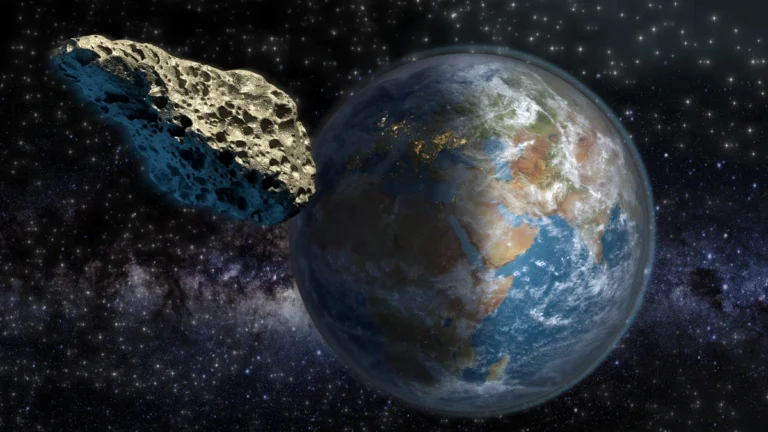
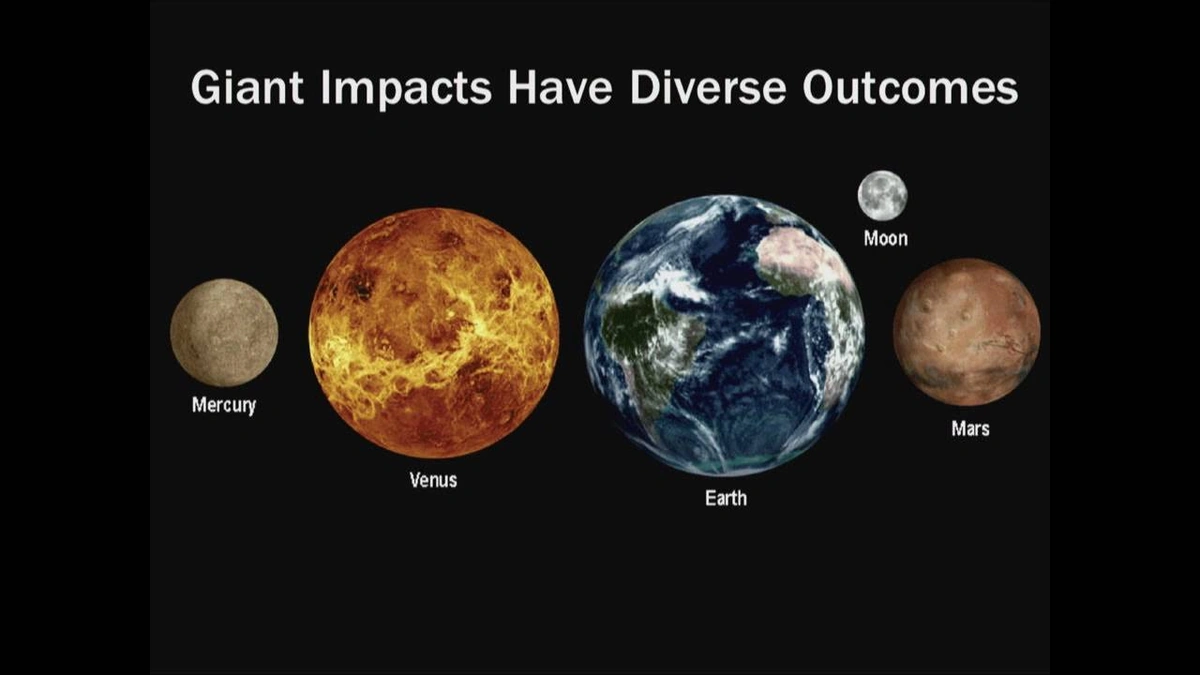
The moon. It hangs there in the night sky, a constant companion. But have you ever stopped to wonder where it came from? For decades, the prevailing theory has been the “Giant Impact Hypothesis” – the idea that a Mars-sized object, often called Theia, collided with Earth billions of years ago, and the resulting debris coalesced to form our moon. But recent research is throwing a fascinating twist into this lunar origin story, challenging our assumptions about Earth’s early days and, crucially, the moon’s origin itself.
The “Why” Behind the Lunar Mystery | Why Should You Care?
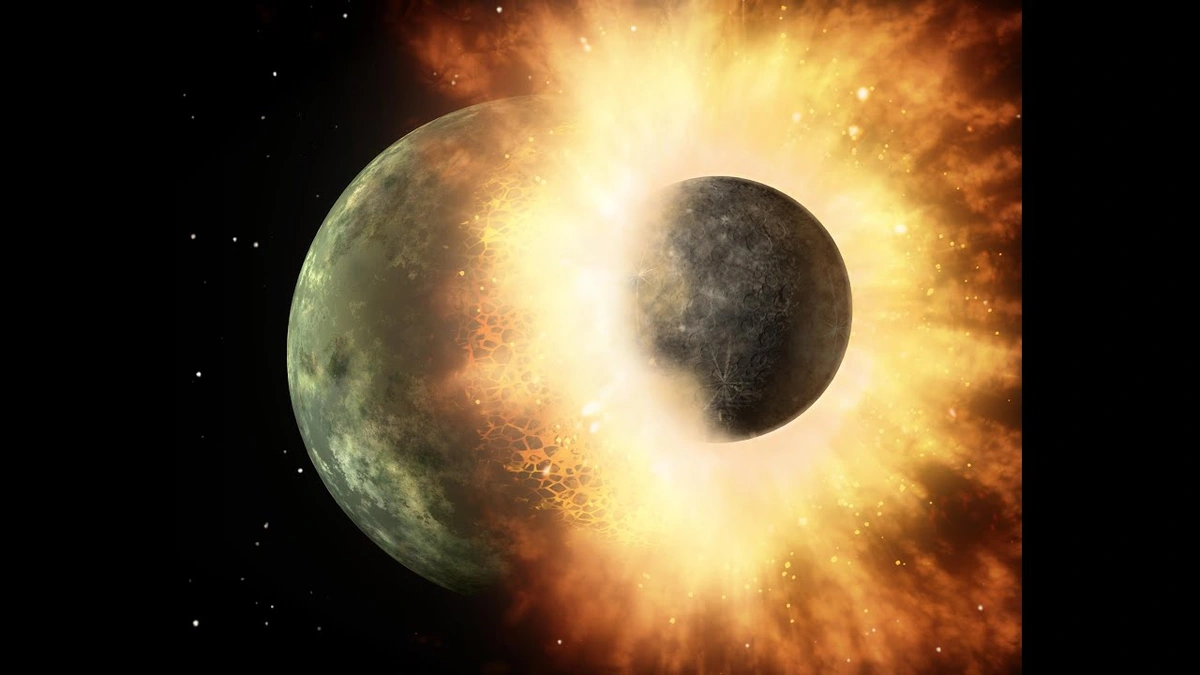
Okay, so a bunch of rocks smashed together a long time ago. Why should you, sitting in your chai-sipping zone, care? Here’s the thing: understanding the lunar formation isn’t just about satisfying our cosmic curiosity. It provides critical insights into the early Earth. It’s like finding a piece of a puzzle that helps us reconstruct the entire picture of our planet’s tumultuous beginnings. This understanding of the Giant-impact hypothesis may lead us to determine the likelihood of other habitable planets and what the requirements are for their formation.
Think about it. If the moon formed from material largely originating from Theia (as was initially believed), it would have a distinctly different composition than Earth. But if the moon is primarily made of Earth material, that tells us something profound about the force and nature of the collision, and the state of the early Earth. So, the composition of the lunar surface is essential to us in finding the composition of Earth’s surface.
But now, new isotopic analyses of lunar rocks are suggesting something far more interesting and potentially unsettling for the established theory. It appears the moon is compositionally very similar to Earth. What does this imply? Buckle up, because here’s where it gets really interesting.
New Evidence | A Deep Dive into Isotopic Analysis
The research, published in reputable scientific journals, focuses on analyzing isotopes – different forms of the same element with varying numbers of neutrons. These isotopic “fingerprints” act like tracers, revealing the origin of the material. And what these scientists are finding is that the lunar rocks they’re studying share an almost identical isotopic composition to Earth rocks. This is a major head-scratcher because if Theia had a significantly different composition (as expected), the moon should show a mix of both Theia’s and Earth’s isotopic signatures.
Isotopic analysis of lunar samples brought back by the Apollo missions is nothing new, of course. But advances in analytical techniques are allowing scientists to look at these samples with unprecedented precision. The more data we collect, the clearer and more complicated the picture becomes. The results of these new isotopic analysis support the homogenous moon formation theory.
And that’s where the different interpretations come in. Let me rephrase that for clarity: There’s no single consensus on what this isotopic similarity means. It could mean Theia had a composition remarkably similar to Earth’s, which some scientists consider unlikely. Or, it could mean the collision was so cataclysmic that it thoroughly mixed the material from both bodies, homogenizing the isotopic signatures. Or, perhaps, our understanding of the impact event needs a fundamental rethink.
Alternative Theories | Rethinking the Giant Impact
So, what are the alternatives? Well, some scientists are exploring variations of the Giant Impact Hypothesis. One idea is that Theia wasn’t a single, large object, but rather a swarm of smaller planetesimals that collided with Earth over a longer period. This could explain the isotopic similarity if these planetesimals had a composition similar to Earth’s mantle. Others are investigating the possibility of a “synestia” – a rapidly rotating, donut-shaped mass of vaporized rock created by the impact. The moon could have then formed from this synestia, drawing primarily on Earth material. One of the best sources I’ve found for checking my work isWikipedia.
But, and this is a big ‘but’, each of these alternative theories has its own set of challenges. For example, simulations of synestia formation struggle to reproduce all the observed characteristics of the Earth-moon system. And the swarm-of-planetesimals scenario requires some very specific conditions to work. We need more data, more sophisticated simulations, and, frankly, a bit of luck to unravel this cosmic puzzle.
And that’s the great thing about science, isn’t it? It’s a constant process of questioning, testing, and refining our understanding of the world around us (and, in this case, the world above us). Theia’s impact still remains one of the most prevalent theories for the formation of the moon.
Implications for Understanding Earth’s Early Evolution
Let’s be honest: the Giant impact hypothesis isn’t just about the moon. The clues we get also affects our ideas about the Earth. If the moon is largely made of Earth material, that suggests the early Earth may have been more homogenous than we thought. It also places constraints on the energy and angle of the impact. A glancing blow, for instance, would be more likely to eject Earth material into orbit than a head-on collision. Moreover, the early Earth must have been spinning fast enough to create the system we see today.
This is why understanding the impact dynamics is so important. Computer simulations are playing a crucial role in this. Scientists can now model the collision in incredible detail, varying parameters like the size, speed, and angle of impact to see what scenarios best match the observed characteristics of the Earth-moon system. A common mistake I see people make is thinking that simulations can prove that a single event happened, but they can’t.
What’s Next? The Future of Lunar Research
So, what’s next in this ongoing quest to understand the moon’s origin? More data, definitely. Future lunar missions, like those planned by NASA and other space agencies, will be crucial. These missions can collect new samples from different locations on the moon, providing a more comprehensive picture of its composition. Also, more data will become available about the moon’s mantle, which will allow scientist to test alternative hypothesis, such as the magma ocean hypothesis. I initially thought this was straightforward, but then I realized more data will allow us to test older ideas.
What fascinates me is the prospect of studying lunar samples returned from permanently shadowed regions near the lunar poles. These regions may contain water ice and other volatile compounds that could provide valuable clues about the early solar system and the origin of the moon. In fact, NASA’s interstellar object has allowed scientists to study various ice compounds that exist in space.
Beyond sample collection, advanced remote sensing techniques will also play a vital role. Orbiting spacecraft can map the moon’s surface composition with high precision, identifying regions of interest for future exploration. Furthermore, improved models of the moon’s internal structure can help us understand its formation and evolution.
FAQ | Unraveling Lunar Mysteries
Frequently Asked Questions
What is the Giant Impact Hypothesis?
The Giant Impact Hypothesis suggests that the moon formed from the debris of a collision between Earth and a Mars-sized object called Theia billions of years ago.
Why is the isotopic similarity between Earth and the Moon surprising?
If the moon formed primarily from Theia, it would have a different isotopic composition than Earth. The similarity suggests a more complex formation process.
What are some alternative theories for the moon’s formation?
Alternative theories include Theia being a swarm of smaller planetesimals, or the formation of a “synestia” from which the moon coalesced.
How do computer simulations help us understand the moon’s origin?
Simulations allow scientists to model the Giant Impact, varying parameters to see which scenarios best match the observed characteristics of the Earth-moon system.
What future lunar missions are planned?
NASA and other space agencies have planned missions to collect new samples from different regions of the moon, providing a more comprehensive understanding of its composition.
Where can I learn more about the latest research on the moon’s origin?
Check reputable scientific journals, university websites, and space agency websites for the most up-to-date information.
So, the origin of the moon remains a fascinating and complex puzzle. But with new evidence and innovative research techniques, we’re slowly piecing together the story of our celestial companion. And who knows? Maybe the next lunar mission will uncover the final piece of the puzzle, revealing the true origins of the moon and, in doing so, shedding new light on the early history of our own planet.
About the Author