
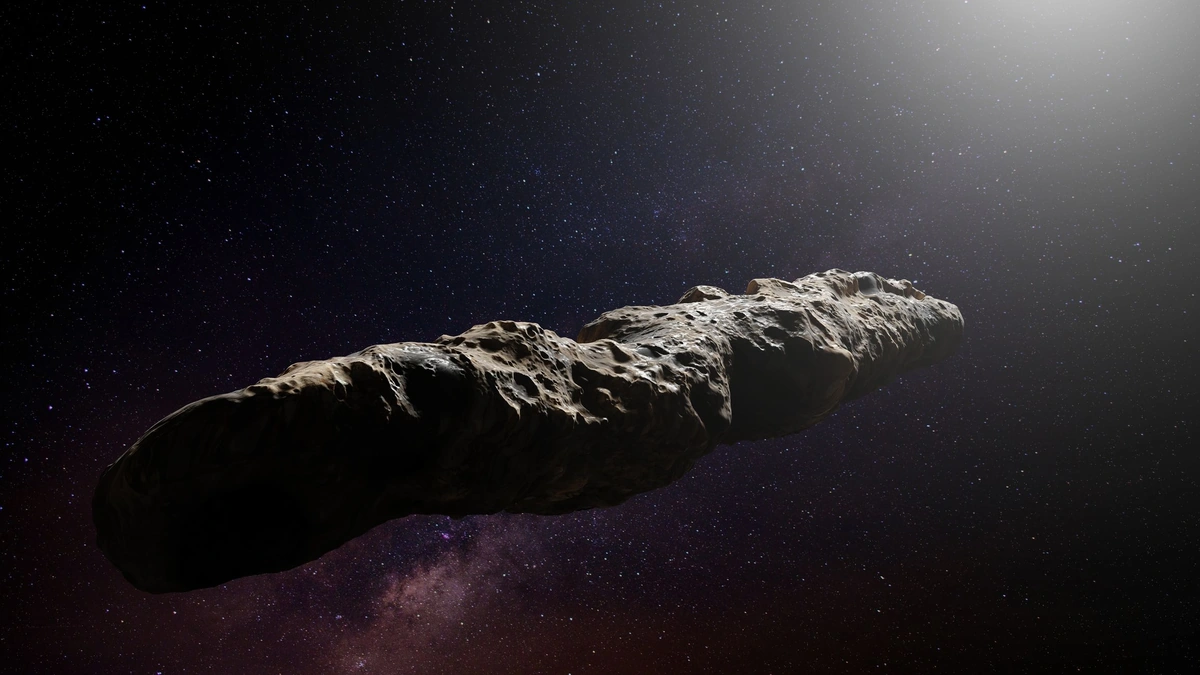
Oumuamua Echoes? Kaku's Alien Tech Warning!
What if, just what if, we weren’t alone? The universe, vast and unknowable, has always sparked our deepest curiosities – and anxieties. For decades, the search for extraterrestrial intelligence (SETI) has been a quiet hum in the background of mainstream science. But every now and then, something pokes its head above the parapet, demanding we pay attention. This time, it’s 3I/ATLAS , and the echoes of a previous visitor, ‘Oumuamua .
Let’s be honest, the thought of alien probes zipping around our solar system sounds like something straight out of a science fiction movie. But when figures like Michio Kaku and Avi Loeb start talking, you know it’s time to sit up and take notice. So, what’s got these intellectual heavyweights intrigued this time? And why is everyone suddenly whispering about intelligent control ?
The Curious Case of 3I/ATLAS | Is It Just Another Comet?
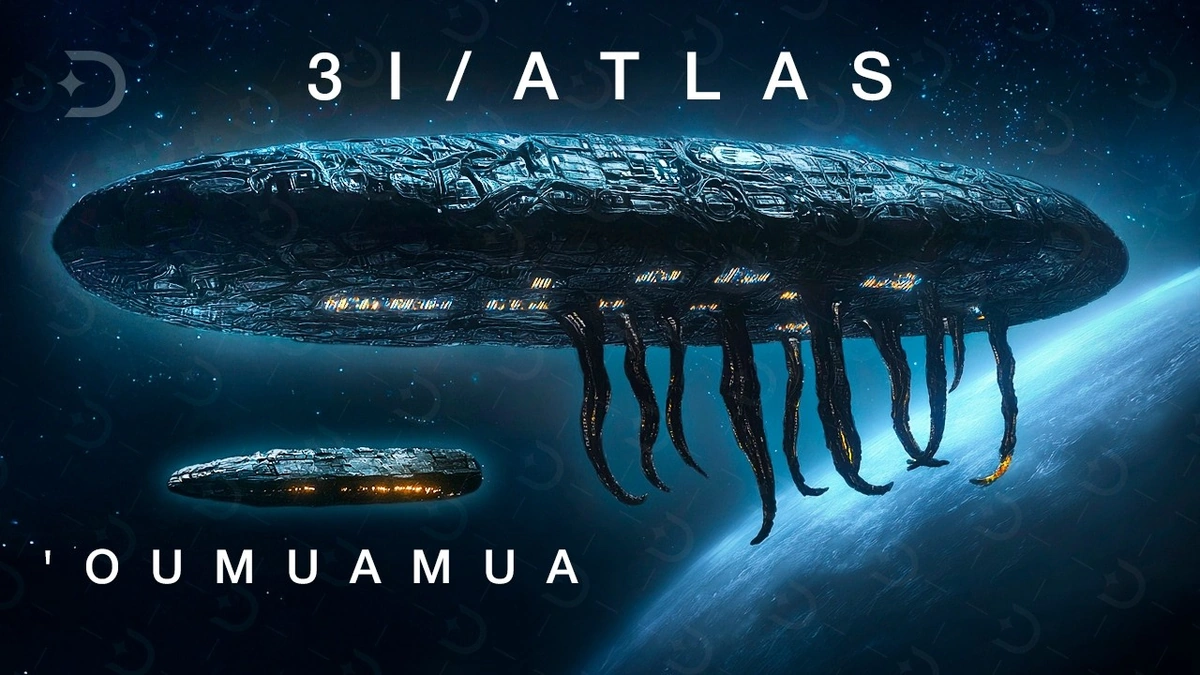
3I/ATLAS is an interstellar object, meaning it originated from outside our solar system. Like ‘Oumuamua, it’s on a trajectory that suggests it’s just passing through. Now, here’s the thing: comets are icy bodies that release gas and dust as they get closer to the Sun, giving them a characteristic tail. This outgassing also subtly alters their trajectory. But some scientists are observing anomalies that don’t quite align with a typical comet. The question becomes: could there be something else influencing its path? Or is it behaving like a normal interstellar comet ?
As per the guidelines mentioned in the NASA website, “Interstellar objects like comets and asteroids are occasionally flung into our solar system, offering scientists a tantalizing glimpse into other star systems.”
‘Oumuamua’s Ghost | Why the Comparison Matters
‘Oumuamua, detected in 2017, was the first interstellar object observed passing through our solar system. What made it so controversial was its unexpected acceleration as it moved away from the Sun. It didn’t behave like a comet, and that lack of a clear explanation fueled speculation. Avi Loeb, in particular, famously suggested that ‘Oumuamua could be an alien light sail – a piece of discarded technology propelled by radiation pressure. That idea was met with skepticism, to put it mildly. But, the unanswered questions linger, and now, with 3I/ATLAS, the debate is reignited.
The reason that the scientific community is taking a closer look now is the trajectory anomalies observed in both. Now while that sounds like a fancy term, what does it mean for the average person? It means that the predicted path and actual path do not align, which could be due to a multitude of reasons, but its just strange enough to have the experts scratching their heads.
The Michio Kaku Factor | What Does He Say?
Michio Kaku, the renowned theoretical physicist and futurist, brings a certain gravitas to any discussion about the possibility of extraterrestrial life. He’s not one to jump to conclusions, but he’s also not afraid to entertain unconventional ideas. Kaku, when discussing 3I/ATLAS, often emphasizes the importance of keeping an open mind and following the data wherever it leads. He acknowledges the possibility of natural explanations but stresses that the anomalies warrant further investigation. Here’s the thing – Kaku’s involvement isn’t an endorsement of any specific theory, but it’s a call for rigorous scientific inquiry. He urges us to consider all possibilities, no matter how outlandish they might seem. It really makes you think, right?
Why This Matters to You (Even If You’re Not an Astrophysicist)
Okay, let’s bring this back down to Earth (pun intended!). Why should someone in India, busy with their daily life, care about a comet – or potential alien probe – zipping through space? Here’s why: This isn’t just about science; it’s about our place in the universe. The discovery of extraterrestrial intelligence, even indirect evidence of it, would be a paradigm shift for humanity. It would change everything – our understanding of biology, technology, philosophy, and our very existence. Consider the implications – a sudden surge in new technologies, or even new sciences that we would not have thought of without the discovery.
A common mistake I see people make is dismissing these kinds of stories as irrelevant or speculative. But science progresses through speculation, through asking “what if?” These questions, even if they ultimately lead to a natural explanation, push the boundaries of our knowledge and inspire future generations of scientists and explorers. And, you know, it’s just plain fascinating! Also, the very nature of interstellar travel is still largely theoretical, but maybe these discoveries will spark new discoveries and research in that area.
What’s Next? The Future of Interstellar Object Research
The story of 3I/ATLAS is far from over. Scientists around the world will continue to monitor its trajectory, analyze its composition, and search for any further anomalies. New telescopes and observatories are coming online, promising to give us an even clearer picture of these interstellar visitors. And the debate about ‘Oumuamua will likely continue, serving as a reminder of the mysteries that still await us in the vast expanse of space.
What fascinates me is the sheer tenacity of the scientific community in the face of such profound unknowns. It’s a testament to the human spirit of inquiry, our relentless desire to understand the universe and our place within it. The search continues…
FAQ
What exactly is an interstellar object?
It’s an object, like a comet or asteroid, that originates from outside our solar system and passes through it.
Is 3I/ATLAS definitely an alien probe?
No, there’s no definitive proof of that. It’s a subject of scientific debate and speculation.
Why was ‘Oumuamua so controversial?
Its unusual acceleration and lack of a clear cometary tail led to speculation about its origin and nature, including the possibility of it being artificial.
Where can I follow the latest updates on 3I/ATLAS?
Follow reputable science news websites and journals for the latest findings. The Minor Planet Center also provides data on such objects.
Could 3I/ATLAS pose a threat to Earth?
No, it’s on a trajectory that won’t bring it close enough to Earth to pose any danger.
What does this tell us about extraterrestrial life?
It may not tell us anything definitive yet, but it highlights the importance of continued exploration and the possibility, however remote, of encountering evidence of life beyond Earth.
About the Author