
OSIRIS-APEX | Earth pic hides HUGE Apophis secret!
Okay, so OSIRIS-APEX just snapped a photo. Big deal, right? We see pictures of Earth and the Moon all the time. But here’s the thing: this isn’t just another pretty snapshot. It’s a crucial step in a mission to study Apophis, a near-Earth asteroid that once had scientists sweating bullets about a potential impact. Let’s dive into why this image matters, and what it tells us about the ambitious journey ahead.
Why This ‘Simple’ Photo Is Actually a Big Deal
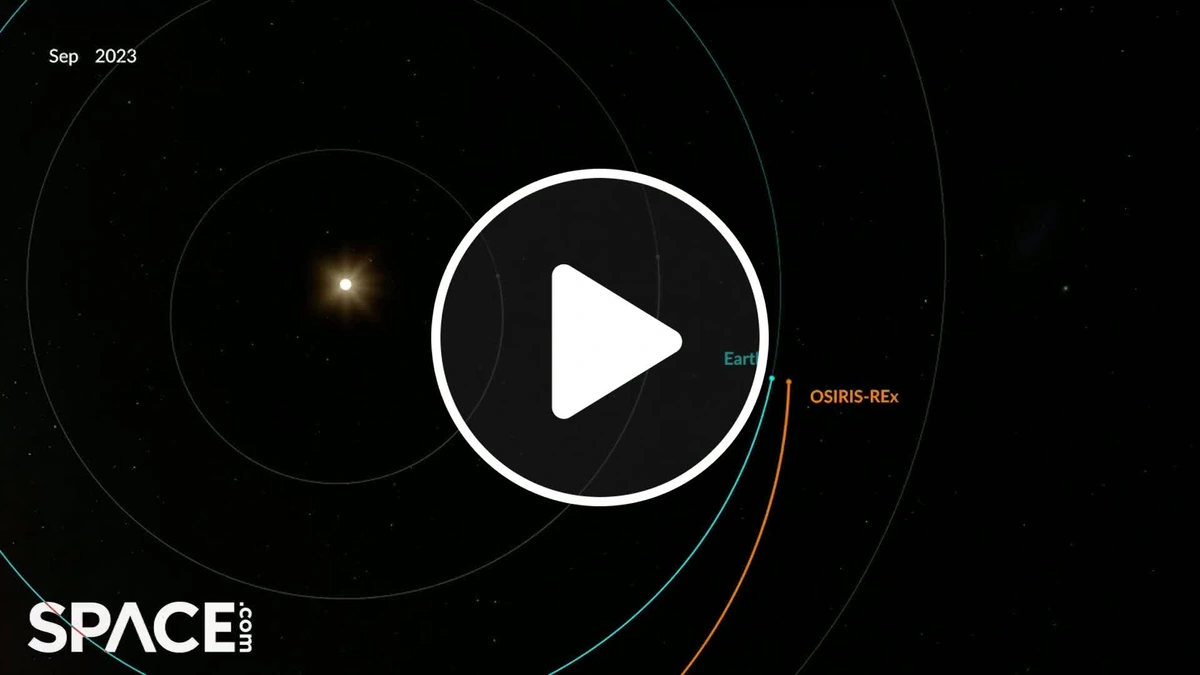
Let’s be honest, a picture of Earth and the Moon might not seem groundbreaking in an age of high-resolution space photography. But this image serves a vital purpose. Think of it as a calibration check for OSIRIS-APEX’s instruments. Before it gets up close and personal with Apophis, NASA needs to ensure everything is working perfectly. It’s like tuning your guitar before a concert – you want to be sure you’re hitting the right notes. Plus, the spacecraft is demonstrating its ability to navigate and orient itself in deep space, which is no small feat when you’re millions of miles away from home.
But there’s more to it. This image provides a valuable baseline. Scientists can compare this initial view of Earth and the Moon with future observations to track changes in instrument performance. It’s a meticulous approach – one that highlights the dedication to gathering accurate data about Apophis. And asteroid exploration , especially of potentially hazardous ones, is something we should all be paying attention to.
The Apophis Encounter | Why It’s More Than Just a Flyby
Apophis is an asteroid that gained notoriety in 2004 when initial observations suggested a significant chance of it hitting Earth in 2029. Thankfully, further analysis ruled out that immediate threat, but Apophis will make a very close approach to Earth on April 13, 2029. It will come within the orbit of our geostationary satellites! This close shave offers a unique opportunity to study an asteroid’s composition and behavior in detail. And that’s where OSIRIS-APEX mission objectives come into play.
OSIRIS-APEX , formerly known as OSIRIS-REx, already has an asteroid mission under its belt. It successfully collected a sample from asteroid Bennu and delivered it to Earth. Now, it’s being repurposed and sent on a new mission to study Apophis after its close approach to Earth. What fascinates me is how NASA is leveraging existing resources and expertise to tackle new challenges.
The close encounter with Earth will alter Apophis’s orbit and potentially its surface properties due to tidal forces. By studying Apophis before, during, and after this event, scientists hope to gain insights into how these gravitational interactions affect asteroids. This knowledge could prove invaluable in the future for planetary defense strategies. After all, understanding how asteroids behave is crucial if we ever need to deflect one from a collision course with Earth. Think of it as preventative medicine for our planet. You can find more details on NASA’s planetary defense efforts here .
How This Mission Benefits You (Yes, Really!)
Okay, maybe you’re not an astronomer or a planetary scientist. So, why should you care about OSIRIS-APEX imaging Apophis? Because this mission is about more than just rocks in space. It’s about protecting our planet and advancing our understanding of the solar system.
The knowledge gained from studying Apophis could help us develop better strategies for mitigating the threat of future asteroid impacts. Imagine a scenario where we detect a potentially hazardous asteroid years in advance. The data from OSIRIS-APEX could inform the design of missions to deflect or even destroy the asteroid before it reaches Earth. It’s like having an early warning system and a toolbox ready to deal with any potential cosmic threats.
But beyond planetary defense, this mission contributes to our broader understanding of the solar system’s formation and evolution. Asteroids are like time capsules, preserving material from the early days of our solar system. By studying their composition, we can learn more about the building blocks of planets and the processes that shaped our cosmic neighborhood. You can read more about how asteroid samples have helped scientists here .
Navigating the Cosmic Ocean | Challenges and Innovations
Let’s be clear, Apophis close approach is not going to be easy. Missions like this face incredible challenges. Navigating a spacecraft millions of miles through space requires pinpoint accuracy. The spacecraft must withstand extreme temperatures and radiation. And the instruments must function flawlessly in a harsh environment.
To overcome these challenges, OSIRIS-APEX relies on cutting-edge technology and innovative engineering. The spacecraft uses advanced sensors and navigation systems to precisely target Apophis. It’s equipped with specialized instruments to analyze the asteroid’s composition and surface properties. And the mission team has developed sophisticated software to process and interpret the data collected by the spacecraft. This is no small feat, and the success of OSIRIS-APEX relies on the expertise and dedication of countless scientists and engineers.
And, the fact that this is a repurposed mission brings a level of complexity. This shows how space agencies are thinking about resource utilization. It’s pretty impressive!
Why You Should Keep Watching
The journey of OSIRIS-APEX to Apophis is a testament to human curiosity, ingenuity, and our commitment to protecting our planet. This mission isn’t just about studying an asteroid; it’s about pushing the boundaries of space exploration and expanding our knowledge of the universe.
As OSIRIS-APEX gets closer to Apophis, expect more amazing images and valuable data. This mission promises to reveal new insights about asteroids, planetary defense, and the origins of our solar system. So, keep watching the skies and stay tuned for the next chapter in this exciting cosmic adventure. And who knows, maybe the next discovery will inspire you to become a space explorer yourself. It is quite the exciting time to be alive, especially with comets being tracked like the recent one that got a lot of attention.
FAQ About OSIRIS-APEX and Apophis
What exactly is OSIRIS-APEX?
It’s a NASA mission repurposing the OSIRIS-REx spacecraft to study the asteroid Apophis after its close Earth approach in 2029.
Is Apophis a threat to Earth?
No, current data shows that Apophis is not expected to impact Earth for at least the next century.
What will OSIRIS-APEX do at Apophis?
It will study Apophis’s surface, composition, and orbit, especially how they change due to Earth’s gravity.
How close will Apophis get to Earth?
On April 13, 2029, Apophis will pass within the orbit of geostationary satellites, about 31,000 kilometers from Earth’s surface.
Why is studying Apophis important?
It helps us understand asteroid behavior, improve planetary defense strategies, and learn about the early solar system.
Where can I find more information about OSIRIS-APEX?
Visit NASA’s official website or search for OSIRIS-APEX on NASA’s website.
About the Author