
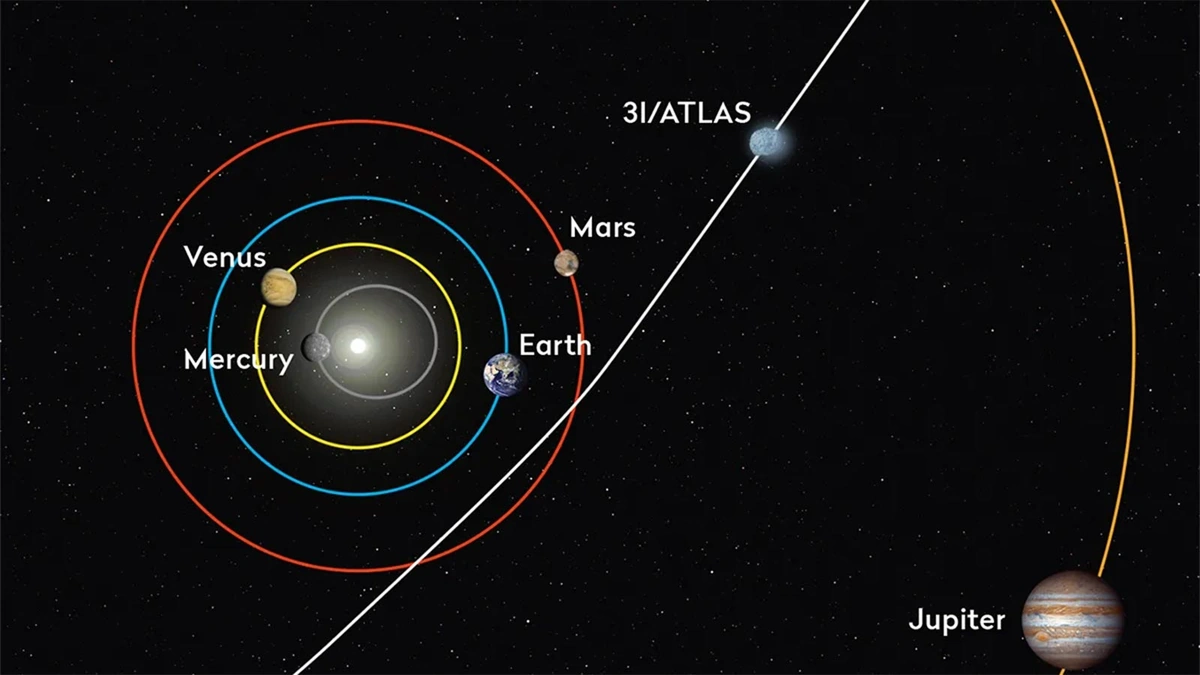
Comet 3i/Atlas | Proof of Alien Tech?
Okay, let’s be honest – space can feel pretty predictable sometimes. Planets orbiting, stars shining, the usual cosmic ballet. But every now and then, something throws a wrench in the works, something… unexpected. And that’s exactly what’s happening with Comet 3i/Atlas. What fascinates me is that this comet is making waves not just because of its appearance, but also because of what its behavior implies about the search for extraterrestrial life.
Comet 3i/Atlas, already known for its fragmented nature, is displaying some seriously strange new behavior. We’re talking unexpected brightening, sudden shifts in its trajectory – the kind of stuff that has astronomers scratching their heads. But here’s where it gets really interesting: all this weirdness is bolstering a particular theory championed by none other than Avi Loeb, the Harvard astrophysicist who’s no stranger to controversial ideas. His argument? That we need a more comprehensive scale – the Loeb scale – to assess potential indicators of extraterrestrial technology. It’s like saying we need a better ruler to measure the possibility of alien artifacts zipping through our solar system.
Why This Comet’s Antics Matter
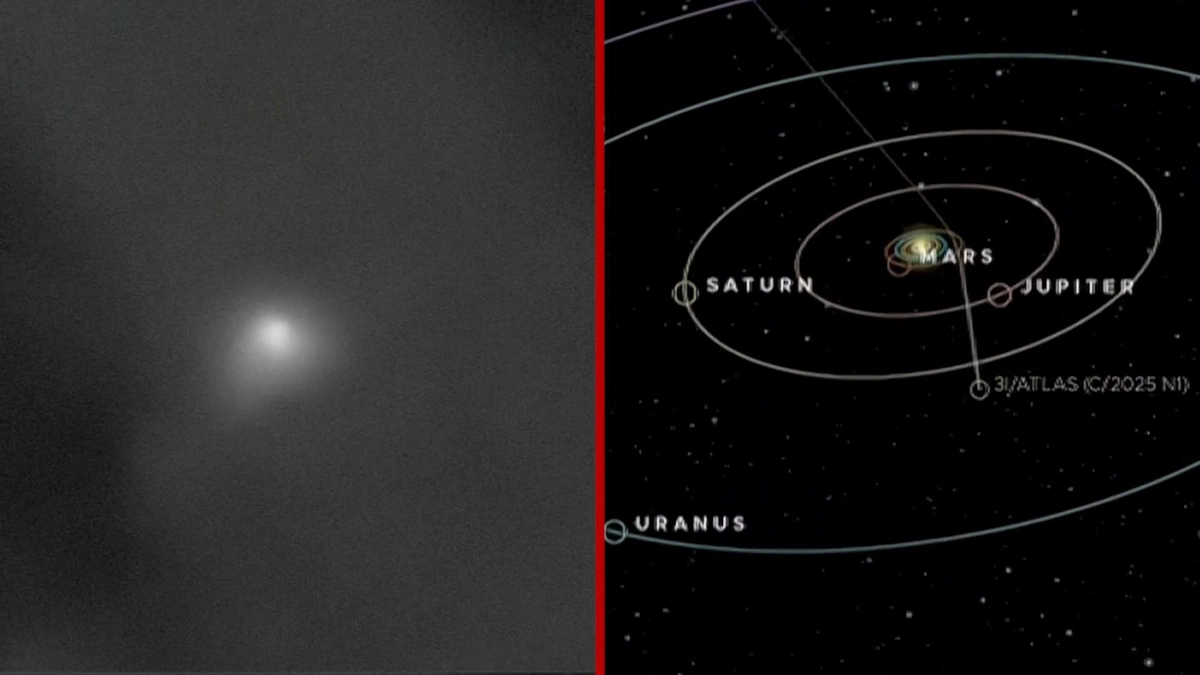
So, why should you, sitting in India, care about a comet behaving oddly millions of miles away? Well, consider this: the implications of Loeb’s argument, strengthened by 3i/Atlas’s antics, could revolutionize how we search for life beyond Earth. It’s not just about finding little green men; it’s about recognizing technological signatures that might be vastly different from what we expect.
Think of it like this: imagine trying to understand the internet using only the tools from the 18th century. You’d completely miss the point! Similarly, if our methods for detecting extraterrestrial intelligence are too narrow, we might be overlooking evidence right under our noses. And that’s where the Loeb scale comes in. The current scale, the Rio Scale, primarily assesses the impact of a signal on humanity. Loeb is suggesting we need one that looks at the likelihood that an object or phenomenon is artificial in origin. According to a recent article in Scientific American , this is more comprehensive than the Rio Scale.
But here’s the thing: Comet 3i/Atlas is a fragmented comet. These comets have a higher chance of disintegration near the sun, and are, therefore, more dangerous to Earth.
Decoding the Comet’s Strange Signals
Let’s dive into the specifics. What exactly is 3i/Atlas doing that’s so peculiar? For starters, its brightening isn’t consistent. Instead of a gradual increase in luminosity as it approaches the sun, it’s experiencing sudden bursts of light. It’s like the comet is turning on and off a cosmic flashlight. This has prompted some astronomers to conduct comet observations for an understanding of what’s going on.
And then there’s the trajectory. Comets, generally speaking, follow predictable paths. But 3i/Atlas seems to be veering off course slightly, as if it’s being nudged by an unseen force. I initially thought this could be explained by simple gravitational interactions, but the degree of deviation is throwing some scientists off. While such instances are rare, there have been a few cases of notable comet behavior that have led to new hypotheses.
The Loeb Scale | A New Yardstick for Extraterrestrial Tech
So, how does all this relate to Avi Loeb and his proposed Loeb scale? The basic premise is that natural phenomena should adhere to certain predictable patterns. When we observe deviations from these patterns – like the erratic behavior of 3i/Atlas – it might indicate the presence of something artificial. It’s like finding a perfectly square rock in the middle of a desert – your first thought wouldn’t be that it formed naturally, would it?
Loeb isn’t saying that 3i/Atlas is an alien spacecraft. Instead, he’s using its unusual behavior as an example of why we need a more sophisticated framework for evaluating such anomalies. We need a scale that considers factors like the object’s trajectory, luminosity variations, and chemical composition – all weighted according to their likelihood of being artificial. While the possibility of this object being artificial is tiny, the presence of interstellar objects in our solar system is a cause for concern.
A common mistake I see people make is dismissing these kinds of ideas as pseudoscience. But let’s be clear: Loeb’s approach is rooted in scientific principles. He’s simply advocating for a more open-minded and rigorous approach to the search for extraterrestrial intelligence. The one thing you absolutely must remember is this isn’t about believing in aliens; it’s about being prepared to recognize them if we ever encounter them. It is a good idea to also use the principles to analyse unidentified aerial phenomena .
The Indian Perspective | Why This Matters Locally
Now, let’s bring this back home to India. India’s space program is rapidly advancing, and with initiatives like Chandrayaan and Gaganyaan, the country is becoming a major player in space exploration. What’s also of particular note, is that India’s contribution to searching for potential threats from space are also increasing. This article from ISRO , highlights just how far India has come in space exploration. But what does this mean for 3i/Atlas?
As India ventures further into space, it’s crucial to consider the implications of discoveries like the strange behavior of Comet 3i/Atlas. And that’s why understanding the Loeb scale and its underlying principles is so important. A common mistake I see people make is dismissing these kinds of ideas as pseudoscience. But let’s be clear: Loeb’s approach is rooted in scientific principles.
Here’s why this year’s space exploration is different and what it signals about the future of technological advancements. The advancement of technology in this arena would also help humanity prepare for a potential comet impact event , something that is not outside the realm of possibility. The search for extraterrestrial intelligence isn’t just a Western obsession; it’s a global endeavor that could benefit from diverse perspectives and approaches. And India, with its rich scientific heritage and growing space capabilities, has a vital role to play.
Navigating the Cosmic Landscape | The Future of Discovery
So, what does all this mean for the future? Well, that’s the exciting part – we don’t know! But the story of Comet 3i/Atlas and the debate surrounding the Loeb scale highlight the importance of remaining curious, open-minded, and adaptable in the face of the unknown. It reminds us that the universe is full of surprises, and that our understanding of it is constantly evolving. And who knows, maybe one day, an Indian scientist will be the one to crack the code and finally answer the question: are we alone?
While the mysteries around comet composition remain, the pursuit of knowledge remains at the forefront.
Ultimately, the story of Comet 3i/Atlas isn’t just about a weird space rock; it’s about our own willingness to challenge assumptions and embrace the possibility of the extraordinary. And that, my friends, is something worth pondering over a cup of chai.
While the discussion of exotic physical processes around comets is fascinating, it’s only the beginning.
FAQ Section
Frequently Asked Questions
What exactly is the Loeb scale?
It’s a proposed scale to quantify the likelihood that an object or phenomenon is of artificial origin, not natural.
Why is Comet 3i/Atlas behaving so strangely?
Its erratic brightening and trajectory deviations are unusual and don’t neatly fit existing models for comet behavior.
Does this mean Comet 3i/Atlas is an alien spacecraft?
Probably not! But its behavior serves as an example of why we need better tools for evaluating potential signs of extraterrestrial tech.
How does this relate to India’s space program?
As India becomes a bigger player in space exploration, it’s important to understand the implications of discoveries like this and be prepared to recognize potential signs of extraterrestrial life.
Where can I find more information about Avi Loeb’s ideas?
You can find his published papers and articles on Harvard’s website and in various scientific journals.
What if I want to track Comet 3i/Atlas?
You can track the comet using online resources.
So, the next time you look up at the night sky, remember Comet 3i/Atlas. It’s a reminder that the universe is full of surprises, and that the search for extraterrestrial intelligence is a journey that requires curiosity, open-mindedness, and a willingness to challenge our assumptions. Just as we question, we should keep developing the technosignature detection framework.
And remember, keep looking up! You never know what you might find.
You’ll want to check this out , too. Also, see this interesting article .
About the Author