
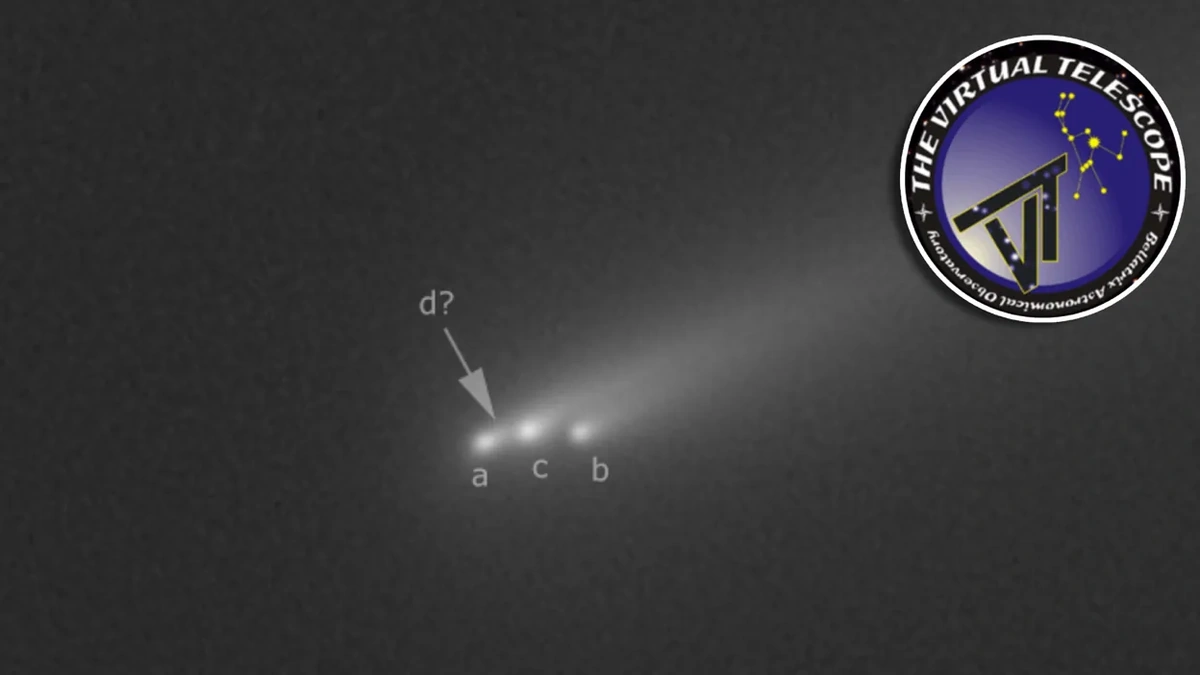
Comet 3I/Atlas | What NASA & ISRO Just Discovered!
An interstellar visitor, Comet 3I/Atlas , is currently making headlines as it zips past Mars at a staggering 130,000 mph. NASA and ISRO, along with other observatories worldwide, are closely monitoring this celestial event. But, let’s be honest, you might be thinking: “Okay, cool. So what?” Here’s the thing: this isn’t just another space rock doing a fly-by. This is a rare opportunity to study an object from outside our solar system, offering insights into the very building blocks of other star systems. What fascinates me is the collaborative effort of space agencies like NASA and ISRO to unlock the secrets this comet holds.
Why Comet 3I/Atlas Matters | A Cosmic Time Capsule

Imagine holding a piece of another solar system in your hand. That’s essentially what interstellar comets like 3I/Atlas represent. These icy wanderers carry pristine material formed in the protoplanetary disks around distant stars. Studying their composition can reveal the chemical makeup of those far-off worlds and potentially even hint at the conditions that could give rise to life. As per the NASA website , such comets offer a unique glimpse into the diversity of planetary systems beyond our own.
Here’s why this is particularly exciting. Our solar system is, well, our solar system. We know its history, its composition, and its quirks. But what about the others? Are they similar to ours, or are they wildly different? Comet 3I/Atlas offers a chance to compare and contrast, helping us understand the common threads and unique variations in the formation of planetary systems throughout the galaxy. This is where the expertise of space agencies like ISRO becomes invaluable, complementing NASA’s efforts with their unique observational capabilities.
The speed of this comet is another important factor. At 130,000 mph, it’s moving incredibly fast, making observations challenging. But, that also makes it exciting, right?
How Scientists Are Tracking This Interstellar Speedster
So, how do scientists actually track something moving that fast across the vastness of space? It’s not like they’re using a cosmic radar gun, right? It’s all about telescopes – both ground-based and space-based. Powerful telescopes like the Hubble Space Telescope and the James Webb Space Telescope (JWST), if it were pointed in that direction, can provide incredibly detailed images and spectroscopic data. Spectroscopic analysis is key here; it allows scientists to analyze the light reflected by the comet and determine its chemical composition. This is akin to performing a chemical analysis from millions of miles away! A common mistake I see people make is assuming all telescopes are equal. The reality is that each telescope has its own strengths and limitations. Some are better at detecting certain wavelengths of light, while others have higher resolution.
And, the collaboration between NASA and ISRO highlights a global effort. ISRO’s contribution, though perhaps less publicized, is equally vital. Their expertise in space observation and data analysis provides crucial support to the overall mission. For instance, the insights related to cometary science are vital. You might wonder about other observatories that are participating.
Let me rephrase that for clarity: this isn’t just about taking pretty pictures. It’s about collecting data that can be analyzed for years to come, potentially leading to new discoveries we can’t even imagine yet.
The Search for Life | Could Comets Play a Role?
Now, for the big question: could comets like 3I/Atlas play a role in the origins of life? It’s a long shot, but hear me out. Comets are known to carry water ice and organic molecules – the building blocks of life as we know it. There is a cometary dust component of interest. The idea is that comets could have delivered these ingredients to early Earth (or other planets), seeding them with the potential for life to arise. I initially thought this was a bit far-fetched, but then I realized that the universe is full of surprises. And, the more we learn about comets, the more we realize how complex and fascinating they are.
But, let’s be clear: no one is suggesting that comets are literally carrying life from one star system to another. The idea is simply that they could have provided the raw materials necessary for life to emerge. According to the latest research on the origins of life , this is a viable hypothesis.
The Future of Interstellar Comet Exploration
What does the future hold for interstellar comet exploration? Well, that depends on a lot of factors, including funding, technological advancements, and, of course, the discovery of more interstellar objects. The one thing you absolutely must double-check related to future missions is the mission parameters. But, with the next-generation telescopes coming online, and the increasing international collaboration in space exploration, the future looks bright. Perhaps one day, we’ll even be able to send a spacecraft to intercept an interstellar comet and collect samples for direct analysis. How cool would that be? This ties into the broader perspective of astronomical observation .
As per the guidelines mentioned in various publications, it’s important to remember that this is a long-term endeavor. We’re not going to solve all the mysteries of the universe overnight. But, with each new discovery, with each new observation, we’re slowly but surely piecing together the puzzle of our cosmic origins.
And that’s why Comet 3I/Atlas matters. It’s not just a rock hurtling through space. It’s a window into the past, a glimpse into the future, and a testament to the power of human curiosity and collaboration. It offers a valuable scientific understanding and an insight into planetary formation . This also ties into the research surrounding interstellar objects .
FAQ About Comet 3I/Atlas
What exactly is an interstellar comet?
It’s a comet that originated outside of our solar system and is just passing through.
How is Comet 3I/Atlas different from other comets?
Its origin is the key difference – it comes from another star system entirely!
Can I see Comet 3I/Atlas with my own telescope?
Probably not. It’s very faint and requires powerful telescopes to observe.
What if I want to learn more about comets?
Check out NASA’s website or your local planetarium for resources.
Will Comet 3I/Atlas crash into anything?
No, its trajectory is well-defined, and it poses no threat to Earth or other planets.
What future space missions can we expect to explore comets?
Many, as technology advances, there will be more ways to explore such phenomena.
So, the next time you look up at the night sky, remember Comet 3I/Atlas. It’s a reminder that we are all connected, not just to each other, but to the vast and mysterious universe beyond.
About the Author