Comet or Alien? NASA Just Revealed the Truth!
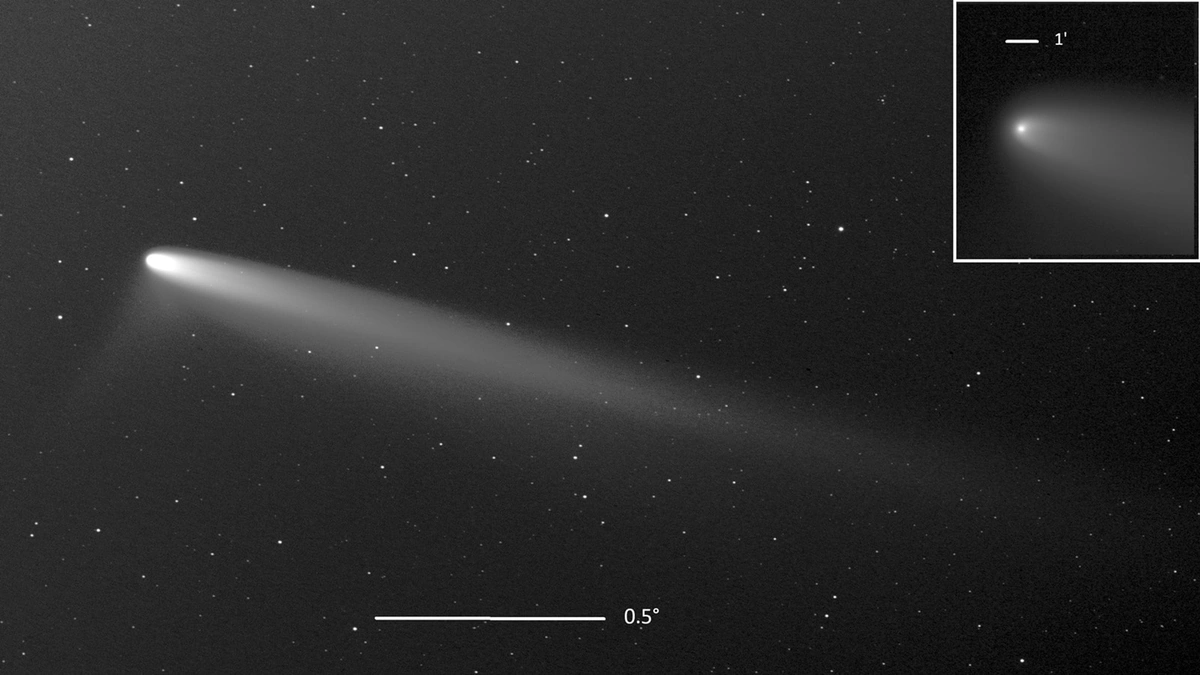
Okay, let’s be honest, a part of all of us wanted it to be aliens, right? The universe is a big place, and the idea of stumbling upon extraterrestrial technology is undeniably thrilling. But, NASA, ever the voice of reason (and occasionally crushing our sci-fi dreams), has officially confirmed that the object previously known as 3I/ATLAS is, in fact, a comet . But before you let out a disappointed sigh, hold on! This is still seriously cool, and here’s why.
Why This Comet Matters | A Cosmic Forensics Lesson

So, why should you care about one more icy snowball whizzing through space? Well, 3I/ATLAS isn’t just any old rock. First off, the “3I” designation tells us that this is only the third interstellar object ever observed passing through our solar system. To put that in perspective, think about how many cars drive past your house every day. Now, imagine only three of those cars are from another country – that’s how rare these cosmic visitors are! According to NASA’s findings, understanding interstellar comets like 3I/ATLAS gives us a peek into other star systems. It’s like finding a message in a bottle washed up on our cosmic shore, potentially revealing clues about the composition and conditions of planets orbiting distant suns. What fascinates me is, that this can reveal the composition of comets from other galaxies.
The “ATLAS” part of the name comes from the Asteroid Terrestrial-impact Last Alert System, which is essentially a network of telescopes designed to spot near-Earth objects that might pose a threat. Thankfully, 3I/ATLAS isn’t on a collision course with us. It just popped in for a quick visit. But this visit still offers a unique chance to analyze its makeup and trajectory, helping us refine our models of how planetary systems form and evolve. But that’s not all…
Unraveling the Comet’s Secrets | What Can We Learn?
Here’s the thing: analyzing comets isn’t just about pretty pictures. Scientists are using sophisticated tools to dissect the light reflected by 3I/ATLAS, a process called spectroscopy. This allows them to identify the elements and molecules present in the comet’s coma (that fuzzy atmosphere around the nucleus) and tail. By comparing the composition of 3I/ATLAS with comets originating from our own solar system, like Halley’s Comet , they can spot similarities and differences. These differences may point to the conditions under which 3I/ATLAS formed in its home star system. Think of it like this: if you’re trying to figure out where someone is from, you might look at their clothes, their accent, and their favorite foods. Astronomers do the same thing with comets, using their chemical signatures as clues to their origin story. One interesting finding is, that scientists are also looking for organic molecules on comets , which might provide clues to the origin of life in the universe.
But how do they know it’s not an alien spacecraft? Well, the trajectory and observed behavior of 3I/ATLAS are consistent with a natural object propelled by gravity and the sublimation of its icy surface. Alien spacecraft, presumably, would have a bit more control over their flight paths (and probably wouldn’t be made of dirty ice!).
The Emotional Angle | Our Place in the Cosmos
Let’s be honest, the thought of finding alien technology is exhilarating. It sparks the imagination and challenges our understanding of what’s possible. But even without little green men, the study of comets like 3I/ATLAS offers a profound connection to the cosmos. It reminds us that we are part of a vast, interconnected universe, where objects travel between star systems, carrying with them secrets of distant worlds. This realization can be humbling and inspiring, fostering a sense of wonder and curiosity about the world beyond our own planet.
And that, my friends, is worth more than any alien spaceship. It’s about understanding our place in the grand scheme of things, and pushing the boundaries of human knowledge. In the past, studying the composition of our solar system’s comets such as Comet I ATLAS , was only possible with Earth and space based instruments. Now, scientists have the opportunity to study the origin and evolution of comets with this interstellar object.
How You Can Participate (Even From Your Couch!)
While you might not be able to hop on a rocket and chase after 3I/ATLAS yourself, there are still plenty of ways to get involved in the excitement of space exploration. Many organizations, like the Planetary Society, offer opportunities for citizen scientists to contribute to research projects by analyzing data and images. You can also follow the latest discoveries on social media and online news platforms, engaging in discussions and sharing your own thoughts and ideas. According to the latest news , there are regular meteor showers and visible astronomical events that can be observed with the naked eye or a simple telescope, providing a direct connection to the wonders of the night sky.
The one thing you absolutely must do is, start looking up! The night sky is full of wonders, and you never know what you might see. Plus, learning about comet observation is a fun and educational activity for the whole family.
Frequently Asked Questions (FAQ)
FAQ
What exactly is a comet, anyway?
Think of it as a dirty snowball made of ice, dust, and rock. As it approaches the sun, the ice vaporizes, creating a visible coma and tail.
How are interstellar comets different from regular comets?
Interstellar comets originate from outside our solar system, while regular comets formed within our own solar system.
Could 3I/ATLAS still be partially alien? Like, maybe they left some trash on it?
Highly unlikely. The scientific evidence strongly suggests it’s a natural object. But hey, never say never!
What if I missed seeing 3I/ATLAS? Will there be other interstellar visitors?
Absolutely! Scientists are constantly searching for new interstellar objects. Keep an eye on space news!
Where can I find reliable information about comets and space exploration?
NASA’s website (nasa.gov) and reputable science news outlets are excellent resources.
So, while it might not be an alien spacecraft, 3I/ATLAS is a fascinating reminder of the vastness and mystery of the universe, and the power of human curiosity to unravel its secrets. And who knows, maybe the next interstellar visitor will be carrying a message from another civilization. Until then, keep looking up!
About the Author