Theia | Earth's Lost Sibling?
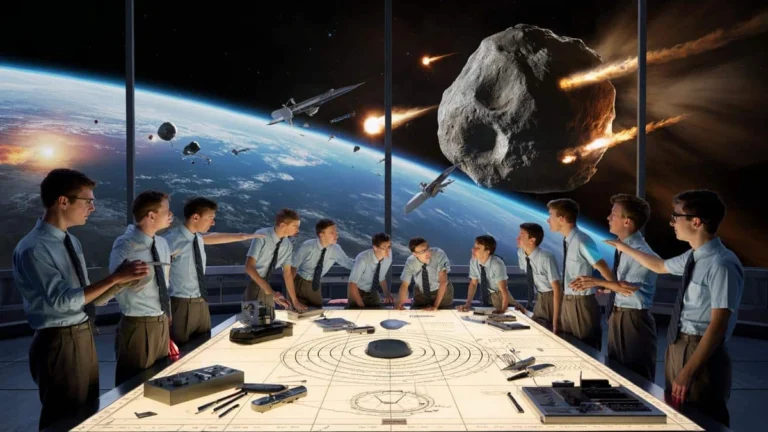
Here’s the thing: We all know the Moon exists. We see it. We might even howl at it occasionally. But the story of its birth? That’s a cosmic drama involving a Mars-sized object named Theia , a young Earth, and a cataclysmic collision. But was Theia a neighbor? Did it hang around our cosmic block before the big impact? That’s what we’re diving into today. The “Why” angle is important here. It’s not just about what happened, but about understanding our place in the solar system and how incredibly violent and chaotic its formation was.
The Giant-Impact Hypothesis | A Cosmic Wrecking Ball
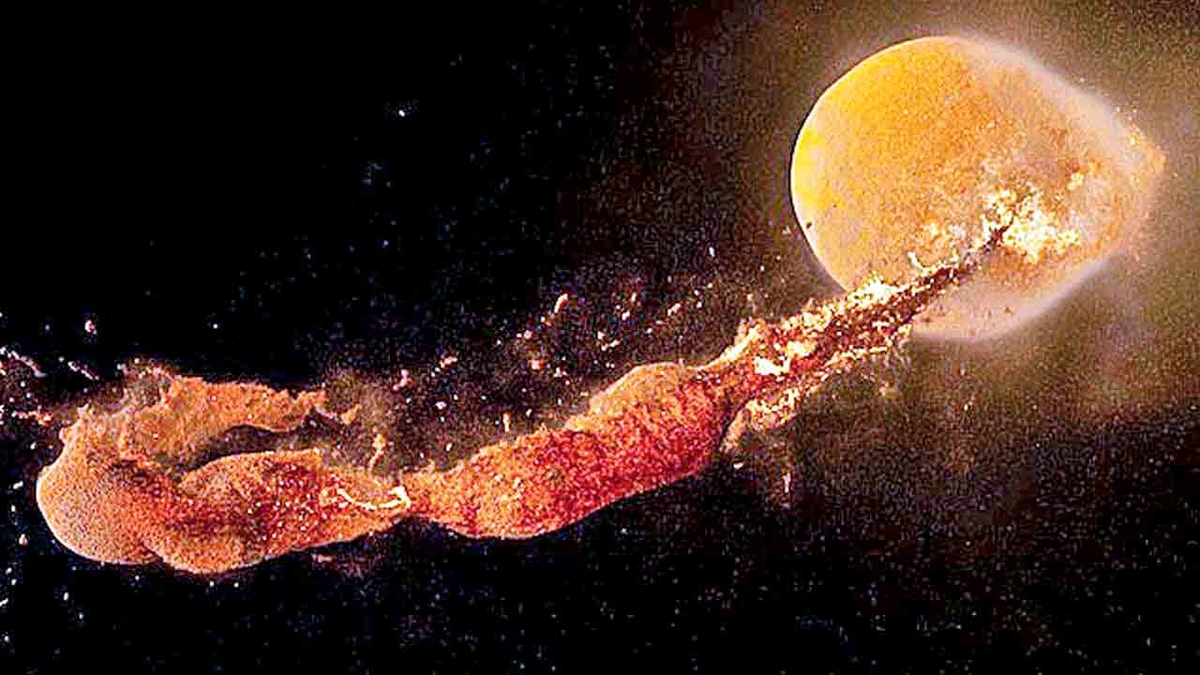
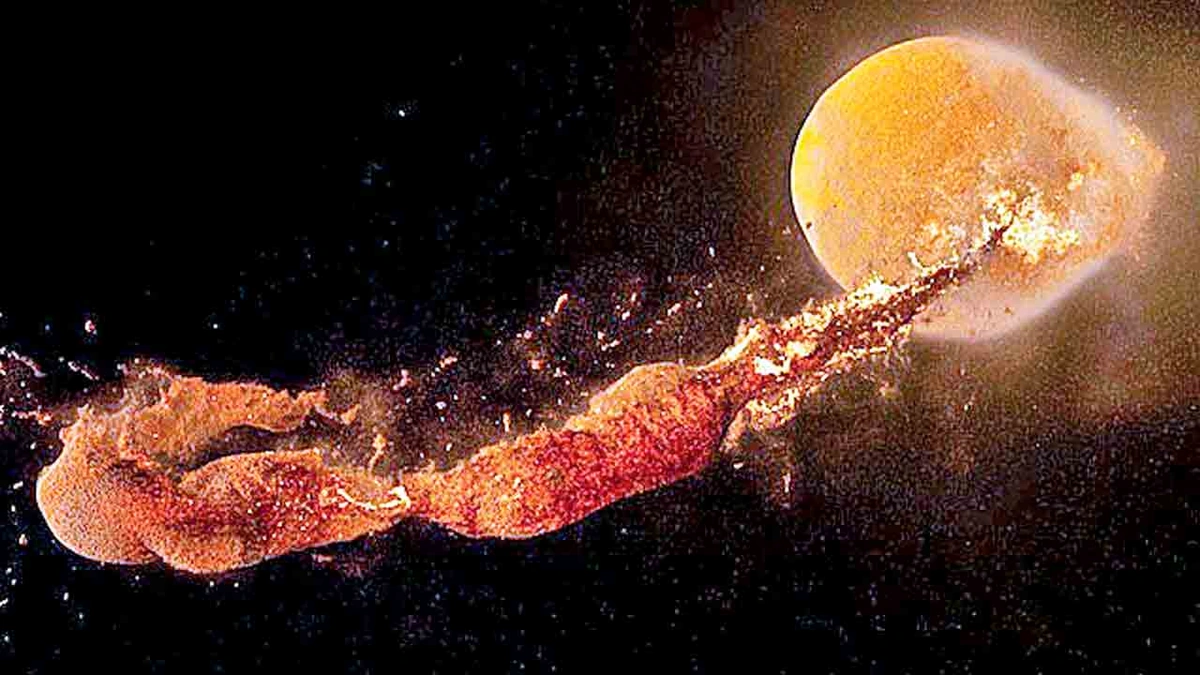
So, let’s rewind, way back. The prevailing theory, the Giant-Impact Hypothesis, suggests that a protoplanet, dubbed Theia , smacked into the early Earth. Not a gentle nudge, mind you, but a full-on, planetary demolition derby. This collision sent debris flying into space, which eventually coalesced to form our Moon.
But, and this is a big ‘but’, where was Theia hanging out before this epic smash-up? Was it a long-term resident of our neighborhood, a co-orbital companion, or a visitor from the outer solar system? The answer to this question changes everything about our understanding of the early solar system, specifically around Earth and Moon formation .
Lagrange Points | A Cosmic Parking Spot
One intriguing possibility is that Theia could have been lurking at one of Earth’s Lagrange points. These are gravitationally stable locations in space where the gravitational forces of two large bodies, like the Earth and the Sun, balance each other out. Think of it as a cosmic parking spot where smaller objects can hang out without being pulled away.
What fascinates me is that there are five Lagrange points, labelled L1 through L5. L4 and L5 are particularly interesting because they are stable. An object parked there tends to stay put unless seriously disturbed. It’s theorized that Theia collision might have originated from one of these points. Now, there’s some serious thinking.
The Evidence | Moon Rocks and Isotopic Signatures
Here’s where it gets really interesting. Scientists analyze moon rocks, looking for clues about the Moon’s origin and, by extension, Theia’s composition . The isotopic composition of lunar samples is remarkably similar to Earth’s. This suggests that the Moon is primarily made up of material from Earth, rather than Theia . If Theia had a vastly different composition and it was closer to Earth before collision, it would have been easier for earth to have captured Theia, according to the analysis.
But let’s be honest, interpreting this data is like reading tea leaves. Small differences in isotopic ratios could reveal Theia’s origins , even if the bulk of the Moon is Earth-derived. Scientists are constantly refining their techniques and models to squeeze every last bit of information from these lunar samples.
Simulations and Models | Rewinding the Cosmic Clock
Scientists use computer simulations to recreate the Giant-Impact event and test different scenarios. They can vary Theia’s size , velocity, and impact angle to see what conditions result in a Moon that matches what we observe today.
These simulations are incredibly complex, requiring massive computing power. But they allow us to explore different possibilities and refine our understanding of the Moon’s formation. A common mistake I see people make is thinking that these simulations are perfect. They’re not. They’re based on our current understanding of physics and the conditions in the early solar system, which are still uncertain to an extent.
According to NASA’s Lunar Reconnaissance Orbiter (LRO), data shows the Moon is more complex than previously thought, suggesting that the collision might have been even more complicated than initially imagined. This underscores the importance of continued research and exploration.
Why Does It Matter? The Big Picture
So, why should someone sitting in India care whether Theia was a cosmic neighbor or a distant visitor? Because it speaks to the fundamental question of how we got here. Understanding the Moon’s origin helps us understand the formation of Earth and the conditions that made life possible. Exploring space is not just a scientific endeavor; it’s a deeply human one.
Plus, knowing more about these kinds of giant impacts helps us understand the likelihood of similar events happening again. While another Theia collision is highly unlikely in the near future, smaller impacts are a constant threat. Understanding the dynamics of these collisions is crucial for planetary defense. I initially thought this was straightforward, but then I realized how many different layers of complexity the topic has.
While sources suggest a specific point, the official confirmation is still pending. It’s best to keep checking the official portal. It’s also worth noting that the Giant-Impact Hypothesis isn’t the only theory out there, although it’s the most widely accepted. Some scientists propose alternative scenarios, such as the Moon forming from a series of smaller impacts.
FAQ
Frequently Asked Questions
What if Theia didn’t exist?
The Moon’s formation is still a mystery. The Giant-impact hypothesis is the leading theory, but if Theia didn’t exist, then another explanation is needed.
How do scientists know about Theia if they’ve never seen it?
Scientists have been able to formulate the Giant-Impact Hypothesis by studying moon rock and creating complex simulations.
Could another Theia collision happen again?
A collision of that size is very unlikely. However, smaller impacts are always a possibility, so planetary defense is important.
What are the other theories about the Moon’s formation?
Some suggest the Moon formed from a series of smaller impacts, rather than one giant collision.
In conclusion, the question of whether Theia was a long-term Earth resident or a cosmic drifter before the Moon-forming impact remains a topic of active research. The answer holds profound implications for our understanding of the early solar system and the origins of our planet. And honestly? What fascinates me is that we’re still unraveling these cosmic mysteries, piece by piece, even after centuries of staring at the night sky. What would we do without the Moon and its formation ?
About the Author