Saturn's Rings Vanishing?! You Won't Believe Why
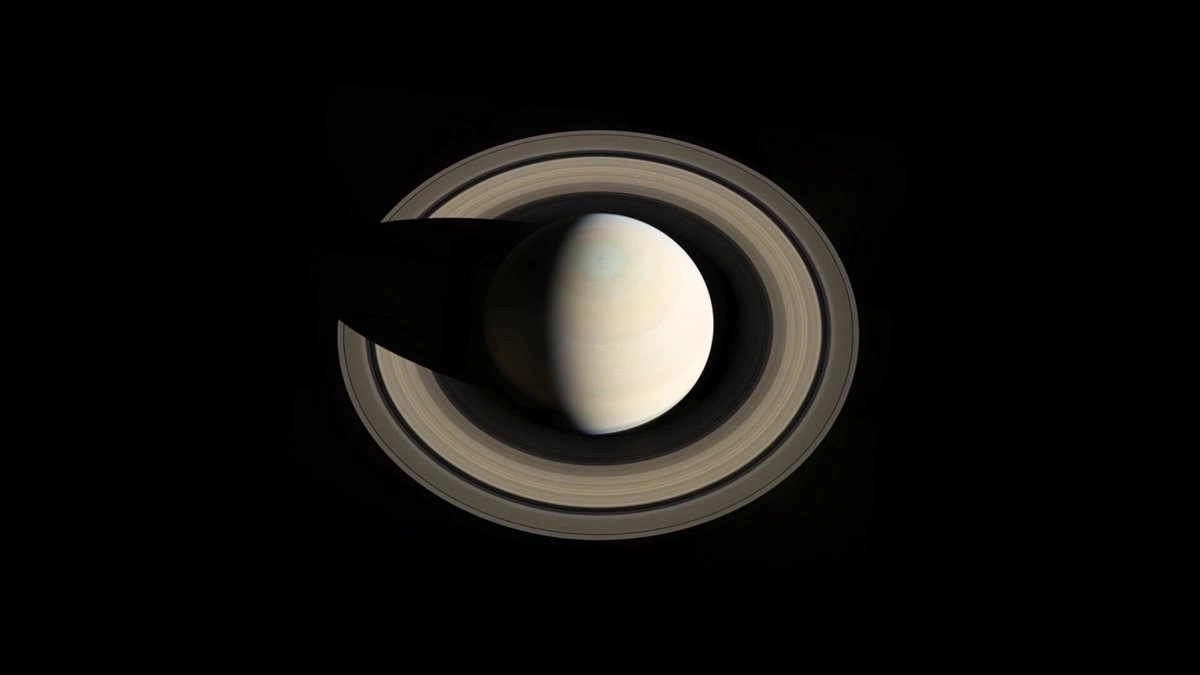
Saturn’s rings. Just the name conjures up images of cosmic beauty, doesn’t it? But here’s the thing: they aren’t permanent. Like everything in the universe, they’re evolving. What’s really fascinating, though, is that they’re disappearing faster than we thought. But don’t worry, Saturn will still look pretty spectacular for a while. Let’s dive into the mysteries of these icy wonders and explore why Saturn’s rings are disappearing .
The Ring Rain Phenomenon
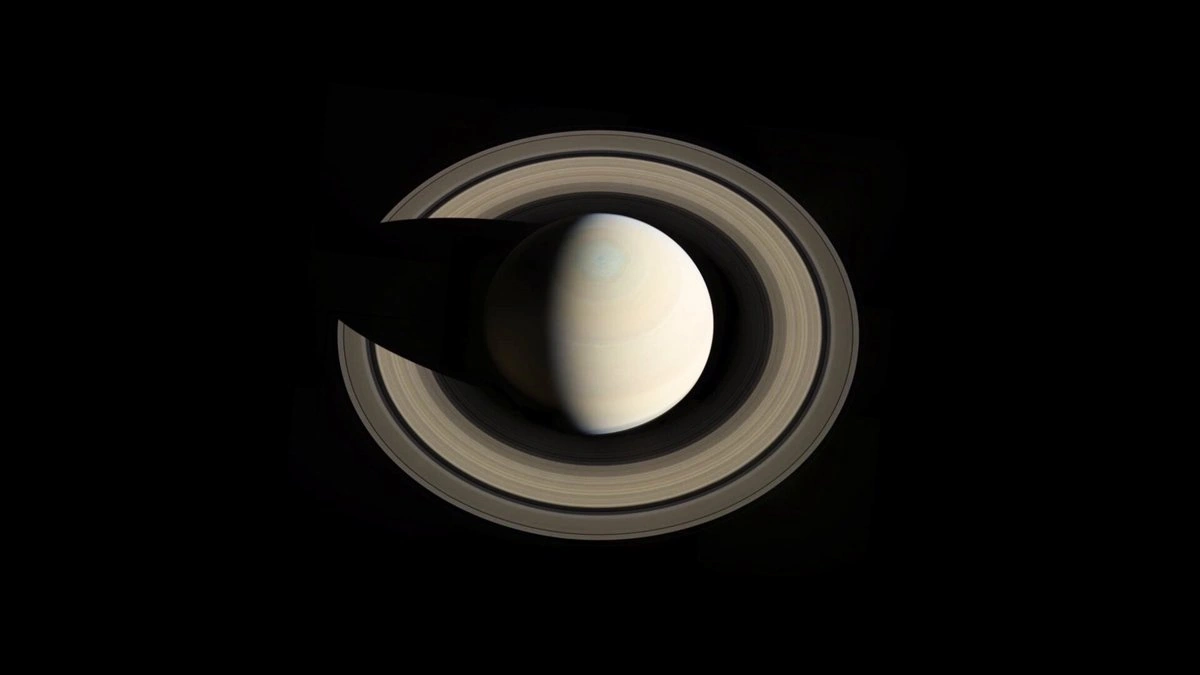
So, what’s causing this cosmic vanishing act? It’s a process scientists call “ring rain.” Essentially, Saturn’s rings are made up of countless icy particles, ranging in size from tiny grains to chunks as big as houses. These particles are constantly bombarded by ultraviolet radiation from the sun and micrometeoroids. This bombardment causes the particles to become electrically charged. Here’s where it gets interesting. Saturn’s gravitational pull and magnetic field then interact with these charged particles, pulling them down towards the planet in a sort of icy rain. It’s like a giant, celestial shower – but instead of water, it’s made of ring particles!
But why does this matter? Well, for one, it gives us insights into the age of the rings. Scientists now estimate that the rings may only be a few hundred million years old – relatively young compared to Saturn itself, which is billions of years old. The rate at which ring rain impacts Saturn also provides valuable data for understanding the planet’s magnetic field and its interaction with the solar environment. This knowledge could even help us understand how other ring systems, like those around Uranus and Neptune, might evolve over time. Fascinating, right?
The Age of the Rings | A Cosmic Puzzle
For a long time, scientists assumed that Saturn’s rings were ancient, perhaps as old as the planet itself. But the data from the Cassini mission threw a wrench in that theory. Cassini’s observations of ring particle composition and the rate of ring rain suggested a much younger age. The rings are surprisingly pure, made up almost entirely of water ice. If they were billions of years old, we’d expect to see a lot more contamination from dust and other space debris.
And then there’s the ring rain. At the current rate, the entire ring system could be gone in a few hundred million years. That’s a blink of an eye in cosmic terms! This raises a really interesting question: if the rings are relatively young and disappearing so quickly, what created them in the first place? One popular theory is that they formed from the breakup of a moon or a large comet that ventured too close to Saturn. The planet’s powerful gravity would have torn the object apart, scattering its icy remains into a ring around the planet. This aligns with the theory of how rings are formed .
What Happens When the Rings are Gone?
Okay, let’s address the elephant in the room: what will Saturn look like when its rings are gone? Well, it’ll still be a pretty spectacular planet. It’ll still have its swirling atmosphere, its moons, and its majestic presence in the night sky. But, let’s be honest, it won’t be quite the same. Those rings are iconic. They’re what make Saturn, well, Saturn. But change is inevitable in the universe. And while the loss of the rings might be a bit sad for us earthlings, it’s just another chapter in the long and fascinating story of our solar system.
Let me rephrase that for clarity: the planet itself will remain majestic. But its image, its cultural impact, will shift. Imagine the impact on astrology – suddenly, Saturn’s influence is discussed without the immediate visual association of its rings. It’s a fundamental shift in how we perceive this gas giant.
The Cassini Mission’s Revelations
The Cassini mission, a joint project by NASA, the European Space Agency (ESA), and the Italian Space Agency (ASI), was a game-changer in our understanding of Saturn and its rings. Cassini spent 13 years orbiting Saturn, sending back a wealth of data and stunning images. It was Cassini that first discovered the ring rain phenomenon and provided the evidence for the rings’ surprisingly young age. Cassini also revealed the complex structure of the rings, showing that they’re not just a simple, flat disk, but a collection of thousands of individual ringlets, each with its own unique composition and characteristics.
What fascinates me is the sheer scale of the mission. Think about it – building a spacecraft capable of traveling billions of kilometers, enduring the harsh environment of space, and performing complex scientific measurements. It’s a testament to human ingenuity and our insatiable curiosity about the universe. And the legacy of Cassini will continue for years to come, as scientists continue to analyze the data it collected and piece together the story of Saturn and its rings. I initially thought this was straightforward, but then I realized the mission’s data still needs further analysis. This shows how important it is to continue exploring.
The Future of Ring Research
Even though the Cassini mission has ended, the study of Saturn’s rings is far from over. Scientists are still working to refine our understanding of the ring rain process, the age of the rings, and the processes that shaped them. Future missions to Saturn are also being considered, which could provide even more detailed information about the rings and the planet itself. One potential mission is the Saturn Ring Observer (SRO), which would be dedicated to studying the rings in unprecedented detail. SRO would be equipped with advanced instruments capable of measuring the composition, structure, and dynamics of the rings, providing invaluable insights into their formation and evolution.
As per the guidelines mentioned in the information bulletin, the continued research will shed light on the origin of Saturn’s rings . The one thing you absolutely must double-check is that our curiosity about the cosmos is boundless. And that’s a good thing, right? Because the more we learn about the universe, the more we learn about ourselves.
FAQ About Saturn’s Rings
Are Saturn’s rings visible from Earth?
Yes! With a good telescope, you can definitely see Saturn’s rings from Earth. Even a small telescope will give you a glimpse. Binoculars might show them as a bulge on either side of the planet.
How thick are Saturn’s rings?
Surprisingly, they’re quite thin! While they span hundreds of thousands of kilometers in diameter, they’re typically only about 10 meters thick.
What are Saturn’s rings made of?
Mostly water ice particles, ranging in size from tiny grains to larger chunks. There’s also some dust and other debris mixed in.
Will Saturn eventually lose all of its rings?
Yes, eventually. Scientists estimate they’ll be gone in a few hundred million years due to the ring rain phenomenon.
Could Saturn get new rings in the future?
It’s possible! If a moon or large comet were to break up near Saturn, it could potentially form a new ring system.
How do micrometeoroids affect the rings?
Micrometeoroids, along with UV radiation, cause particles in Saturn’s rings to become electrically charged, contributing to the ring rain process.
About the Author