Interstellar Object Spying on Jupiter?!
Here’s the thing: space is full of surprises. Just when you think you’ve got a handle on things, some rogue rock or icy chunk comes barreling through, rewriting the cosmic rulebook. And lately, the buzz is all about interstellar object 3I/ATLAS – could it be deploying tiny satellites to spy on Jupiter? Sounds like science fiction, right? Well, let’s dive into the fascinating, and sometimes speculative, world of interstellar visitors and what they might be up to.
A Cosmic Mystery Tour | What Exactly Is 3I/ATLAS?
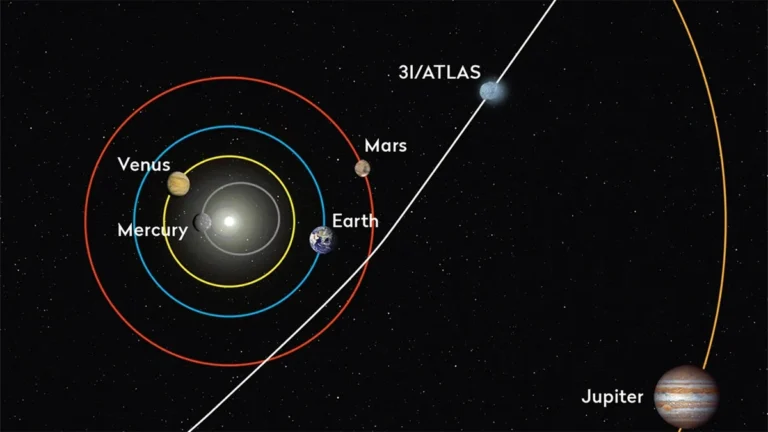
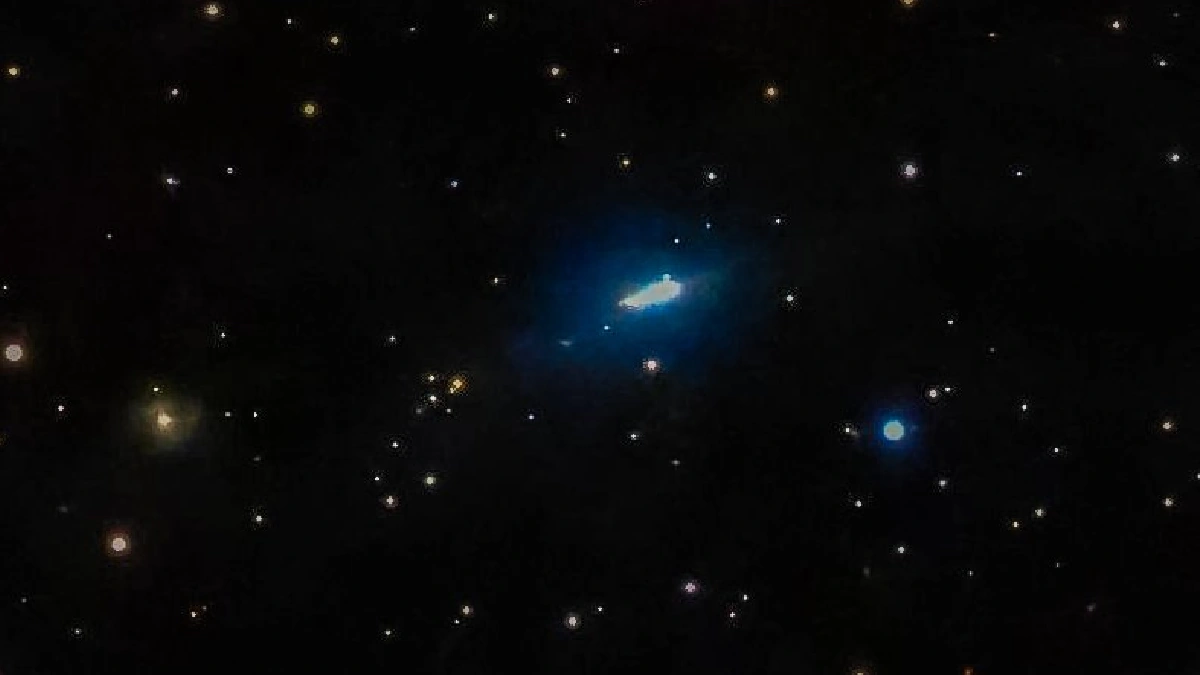
Okay, so 3I/ATLAS isn’t your run-of-the-mill asteroid or comet. It’s an interstellar object , meaning it originated from outside our solar system. That’s a big deal. Think about it – it’s traveled perhaps millions or even billions of kilometers to get here. It’s a cosmic tourist, and we’re its accidental hosts. The “3I” part means it’s the third interstellar object ever discovered. The first was ‘Oumuamua, which caused quite a stir with its unusual shape and behavior. So, what makes 3I/ATLAS special? Well, for starters, its orbit is highly eccentric, indicating its origins beyond our solar system’s familiar neighborhood. Understanding the trajectory of interstellar objects is crucial in learning about other star systems.
The Satellite Speculation | Where Did That Idea Come From?
Now, about those satellites… This is where things get interesting, and a little speculative. The idea that 3I/ATLAS might be releasing tiny satellites isn’t based on direct observation (yet!), but rather on some unusual behavior. Some astronomers have noted variations in its brightness that don’t quite match expectations for a simple, rotating object. These fluctuations could be interpreted in various ways, and one intriguing hypothesis is that 3I/ATLAS is shedding small pieces of itself – potentially, these could even be designed for observation. Let me rephrase that for clarity: instead of naturally breaking off, these could be intentionally released. The possibility of alien technology always captures the imagination.
But, and this is a big but, let’s not jump to conclusions. There are many other explanations for the observed brightness variations. It could be due to changes in the object’s rotation, its surface composition, or even the way sunlight is reflecting off its irregular shape. However, the thought of a potential interstellar probe lurking in our solar system is undeniably exciting.
Why Jupiter? The Giant’s Gravity Well
So, why Jupiter? If 3I/ATLAS were deploying satellites, why would they be targeting the gas giant? The answer, most likely, lies in Jupiter’s immense gravitational pull. Jupiter is the solar system’s heavyweight champion. Its gravity is so strong that it acts like a cosmic vacuum cleaner, attracting asteroids, comets, and, potentially, interstellar objects. A satellite strategically positioned near Jupiter could gather a wealth of data about the planet’s atmosphere, magnetic field, and even its moons. It would be a prime location for interstellar voyeurism. Here’s a link to the Jupiter Wiki page, for those who want a refresher.
But, and I can’t stress this enough, this is all highly speculative at this point. No one has actually seen any satellites being released by 3I/ATLAS. This is more of a thought experiment, exploring the possibilities. A common mistake I see people make is assuming correlation equals causation. Just because 3I/ATLAS is passing near Jupiter doesn’t mean it’s sending out probes. Let’s be honest; most likely, it’s just a coincidence. However, understanding interstellar dynamics is a crucial step in studying these visitors.
The Search Continues | How We’re Watching the Skies
The good news is that astronomers around the world are actively monitoring 3I/ATLAS and other interstellar objects. Using powerful telescopes and advanced imaging techniques, they’re constantly gathering data, searching for any signs of unusual behavior. The Vera C. Rubin Observatory, currently under construction in Chile, promises to revolutionize our ability to detect and study these objects. With its wide field of view and unprecedented sensitivity, it will be able to scan the entire sky every few nights, spotting even the faintest and most distant visitors. According to the latest reports, the observatory is on track to begin operations in the next few years.
What fascinates me is the sheer ingenuity of scientists in devising new ways to observe the cosmos. From ground-based telescopes to space-based observatories, they’re constantly pushing the boundaries of what’s possible. And who knows, maybe one day they’ll finally catch 3I/ATLAS in the act of releasing a tiny satellite. Until then, we can only speculate and dream about the possibilities. The search for extraterrestrial intelligence will continue, and objects like 3I/ATLAS offer unique opportunities.
Don’t forget that accurately measuring space object velocity is crucial for understanding their behavior and origins.
The Broader Implications | Why Interstellar Objects Matter to Us
Okay, so maybe 3I/ATLAS isn’t sending out satellites. But even if it’s just a lonely rock hurtling through space, it still holds immense scientific value. These interstellar objects offer a unique window into other star systems. By studying their composition, their structure, and their behavior, we can learn about the conditions in which they formed. We can gain insights into the building blocks of planets, the distribution of elements, and even the potential for life beyond Earth. Plus, the study of these objects helps us refine our understanding of the solar system, such as the information available at the provided website .
And that, my friends, is why these interstellar visitors are so important. They’re not just cosmic curiosities; they’re messengers from distant worlds, carrying secrets of the universe. And who knows, maybe one day, one of them will turn out to be something truly extraordinary. But, for now, we’ll just keep watching the skies, waiting for the next surprise. The possibility of interstellar travel is something humanity dreams of.
So, as we look up at the night sky, remember 3I/ATLAS and the mysteries it holds. It’s a reminder that the universe is vast, full of wonders, and constantly challenging our understanding. And even if it’s not releasing satellites to observe Jupiter, it’s still a pretty cool rock. Plus, this object may give us some clues to better understand other space travelers that come into our system. The future of space exploration initiatives depends on our willingness to learn.
FAQ About Interstellar Objects
What exactly is an interstellar object?
It’s a space rock (asteroid or comet) that originated from outside our solar system.
How many interstellar objects have we found?
Only a few! 3I/ATLAS is the third confirmed interstellar object discovered.
Could interstellar objects carry life?
It’s possible, but highly unlikely. The harsh conditions of interstellar space make survival difficult.
What if I want to study astronomy?
Start by reading books, watching documentaries, and joining an astronomy club. The options are endless!
Are these objects named after Greek gods?
Usually, but not always. They follow a specific naming convention.
Will an interstellar object ever hit Earth?
The chances are very slim, but scientists are constantly monitoring near-Earth objects.
About the Author