
Alien Comet? Elon Musk's Wild Space Claim
So, Elon Musk thinks an interstellar comet might be an alien spaceship? Let’s be real, anything is possible when it comes to space, right? But before we start building our welcome signs, let’s dive a little deeper into this fascinating (and potentially far-fetched) idea. I mean, who wouldn’t want it to be true?
Why This Comet Has Everyone Talking

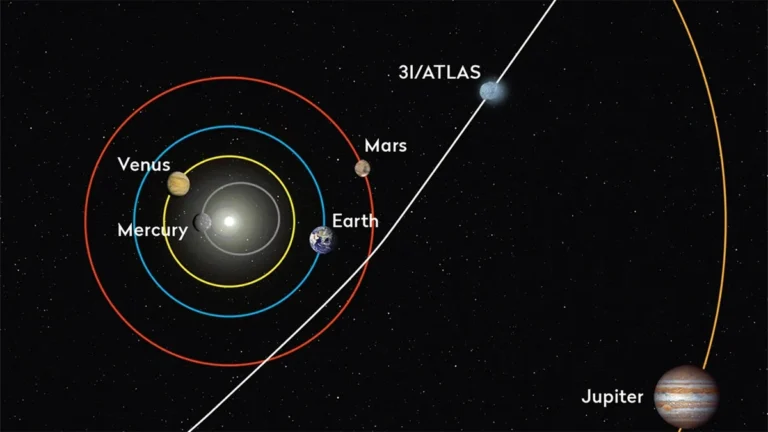
Here’s the thing: comets aren’t usually the stuff of headlines unless they’re about to crash into Earth (knock on wood). But 3I/ATLAS, or C/2019 Q4 (Borisov), is different. It’s an interstellar object –meaning it originated outside our solar system. That automatically makes it way cooler. According to NASA’s Jet Propulsion Laboratory website , what fascinates me about this is that it gives us a glimpse into other star systems. It’s like finding a message in a bottle that’s floated across the cosmic ocean.
But — and this is a big but — what makes it potentially alien? Well, that’s where Musk’s tweet comes in. He didn’t exactly say it is an alien spaceship. He just speculated that it’s a ‘possible alien origin’. Big difference. Yet, the idea is tantalizing and it ignited the imaginations of space enthusiasts and conspiracy theorists alike. And that’s where the fun begins. But let’s ground ourselves for a second.
The Science (and Speculation) Behind Alien Origins
Now, I’m no astrophysicist, but I’ve done some digging. The more grounded explanation is that 3I/ATLAS is just a regular comet, albeit from another solar system. The composition of interstellar comets, like this, can tell scientists a lot about the conditions in other star systems, including the potential building blocks for life. That’s exciting enough, right? Still, that doesn’t rule out the possibility of, say, some alien civilization using comets as a sort of galactic transport system. Or maybe they crashed and this is the debris. I initially thought this was a little bonkers, but then I considered, if we could, wouldn’t we?
And — yes, scientists have considered the possibility of panspermia — the theory that life can spread throughout the universe via asteroids, comets, and other celestial bodies. So, while it’s a long shot, the idea of an interstellar comet carrying some form of microbial life to our solar system isn’t entirely out of the realm of possibility. Which is both terrifying and incredible.
Elon’s History with Space Speculation
Let’s be honest: Elon Musk is no stranger to making bold, sometimes outrageous, statements about space. He’s talked about colonizing Mars, building a city on the moon, and, you know, saving humanity from extinction. He has even speculated about life on Mars being a possibility. So, when he throws out the idea of an alien origin for an interstellar comet , it’s important to take it with a grain of salt. He does have a tendency to, let’s say, color outside the lines of scientific consensus. That said, his speculations often spark public interest in science and exploration, which is ultimately a good thing. Whether it’s launching his Tesla Roadster into space or musing about alien technology, he keeps the conversation going. And maybe, just maybe, he knows something we don’t. Let’s explore his views on the possibility of comets with alien origins.
What This Means for the Future of Space Exploration
Regardless of whether 3I/ATLAS turns out to be an alien artifact or just a space rock, its discovery highlights the importance of continued space exploration. The more we learn about our solar system and beyond, the better we understand the origins of the universe and our place in it. Plus, identifying and tracking near-Earth objects like asteroids and comets is crucial for planetary defense. As per the guidelines mentioned in the information bulletin, funding space research ensures we’re prepared for anything the cosmos might throw our way — literally.
A common mistake I see people make is underestimating the importance of these kinds of scientific endeavors. But the truth is, every discovery, every mission, every telescope brings us closer to answering some of the biggest questions humanity has ever asked. And who knows? Maybe one day we’ll actually find definitive proof of extraterrestrial life. Until then, we can keep speculating and exploring. It is important to look out for space debris which is increasingly becoming a hazard to many space missions.
According to the latest circular on the official NASA website (nasa.gov), there are plans to launch new telescopes that would be able to identify potentially hazardous objects with greater accuracy. It is important to track these cosmic objects , be it asteroids or comets, for planetary defense.
Let me rephrase that for clarity… the hunt for potentially hazardous objects never ends!
What Can You Do? Keep Looking Up!
You don’t need a fancy telescope to appreciate the wonders of space. Go outside on a clear night and look up. Think about how incredibly vast the universe is and how much we still have to learn. Read articles, watch documentaries, and follow scientists on social media. Engage with the topic! The more people who are interested in space exploration, the more support there will be for future missions and discoveries. The study of interstellar dust gives us important insights into the formation of stars and planets in other galaxies.
And if you happen to spot a strange object in the sky, be sure to report it — you never know, you might be the one to make the next big discovery. Let’s find out more about other objects in the cosmos.
FAQ About Interstellar Comets
What exactly is an interstellar comet?
It’s a comet that originated outside our solar system and is just passing through.
How do scientists know it’s from another star system?
Its trajectory and speed are different from objects that formed within our solar system.
Could an interstellar comet actually carry alien life?
It’s theoretically possible, but highly unlikely. Still, not impossible!
What if I forgot my application number?
Well, you won’t need your application number to observe the comet, but keep an eye on the NASA websites to track its location.
Is 3I/ATLAS dangerous to Earth?
No, it’s not on a collision course with our planet.
Will we see more interstellar comets in the future?
Absolutely! As our technology improves, we’ll likely discover even more of these fascinating objects.
So, while the possibility of 3I/ATLAS being an alien spaceship is a long shot, it’s a reminder of the endless possibilities that exist in the universe. And that, to me, is what makes space exploration so exciting. It’s the hope that, maybe, just maybe, we’re not alone.
About the Author