
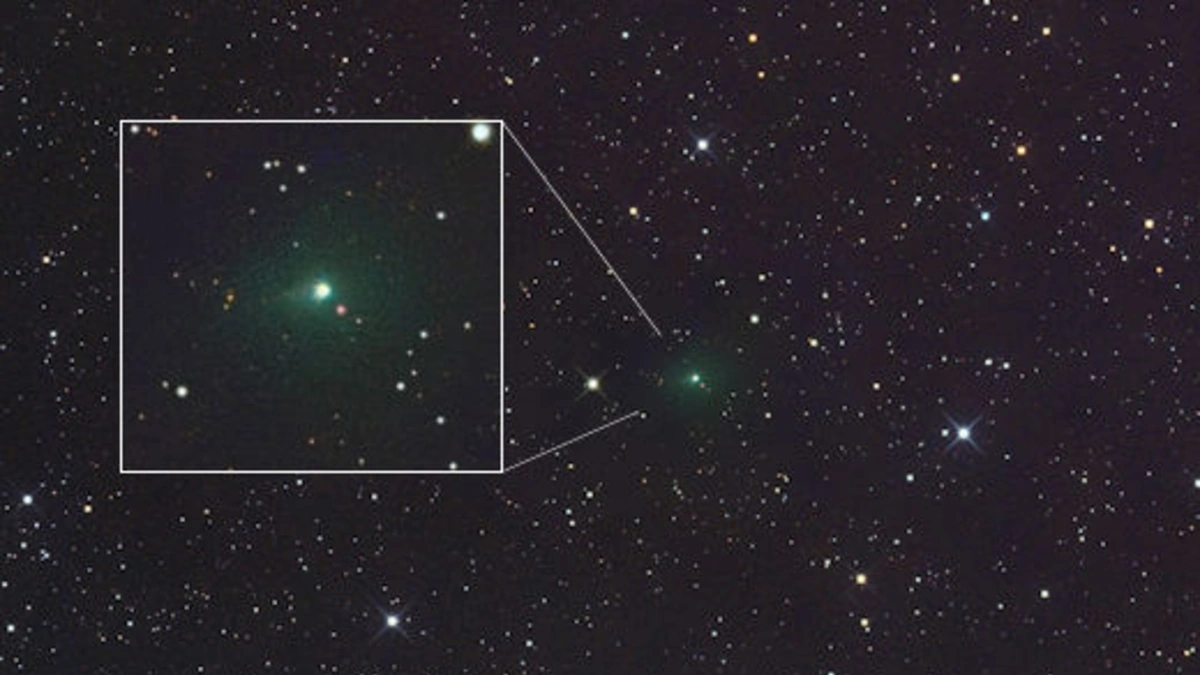
Comet 3I/ATLAS | What's Missing SHOCKS Scientists!
Okay, let’s be honest. When I first saw the headline about Comet 3I/ATLAS , I thought, “Another space rock, another press release.” But then I dug deeper. This isn’t just about some icy wanderer; it’s about rethinking what we know about cometary composition and how these celestial snowballs might have seeded the early Earth. Buckle up, because this gets interesting. We’re going to explore why the deficiencies of nickel, cyanide, and carbon-chains in 3I/ATLAS matter and what they tell us about the origins of our solar system.
The Curious Case of Missing Elements | Why It Matters
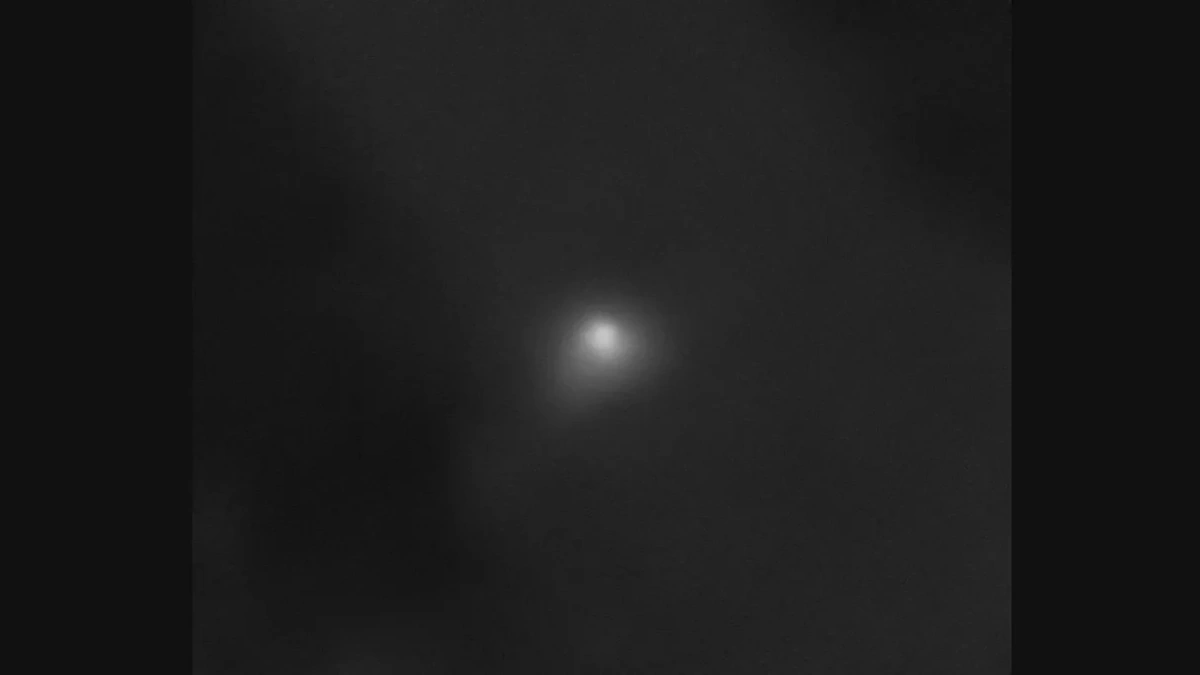
So, what’s the big deal about these missing elements? Well, comets are essentially time capsules. They’re leftovers from the formation of our solar system, preserving the chemical conditions of that ancient era. Typically, comets are expected to contain a certain amount of, well, everything – including nickel, cyanide, and carbon-chain molecules. The fact that 3I/ATLAS is deficient in these elements suggests that either it formed in a different region of the protoplanetary disk, or it underwent some pretty significant processing that stripped these compounds away. It’s like finding a pizza with no cheese – something’s definitely not right, and you want to know why .
Think of it this way: Imagine the early solar system as a vast, swirling kitchen. Different ingredients (elements and molecules) were distributed unevenly, creating different “recipes” in different regions. According toprotoplanetary disk models, the amount of sunlight reaching these regions determines which materials can condense into solids. If 3I/ATLAS formed in a colder, more distant region, it might simply have never incorporated these elements in the first place. Or, perhaps it experienced intense radiation or collisions that altered its composition over billions of years. That’s the kind of puzzle compositional analysis is working to resolve.
Nickel’s Absence | A Metallic Mystery
Nickel, a metal commonly found in meteorites and other celestial bodies, plays a vital role in understanding the formation and evolution of planetary materials. The deficit of Nickel in 3I/ATLAS Comet implies one of the three possibilities: Either the comet formed in a region where the nickel abundance was originally lower, or the formation process did not favour nickel incorporation or the nickel compounds got selectively depleted as the comet evolved over time. I find this fascinating, especially considering that nickel is often associated with iron, and iron is a major component of many asteroids and planetary cores.
The Cyanide Conundrum | Beyond Simple Poison
Now, cyanide. Yes, it’s toxic – but in space, it’s a building block. Cyanide, specifically hydrogen cyanide (HCN), is a relatively simple molecule containing carbon, hydrogen, and nitrogen. Its presence is indicative of the kind of chemical processes that could lead to the formation of more complex organic molecules, eventually, potentially even the building blocks of life. The deficiency of cyanide in 3I/ATLAS suggests that the comet’s parent molecular cloud was poor in nitrogen, a key ingredient for cyanide formation. Or, perhaps the radiation environment destroyed it, preventing its formation. It’s like trying to bake a cake without flour – the end result is just not going to be the same.
Carbon-Chain Depletion | A Challenge to Cometary Models
Carbon-chain molecules, like those composed of several carbon atoms linked together, are crucial components of organic material in comets. These chains play a critical role in the chemical processes that create more complex organic molecules. If these components are depleted, the building of complex molecules may not occur as expected. In the case of 3I/ATLAS, the deficiency in carbon-chain molecules points towards a formation in environmental conditions in which these carbon chains were unstable, or the comet’s journey subjected it to processes that broke down these chains over time. This challenges standard models of cometary formation and evolution.
What Does This Mean for Us?
Here’s the thing: understanding the composition of comets is not just an academic exercise. It’s like piecing together the story of our cosmic origins. Comets are thought to have delivered water and organic molecules to the early Earth, potentially playing a crucial role in the emergence of life. If we can figure out what comets are made of, and how that composition varies across different comets, we can better understand the conditions under which our planet formed and the processes that made it habitable. According to the latest research on the biology foundation model , the origins of life on Earth could be seeded with comets.
Moreover, with increased space exploration and potential asteroid mining in the future, understanding the composition of these celestial bodies becomes even more critical. Who knows? Maybe one day we’ll be extracting valuable resources from comets and asteroids, but for that to happen, we need a far better handle on what they’re actually made of. This knowledge provides a framework to refine our understanding of the formation of celestial bodies in the early solar system. Also, knowing the composition of comets enhances our ability to predict the behavior of near-Earth objects, thereby improving planetary defense strategies.
Navigating the Cosmic Questions of Compositional Analysis
A common question I encounter is, “Why focus on deficiencies? Shouldn’t we be looking for what’s there ?” Well, consider this: the absence of something can be as telling as its presence. In the case of 3I/ATLAS, the lack of nickel, cyanide, and carbon-chains provides clues about the comet’s origin, its history, and the conditions in the early solar system. It’s similar to identifying missing pieces of a puzzle – understanding what is missing can guide you towards the complete picture. Analyzing these compositional variations helps us understand where comets like 3I/ATLAS came from and how they evolved. According to this article , understanding the building blocks of the universe can lead to discoveries.
FAQ About Comet Composition
Frequently Asked Questions
What does compositional analysis tell us about comets?
It tells us what the comet is made of – its elemental and molecular makeup. This helps us infer where it originated and the conditions it experienced.
Why is the composition of 3I/ATLAS so unusual?
The Comet 3I/ATLAS’s composition is unusual because of the deficiency of nickel, cyanide, and carbon-chain molecules. This is not typically seen in other comets, and it may be a sign that the comet originated from a different protoplanetary disk region.
Could these deficiencies affect the comet’s behavior?
Potentially. The absence of certain compounds can influence how a comet interacts with sunlight, its rate of sublimation, and even its overall lifespan. These compositional differences are important for understanding planetary defense strategies.
How do scientists analyze comet composition?
Scientists use a variety of techniques, including spectroscopy (analyzing the light emitted or absorbed by the comet) and mass spectrometry (analyzing the mass and charge of the comet’s components).
Are there other comets with similar deficiencies?
Yes, but each comet is unique. The specific combination and degree of these deficiencies in 3I/ATLAS is what makes it particularly interesting.
So, the next time you look up at the night sky, remember that even the seemingly empty spaces hold secrets waiting to be uncovered. And sometimes, what’s not there tells the most compelling story of all.
About the Author