
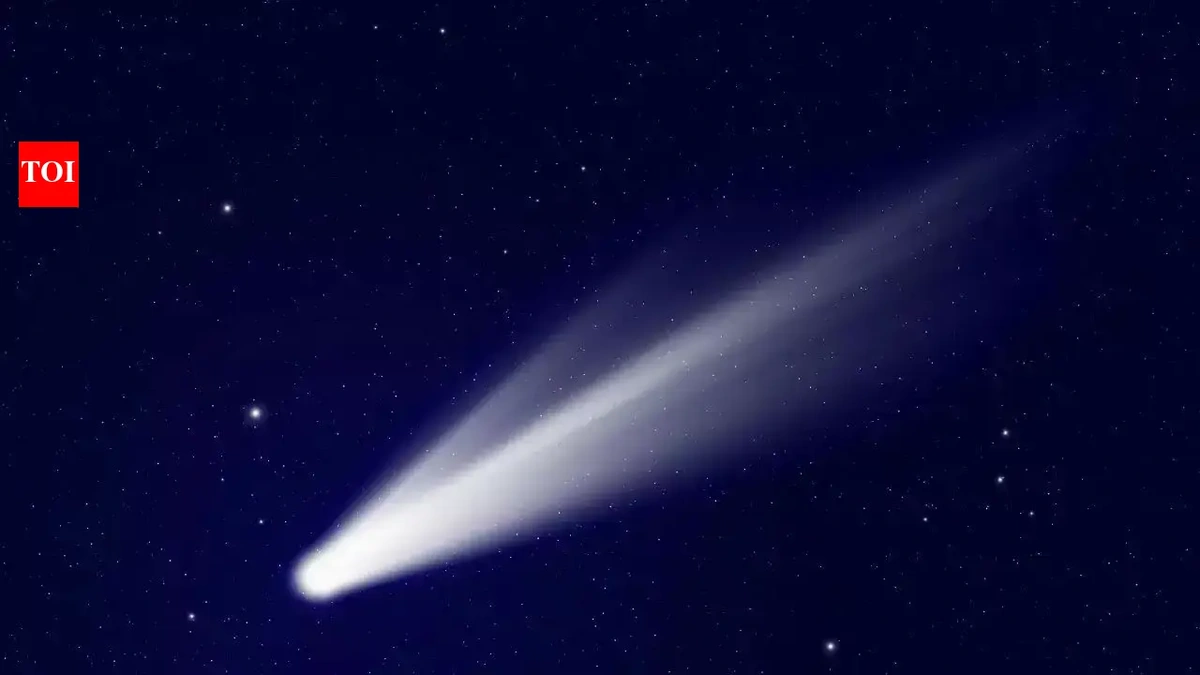
Comet 3I/ATLAS | Alien Tech?
Okay, folks, buckle up. We’re diving deep into the cosmos, and it’s about to get weird in the best way possible. We’re talking about comets , specifically Comet 3I/ATLAS, and a rather provocative claim from Harvard’s Avi Loeb. Now, Loeb isn’t your average astrophysicist; he’s the guy who boldly suggested that the interstellar object ‘Oumuamua might have been alien technology. So, when he throws out a theory, people listen, even if they raise an eyebrow or two. He’s suggesting that Comet 3I/ATLAS, based on its peculiar emission patterns, might be exhibiting artificial behavior. Yeah, you read that right. Let’s break down why this is more than just sensationalism and what it could actually mean.
The Curious Case of Comet 3I/ATLAS | What’s the Fuss?
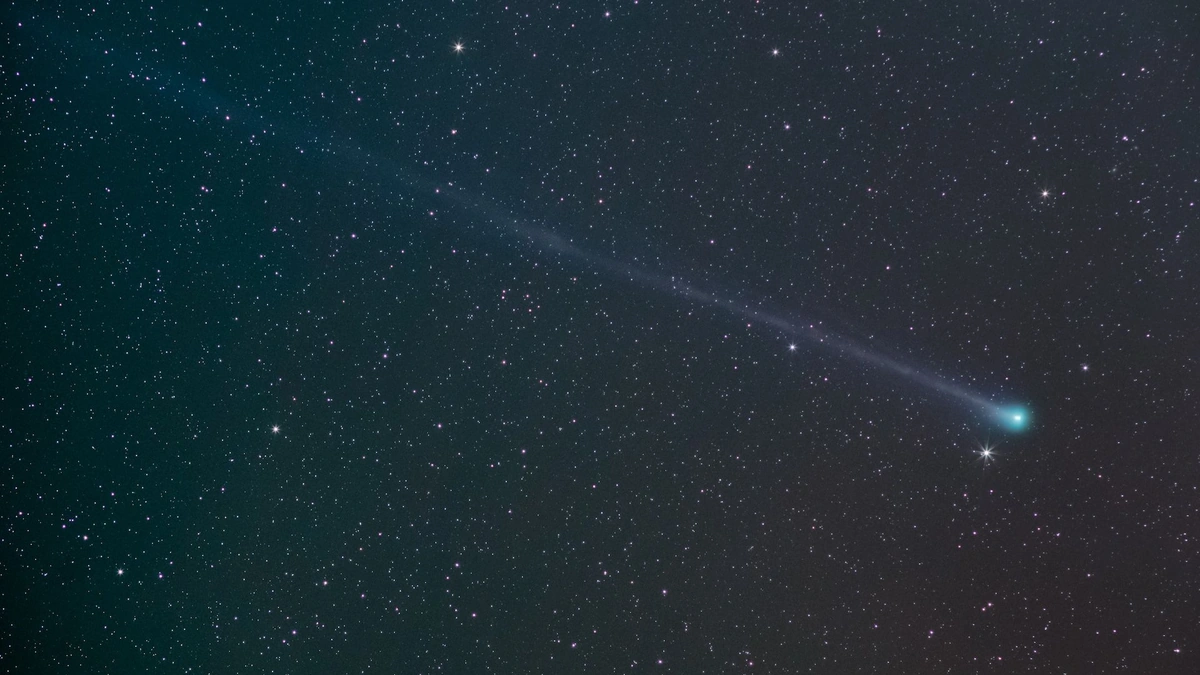
So, what’s got everyone buzzing? It’s all about the way this interstellar comet behaves. Comets, as you probably know, are icy bodies that release gas and dust as they approach the sun. This creates the beautiful cometary tails we often see. But, according to Loeb’s research, 3I/ATLAS doesn’t quite fit the standard model. Its emission patterns are… well, let’s just say they’re not playing by the rules. The intensity and timing of its outbursts are irregular, leading Loeb to speculate whether something more exotic might be at play.
Now, before you jump to conclusions about alien spacecraft refueling at our doorstep, let’s consider the possibilities. The conventional explanation is that these unusual emissions are due to the comet’s composition or the way it interacts with solar radiation. Fair enough. But Loeb argues that these explanations fall short of fully accounting for the observed data. He proposes that the emission patterns could be consistent with an artificial mechanism, perhaps some kind of technology influencing the comet’s behavior. It’s a long shot, sure, but it’s a shot worth considering, especially coming from a mind like Loeb’s.
Why This Matters (More Than You Think)
Here’s the thing: whether Loeb is right or wrong isn’t the whole point. It’s the questions he’s prompting us to ask. The scientific method thrives on skepticism and the willingness to challenge established norms. Loeb’s hypothesis encourages us to look at celestial objects with fresh eyes and consider unconventional explanations. And that is really important. Think about it for centuries, people believed the Earth was the center of the universe. It took bold thinkers like Copernicus and Galileo to challenge that dogma and revolutionize our understanding of the cosmos. Loeb’s work is in that same spirit of questioning the status quo. Don’t forget to check out comet alien origins for related content.
And let’s not ignore the sheer intellectual stimulation. The idea of extraterrestrial technology , even if hypothetical, ignites the imagination and inspires scientific inquiry. It pushes us to develop better instruments, more sophisticated models, and a deeper understanding of the universe. Plus, let’s be honest, it’s just plain cool to think about. What fascinates me is that even if this turns out to be a natural phenomenon, the investigation itself will yield invaluable insights into the nature of comets and their interactions with the solar system. That’s a win-win, no matter how you slice it.
Digging Deeper | What Could Explain the Unusual Emission Patterns?
So, what other explanations are on the table? Well, scientists are exploring a range of possibilities. One idea is that Comet 3I/ATLAS might have a unique composition, perhaps containing volatile compounds that react unexpectedly when exposed to sunlight. Another theory suggests that the comet’s surface features such as cracks or fissures could be channeling gases in peculiar ways, leading to the observed emission patterns. And yet another explanation, the existence of unusual cometary activity , explores the effects of dust grains released in proximity to the nucleus.
But here’s the kicker: none of these explanations fully satisfy all the observations. That’s where Loeb’s hypothesis gains traction. While it’s certainly an extraordinary claim that requires extraordinary evidence, it cannot be dismissed out of hand. It forces us to think outside the box and consider the possibility that something truly remarkable might be happening out there. And, frankly, isn’t that what science is all about?
The Search for Extraterrestrial Intelligence (SETI) and Comets
This brings us to the broader context of the Search for Extraterrestrial Intelligence, or SETI. For decades, SETI researchers have been scanning the skies for signals of intelligent life beyond Earth. But what if, instead of radio waves, we should be looking for technological artifacts, like artificial emission patterns from comets? Loeb’s work suggests a novel approach to SETI, one that focuses on identifying anomalies in the behavior of celestial objects. This doesn’t mean that all unusual comets are alien probes, but it does mean that we should be open to the possibility and investigate accordingly.
Think about it. If an advanced civilization wanted to explore the galaxy, sending out self-replicating probes disguised as comets might be a clever way to do it. These probes could travel vast distances, collecting data and transmitting information back to their home world. It’s a far-fetched scenario, sure. But it’s no more far-fetched than some of the other ideas that have shaped the course of scientific progress. And it underscores the importance of maintaining a broad perspective when searching for life beyond Earth. According to Wikipedia , the term comet derives from the Ancient Greek. Don’t forget to check out Theia Moon Formation for related content.
Looking Ahead | What’s Next for Comet 3I/ATLAS?
So, what’s the next step in this cosmic whodunit? Well, scientists will continue to observe Comet 3I/ATLAS, gathering more data on its emission patterns and physical characteristics. They’ll use advanced telescopes and sophisticated models to try to unravel the mystery of its behavior. And, who knows, maybe they’ll find evidence that supports Loeb’s hypothesis. Or maybe they’ll uncover a completely new explanation that no one has thought of yet. That’s the beauty of science. It’s a constant process of discovery, driven by curiosity and the relentless pursuit of knowledge.
Here’s the real punchline: even if we don’t find evidence of artificiality, the effort to investigate Comet 3I/ATLAS will have been well worth it. It will have pushed us to refine our understanding of comets, develop new technologies, and expand our horizons. And that, my friends, is a legacy that will endure long after this particular comet has faded from view. The study of comet composition will certainly benefit from this.
FAQ Section
Frequently Asked Questions
What exactly are these “artificial emission patterns”?
They refer to unusual bursts of gas and dust from the comet that don’t align with typical cometary behavior. Think of it like a car sputtering when it should be running smoothly.
Is Avi Loeb saying this is definitely alien technology?
No, he’s proposing it as a possibility worth investigating, not a certainty. Big difference!
Could this be some kind of natural phenomenon we just don’t understand yet?
Absolutely. That’s the most likely explanation, and scientists are exploring various natural causes.
What if I want to follow this story and learn about new discoveries?
Keep an eye on reputable science news sources and follow researchers like Avi Loeb on social media. And of course, keep checking back here!
Is Comet 3I/ATLAS dangerous to Earth?
No, it poses no threat to our planet. It’s just an interesting object to study.
About the Author