
Avi Loeb | Did Aliens Visit Us?
Let’s be honest: space is cool. But what’s even cooler than nebulas and supernovas? The possibility of bumping into something… or someone… else out there. And that’s where the ever-intriguing Avi Loeb comes in. He isn’t your average, run-of-the-mill astrophysicist. He’s the kind of scientist who isn’t afraid to ask the big questions, even if they ruffle a few feathers. Especially if they ruffle a few feathers.
What fascinates me about Loeb isn’t just his theories about objects like ‘ Oumuamua ‘ and the potential connection to extraterrestrial technology, but why he’s so driven to explore these ideas. It’s a refreshing take on the search for life beyond Earth, and worth exploring. His work challenges us to think outside the box – or, perhaps, outside the planet.
The ‘Oumuamua Enigma | More Than Just a Space Rock?

Okay, let’s rewind a bit. In 2017, astronomers spotted something zipping through our solar system. It was named ‘Oumuamua, which, loosely translated from Hawaiian, means “scout.” But this wasn’t just any asteroid or comet. ‘Oumuamua had an odd shape, an unusual trajectory, and it accelerated away from the sun in a way that scientists couldn’t quite explain. This is where Avi Loeb’s contrarian thinking enters the picture. He proposed a rather bold hypothesis: what if ‘Oumuamua wasn’t a natural object at all? What if it was a piece of alien technology, perhaps a light sail propelled by solar radiation?
Now, I know what you might be thinking: “Aliens? Really?” And I get it. It sounds like something straight out of a science fiction movie. But here’s the thing: Loeb’s hypothesis, while controversial, is based on scientific reasoning. He argues that the observed properties of ‘Oumuamua are difficult to explain with conventional astrophysical models. In fact, a lot of scientists are scratching their heads about ‘Oumuamua’s origins even today. Here ‘s a deep dive into that.
Project ATLAS | Scanning the Skies for the Unexpected
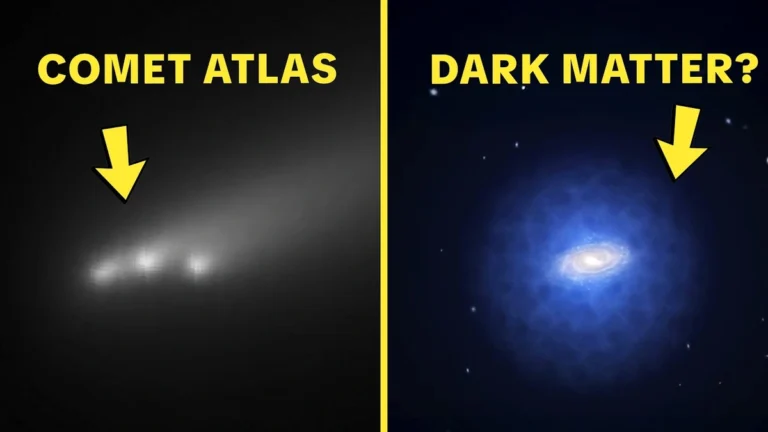
So, where does Project ATLAS fit into all of this? ATLAS (Asteroid Terrestrial-impact Last Alert System) is a system of telescopes designed to scan the sky for potentially hazardous asteroids. But it also has the potential to detect other unusual objects, like more interstellar visitors or even, dare I say, signs of extraterrestrial activity. ATLAS is our early warning system, constantly watching for anything that might pose a threat – or, perhaps, an opportunity.
Loeb is involved with various initiatives that complement ATLAS. He champions the idea of being proactive in the search for extraterrestrial intelligence (SETI) , not just passively listening for signals. This means actively looking for technological signatures – anything from artificial structures to unusual patterns in space. And with observatories like ATLAS constantly scanning the skies, the chances of spotting something truly extraordinary are increasing.
The Broader Implications | Why This Matters to India
Okay, you might be thinking, “This is all fascinating, but what does it have to do with me, sitting here in India?” That’s a fair question. Here’s why it matters. The search for extraterrestrial life isn’t just some pie-in-the-sky endeavor. It has profound implications for our understanding of the universe, our place in it, and the future of humanity. And India, with its growing scientific prowess and ambitious space program, has a crucial role to play.
Imagine the impact of discovering definitive proof of extraterrestrial life. It would revolutionize science, technology, and even our philosophical and religious beliefs. It could also lead to new technologies and solutions to some of humanity’s biggest challenges. India, with its rich history of scientific innovation and its diverse cultural perspectives, could be at the forefront of this revolution. Here’s another interesting theory to consider. But, let’s be honest, there is quite the challenge ahead as well.
Challenges and Criticisms | A Healthy Dose of Skepticism
Of course, Loeb’s extraterrestrial theories aren’t without their critics. Many scientists argue that there are more mundane explanations for objects like ‘Oumuamua. They point to the limitations of our current data and the possibility of unknown natural phenomena. And they’re right to be skeptical. Science thrives on skepticism. It’s what drives us to question, investigate, and refine our understanding of the world.
But here’s the thing: skepticism shouldn’t be confused with cynicism. It’s important to remain open to new ideas, even if they challenge our existing paradigms. As Loeb himself has said, “Extraordinary claims require extraordinary evidence, but we should be willing to consider all possibilities.” And that’s what makes his work so compelling. He’s not afraid to challenge the status quo and push the boundaries of scientific inquiry.
The Future of Space Exploration | India’s Role in the Search for Life
India is poised to play a significant role in the future of space exploration. With missions like Chandrayaan-3 and Gaganyaan, India is demonstrating its commitment to scientific advancement and its ambition to explore the cosmos. And as India’s space program continues to grow, it will have more opportunities to contribute to the search for extraterrestrial life.
Whether it’s developing new telescopes, analyzing data from space missions, or collaborating with international partners, India has the potential to make groundbreaking discoveries. And who knows, maybe one day, an Indian scientist will be the one to find the definitive proof that we are not alone in the universe. Now, that is a thrilling prospect.
FAQ About Avi Loeb and Extraterrestrial Theories
What is Avi Loeb’s most controversial theory?
Avi Loeb’s most controversial theory revolves around the object ‘Oumuamua, which he suggests could be an alien artifact or a piece of advanced technology, like a light sail. This challenges conventional explanations of interstellar objects.
What is Project ATLAS and how does it relate to this?
Project ATLAS (Asteroid Terrestrial-impact Last Alert System) scans the skies for potentially hazardous asteroids. Avi Loeb believes it could also detect unusual objects, including potential signs of extraterrestrial technology.
Why should people in India care about the search for extraterrestrial life?
The search for extraterrestrial life has profound implications for science, technology, and our understanding of the universe. India, with its growing scientific capabilities, can play a crucial role in this endeavor. Search for life beyond our own is not a pipedream.
Are Avi Loeb’s theories widely accepted in the scientific community?
No, Avi Loeb’s theories, particularly regarding ‘Oumuamua, face criticism and skepticism from many scientists. However, they also spark important discussions and encourage open-minded exploration of unconventional ideas.
What kind of evidence supports the claim of extraterrestrial life?
Currently, there is no definitive evidence to prove it, but that doesn’t mean there won’t be any in the future. The search continues to go on.
What if I don’t know much about space exploration?
No worries! There are some resources online that can help you become well-versed in no time. NASA and other science-based agencies are very helpful.
So, the next time you look up at the night sky, remember Avi Loeb and his audacious ideas. Remember the vastness of the universe and the endless possibilities it holds. And remember that the search for extraterrestrial life is not just a scientific quest, but a human one – a quest to understand our place in the cosmos and to answer the age-old question: are we alone?
About the Author