Avi Loeb's Comet Claim | What's He Hiding?
Okay, let’s be honest, space can be a bit… predictable. You’ve got your planets orbiting, your stars burning steadily (mostly), and your comets zipping around in nice, neat trajectories. That’s what makes the story of 3I/ATLAS so darn interesting. And when a renowned astronomer like Avi Loeb throws in his two cents, well, you know it’s going to be good. We have to ask ourselves, does 3I/ATLAS adhere to the expected physics?
Loeb, a Harvard astronomer known for his, shall we say, unconventional ideas (remember the ‘Oumuamua alien spaceship hypothesis? Good times!), is suggesting that this interstellar object, 3I/ATLAS, isn’t behaving like your average comet. But why does this matter, you ask? Well, that’s what we’re going to dive into. It all boils down to how we understand the universe and the objects within it. Is our knowledge complete? Or are there things that we cannot explain yet?
The Case of the Unpredictable Comet

So, what’s got Loeb all riled up? It’s the way 3I/ATLAS disintegrated as it approached the sun. Comets, as they get closer to our star, heat up and release gas and dust, creating that beautiful, iconic tail. But 3I/ATLAS didn’t just fizzle out gradually; it fragmented in a rather dramatic and, according to Loeb, unusual way. Its fragmentation process doesn’t align with the traditional models of cometary disintegration, suggesting there might be forces or compositions at play that we haven’t fully accounted for. This is where it gets juicy!
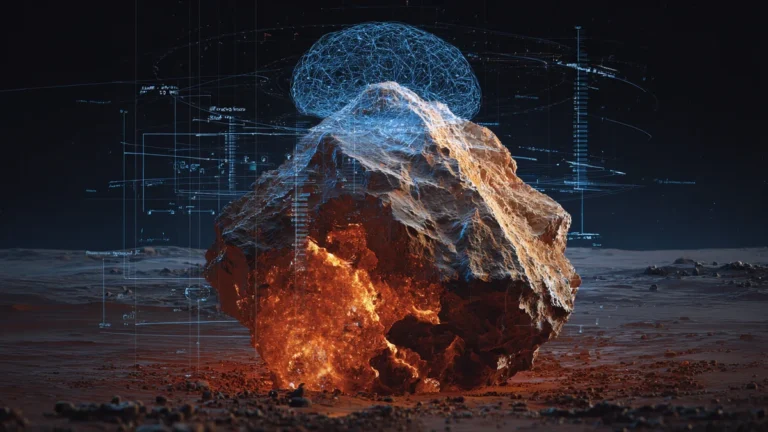
Loeb proposes that 3I/ATLAS might be a “dust bunny” – a loosely held-together collection of dust particles rather than a solid, icy body. Think of it like a snowball that’s mostly fluff. As it gets closer to the sun, that fluff just… poofs. It is important to consider alternative hypotheses when astronomical events do not meet the standards of expected results.
How This Challenges Our Understanding of Comets
Here’s the thing: our current understanding of comets is based on observations of comets within our solar system. We have a model based on evidence, but what happens when something from outside our solar system shows up and acts differently? Does the interstellar object challenge our comet physics knowledge?
This is where 3I/ATLAS gets interesting. If Loeb is correct, it suggests that comets in other star systems might form differently than our own. It could also tell us about the composition of the interstellar medium – the stuff that floats around between stars. Finding purpose and understanding the universe can be correlated. The implications are big.
I initially thought that this new comet was just like the other comets. But, thinking about how big the universe is, it is reasonable to infer that there are numerous planetary systems, and comets in other planetary systems might not have similar characteristics.
The ‘Oumuamua Connection and the Search for Extraterrestrial Intelligence (SETI)
You can’t talk about Avi Loeb without mentioning ‘Oumuamua. This was another interstellar object that zipped through our solar system a few years back, and Loeb famously suggested it could be an alien light sail. Controversial? Absolutely. But it highlights Loeb’s willingness to think outside the box and challenge conventional wisdom.
And that’s what makes his take on 3I/ATLAS so compelling. He’s not just saying, “This comet is weird.” He’s saying, “This comet is weird, and maybe it’s telling us something important about the universe, about how planetary systems form, and maybe, just maybe, about the possibility of extraterrestrial life .”
The search for life beyond Earth is something that fascinates many people around the world. Whether or not there is life in other regions of the universe, we need planetary scientists and renowned astronomers like Avi Loeb to help the human species better understand our place in the cosmos.
What Does This Mean for the Future of Astronomy?
Whether Loeb is right or wrong about 3I/ATLAS being a “dust bunny,” his hypothesis is valuable. It forces us to question our assumptions and to develop new models for understanding comets and other interstellar objects. It encourages further research and observations, pushing the boundaries of our knowledge.
Moreover, it highlights the importance of studying objects from outside our solar system. These interstellar visitors can provide valuable insights into the diversity of planetary systems and the composition of the interstellar medium. Think about it: we’ve been studying our own backyard for centuries. Now, we have the chance to learn about the neighborhoods next door.
The Broader Implications for Scientific Inquiry
Ultimately, the story of 3I/ATLAS and Avi Loeb’s interpretation of its behavior is a lesson in scientific inquiry. It’s about questioning established theories, proposing new ideas, and being willing to challenge the status quo. Science isn’t about having all the answers; it’s about asking the right questions. And sometimes, the most interesting discoveries come from the most unexpected places – like a comet that doesn’t follow the rules.
What fascinates me is that it is something that we can all think about. You do not need to be an astronomer to wonder about what is beyond our atmosphere. Even an ordinary person can ponder the vastness of space. The universe is filled with interesting things, and this unusual interstellar event proves it.
So, the next time you look up at the night sky, remember 3I/ATLAS. Remember the importance of questioning . And remember that even in the vastness of space, there are still surprises waiting to be discovered.
FAQ Section
Frequently Asked Questions
What exactly is 3I/ATLAS?
3I/ATLAS is an interstellar object, meaning it originated from outside our solar system. It was discovered by the ATLAS survey in 2020.
Why is Avi Loeb’s interpretation controversial?
Loeb often proposes unconventional explanations for astronomical phenomena, challenging mainstream scientific thinking. While sometimes controversial, these ideas prompt valuable discussions and further research.
What’s the difference between a comet and an asteroid?
Comets are icy bodies that release gas and dust as they approach the sun, creating a tail. Asteroids are typically rocky or metallic and don’t usually have tails.
Could 3I/ATLAS pose a threat to Earth?
No, 3I/ATLAS passed safely through our solar system and is now moving away from the sun.
Where can I learn more about interstellar objects?
You can find information on NASA’s website and in scientific journals such as Nature and Science.
About the Author