
First Kiss | Older Than We Thought?
Imagine this: a world without the clumsy, heartwarming, sometimes awkward experience of a first kiss . It’s hard to picture, right? We associate kissing with romance, affection, and well, being human. But a recent study throws a fascinating wrench into that picture, suggesting that the origins of kissing might predate humanity by a whopping 21 million years! What fascinates me is, where did scientists even begin to unearth this information?
The ‘Why’ Behind This Prehistoric Smooch
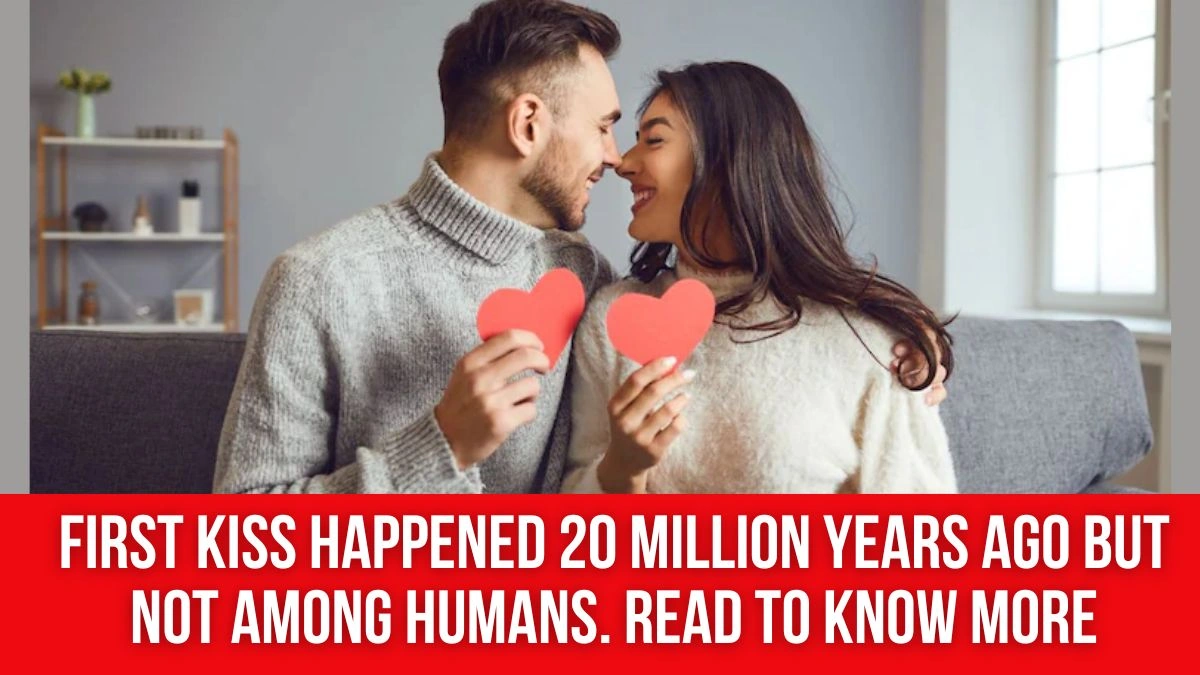
Here’s the thing: this isn’t just about some paleontologist stumbling upon an ancient lipstick stain. The research delves into the evolutionary history of oral sex and mouth-to-mouth contact in early mammals. Why does it matter? Because it challenges our assumptions about human behavior and its roots. It suggests that what we consider a uniquely human expression of intimacy could have far deeper, more primal origins. Think about that the next time you see a rom-com!
But, it is important to understand the science of kissing. This study, published in the journal Proceedings of the Royal Society B, isn’t claiming they found cave paintings of primates locking lips. Instead, scientists traced the evolution of certain oral diseases – specifically, the oral herpes virus. The transmission of these viruses requires close contact, and by analyzing the evolutionary relationships of the viruses and their hosts (ancient mammals), researchers could infer when mouth-to-mouth contact first became a common behavior. This is a classic example of using a biological marker to trace behavior through vast stretches of time. It’s like detective work on a geological scale!
Tracing Back the Kiss | Viral Evidence
Let’s be honest, trying to find evidence of kissing from millions of years ago sounds like an impossible task. The study authors cleverly sidestepped the limitations of the fossil record by focusing on the evolutionary history of herpes simplex virus 1 (HSV-1) and similar pathogens. Here’s how this type of analysis works:
By examining the genetic code of the virus, scientists are able to approximate when it first branched off from its ancestral forms. By comparing that to the evolutionary timelines of the mammals the viruses infected, they can estimate when close contact behaviors like kissing first emerged. This method isn’t foolproof, of course. It relies on assumptions about the rate of viral evolution and the specificity of the host-virus relationship. But, it’s a pretty clever way to get around the lack of direct behavioral evidence.
Implications for Understanding Human Behavior
So, what does this all mean for us, the modern kissers? Well, it suggests that the urge to kiss might be more deeply ingrained than we previously thought. It’s not just a learned cultural behavior; it could be rooted in our mammalian heritage . “I initially thought this was a load of hooey, but it is really interesting,” said Professor Bryce Richards of Cornell University.
And, if kissing has been around for millions of years, it likely served important functions beyond just romance. It could have played a role in social bonding, mate selection, or even the transmission of immunity (through exposure to saliva containing antibodies). We often think of kissing as a purely pleasurable activity, but evolutionarily speaking, there may be more to it than meets the lips. Consider also the oral transmission of disease, what could be some causes as it relates to interstellar objects?
But here’s where I get a little skeptical: Can we definitively say that the mouth-to-mouth contact they’re tracing is exactly what we think of as kissing? Or could it be related to feeding behaviors (like a mother bird feeding its chicks) or other forms of social grooming? I’m not saying the study is wrong, but it’s important to consider alternative interpretations.
Kissing Customs Across Cultures
What fascinates me even more is how culturally specific kissing is. While it’s a widespread expression of affection in many Western societies, other cultures have historically viewed it with suspicion or even disgust. Some cultures traditionally kiss the ground that they are walking on. So, this makes me question how much of kissing truly stems from ancient instincts.
There are different reasons why some cultures may not participate in kissing. Some relate to hygiene while other cultures may believe that kissing introduces an exchange of one’s spirit. It’s a great reminder that while biology may lay the foundation for certain behaviors, culture shapes how we express them. As per the guidelines mentioned in the information bulletin , cultural acceptance could lead to the behavior.
The Future of Kissing Research
This study is a starting point. There are countless questions left unanswered. What was the role of kissing in the evolution of human language? How has kissing influenced the spread of infectious diseases? And what can the study of animal behavior tell us about the origins of our own kissing habits?
Let me rephrase that for clarity: Future research will hopefully delve deeper into the cross-cultural variations in kissing behavior. The analysis of ancient DNA and viral genomes may shed new light on the timing and geographical origins of kissing. But, it all depends on having the right equipment and access to specimens to test. Ultimately, understanding the ancient kiss might just give us a better understanding of ourselves.
FAQ About the Ancient Kiss
Is this study saying dinosaurs kissed?
Not exactly. The study focuses on early mammals, not dinosaurs. However, the research does suggest that mouth-to-mouth contact behaviors predate humans by millions of years.
Does this mean kissing is purely instinctual?
Not necessarily. While the study suggests a deep evolutionary history, culture clearly plays a role in shaping how we express kissing.
Could this study be wrong?
Like any scientific study, it has limitations. The reliance on viral evolution as a proxy for behavior means the conclusions are not definitive.
What are the main risks of kissing?
The primary risks are the transmission of diseases such as herpes, mononucleosis (“mono”), and even, in rare cases, certain bacterial infections.
Can kissing boost your immune system?
Potentially, yes. Exposure to saliva during kissing can introduce new microbes and stimulate antibody production, which may strengthen your immune system over time.
What are some interesting facts about kissing?
Kissing burns calories, releases endorphins, and can lower blood pressure. Plus, the science of kissing is called philematology.
About the Author