3I/ATLAS | The Comet That Changed Everything?
Okay, let’s talk about something that’s been buzzing around the astronomy community: 3I/ATLAS . But what’s the big deal? Why should you, sitting here in India, even care about some icy rock hurtling through space? Here’s the thing: it’s not just some icy rock. It’s an interstellar visitor, a cosmic traveler from beyond our solar system, and its story is way more fascinating than you might think. This time, we’re diving deep into the “Why” angle. Forget just the facts; let’s explore the implications, the hidden contexts, and why this particular comet has captured the imagination of scientists and space enthusiasts alike.
The Interstellar Traveler | A Cosmic Immigrant
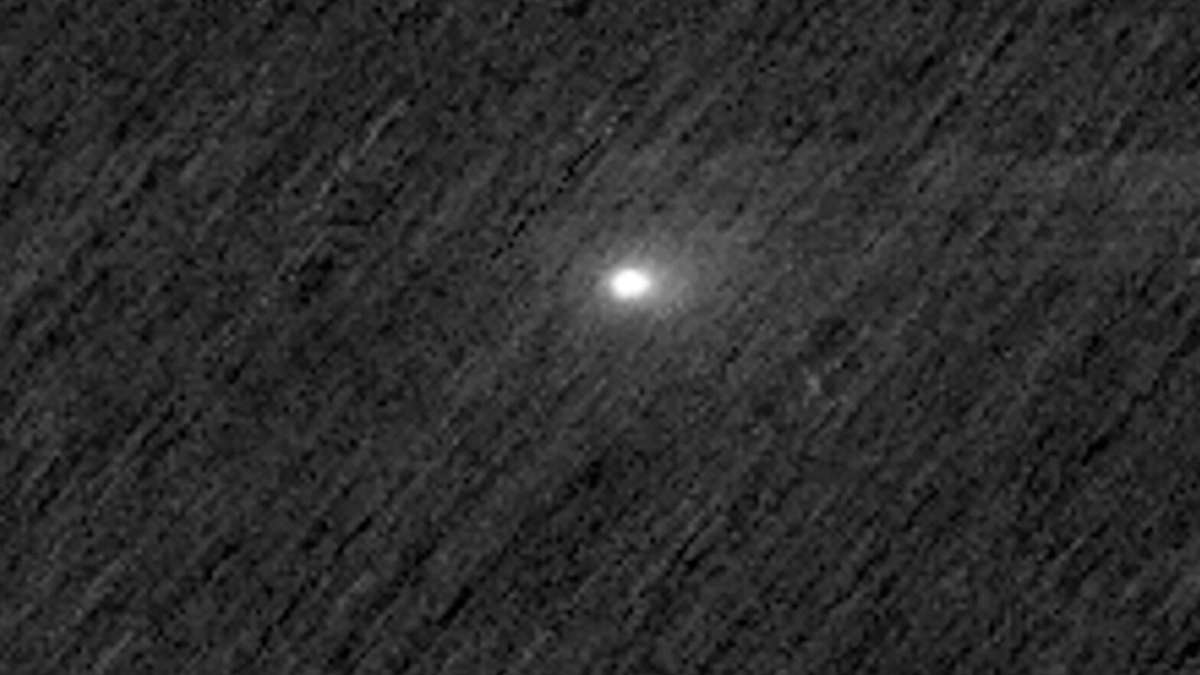
Imagine Earth. Now imagine leaving Earth. That’s what 3I/ATLAS’s interstellar origin did – eons ago. Discovered by the Asteroid Terrestrial-impact Last Alert System (ATLAS), hence the name, this comet isn’t like the others in our cosmic neighborhood. Most comets we see are residents of our solar system, born from the leftover debris of its formation. 3I/ATLAS, however, is an immigrant. Its trajectory and speed indicate it came from somewhere far, far away – another star system, another sun, another set of planets we can only dream about.
What fascinates me is the sheer improbability of it all. Think about the vast distances between stars. Imagine a comet being ejected from its home system, traveling for millions or billions of years through the cold, empty void of interstellar space, and then, by sheer chance, passing through our little corner of the galaxy. It’s like winning the cosmic lottery.
Why 3I/ATLAS Matters | More Than Just a Space Rock
But why does it matter? Let’s be honest, most of us are more concerned with getting our chai right in the morning than with comets. But 3I/ATLAS offers a unique opportunity to study material from another star system up close and personal – well, relatively. The analysis of the comet’s composition , its gases, and its dust can provide invaluable clues about the formation and evolution of planetary systems beyond our own. This is where I/ATLAS comes into play.
Think of it like this: if you wanted to understand the culture of a foreign country, wouldn’t you want to examine artifacts brought from that country? 3I/ATLAS is a cosmic artifact, a messenger from another world. By studying it, we can learn about the building blocks of planets, the chemical processes that occur in other star systems, and potentially even the conditions that might lead to the emergence of life.
According to NASA’s Jet Propulsion Laboratory ( jpl.nasa.gov ), interstellar objects provide a snapshot into alien planetary systems. It’s like receiving a time capsule containing information from a distant civilization, only this time, the capsule is made of ice and dust.
The Hunt for Interstellar Visitors | A New Era of Discovery
3I/ATLAS isn’t the first interstellar object we’ve detected. That honor belongs to ‘Oumuamua, a mysterious object discovered in 2017. ‘Oumuamua had a very elongated shape, was small, and did not emit gas like a normal comet, and its trajectory puzzled scientists. The discovery of ‘Oumuamua and then 3I/ATLAS has opened a new era in astronomy – the era of interstellar object detection.
Telescopes like the Vera C. Rubin Observatory, currently under construction in Chile, will be able to scan the skies much more efficiently, potentially discovering many more interstellar visitors. Each new discovery will add another piece to the puzzle, helping us to build a more complete picture of the galaxy and our place within it.
What’s so exciting is that these interstellar comets detection could become almost routine in the coming years. This isn’t just about cataloging space rocks; it’s about fundamentally changing our understanding of the universe. It will allow us to see just how unique (or not) our own solar system is.
Challenges and Future Research | What’s Next for 3I/ATLAS?
Unfortunately, 3I/ATLAS is already receding from our solar system, heading back into the interstellar void. This means we won’t have another chance to study it up close. Also, this comet’s orbit makes it hard to predict when it might be back.
But the data collected during its passage will keep scientists busy for years to come. They will analyze its composition, study its trajectory, and compare it to other comets and asteroids to understand its origins and its journey. Future missions could potentially target interstellar objects for closer study, perhaps even sending probes to collect samples and bring them back to Earth for analysis.
And, this may be controversial, but who knows, maybe one day, we’ll be the ones sending probes to other star systems.
Think of it as the ultimate cultural exchange program – cosmic edition.
The Broader Implications | Our Place in the Cosmos
So, what’s the ultimate takeaway? 3I/ATLAS, and other interstellar objects, remind us that we are not alone. Not in the sense of little green men, but in the sense that our solar system is just one of countless others, each with its own unique history and composition. It shows that we are connected to the rest of the galaxy in ways we are only beginning to understand.
It is a reminder that our origins go beyond the cosmic dust from which our solar system formed. This also shows that everything we do on Earth matters and how we manage our environment will matter. Moreover, it reinforces the idea that science is a journey, not a destination. Every new discovery raises new questions, pushes the boundaries of our knowledge, and inspires us to explore further. As technology evolves, scientists will gain access to better tools to study 3I/ATLAS’s orbit and cometary activity .
And that, my friends, is why 3I/ATLAS is a big deal. This is why we should care and be excited. It’s not just about a comet; it’s about understanding our place in the universe and exploring the infinite possibilities that lie beyond our solar system. It’s about the enduring human quest for knowledge and the thrill of discovering something new. The comet may be long gone, but its legacy of exploration and discovery will endure. Its orbital path is one of the most studied in astronomy. Speaking of that, you can find more information here on our website.
FAQ About 3I/ATLAS
What exactly is 3I/ATLAS?
It’s an interstellar comet, meaning it originated from outside our solar system. It was discovered by the ATLAS survey.
How is 3I/ATLAS different from other comets?
Its trajectory and speed indicate it came from another star system. Most comets are from our own solar system.
Can we still see 3I/ATLAS?
No, it’s already receding from our solar system and is no longer visible to telescopes.
What can scientists learn from 3I/ATLAS?
Its composition can provide clues about the formation of planetary systems beyond our own. Also, we can measure the comet’s speed .
How was the comet named?
The “I” stands for interstellar, and ATLAS is the name of the survey that discovered it.
Will 3I/ATLAS ever come back?
Due to its current trajectory, scientists are unsure when the comet will return to our solar system.
About the Author