Interstellar Comet | Alien Ship?
Okay, let’s be honest: space is weird . And every now and then, something truly bizarre shows up to remind us just how little we know. Recently, a video of an interstellar comet , specifically 3I/ATLAS, went viral. It’s glowing. Glowing brightly. The internet, naturally, exploded. Are we looking at an alien spaceship? A natural, but unusual, phenomenon? Let’s dive in, shall we?
The “Why” Angle | Unpacking the Significance of Interstellar Comets
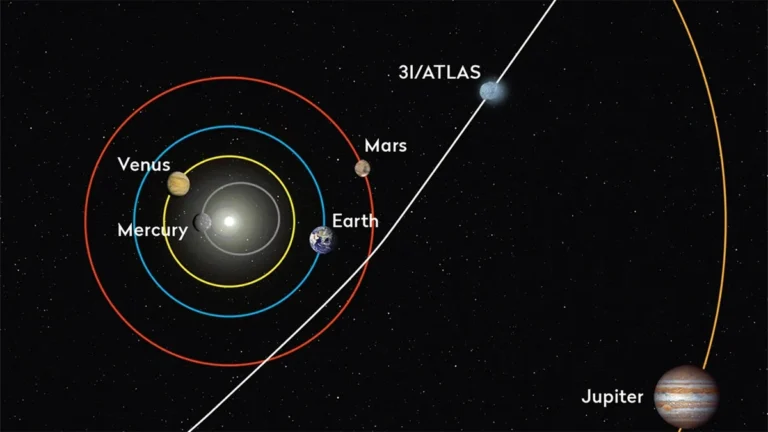
Here’s the thing: comets themselves aren’t that unusual. We’ve seen them for millennia. What makes 3I/ATLAS special – and why it’s setting the internet on fire – is its origin. It’s not from around here. It’s an interstellar object , a cosmic traveler from another star system. Think about that for a moment. It’s like finding a message in a bottle that’s drifted across an entire ocean. Except the ocean is space, and the bottle is a chunk of ice and rock.
So, why does this matter? Well, for starters, it gives us a rare opportunity to study the building blocks of other solar systems. By analyzing the composition of 3I/ATLAS, scientists can glean insights into the conditions that prevailed around a distant star, potentially billions of years ago. This is huge. Imagine if we could determine whether other star systems have the same raw materials as ours – the kind that could potentially lead to the formation of planets, and maybe even life. That’s the kind of potential we’re talking about.
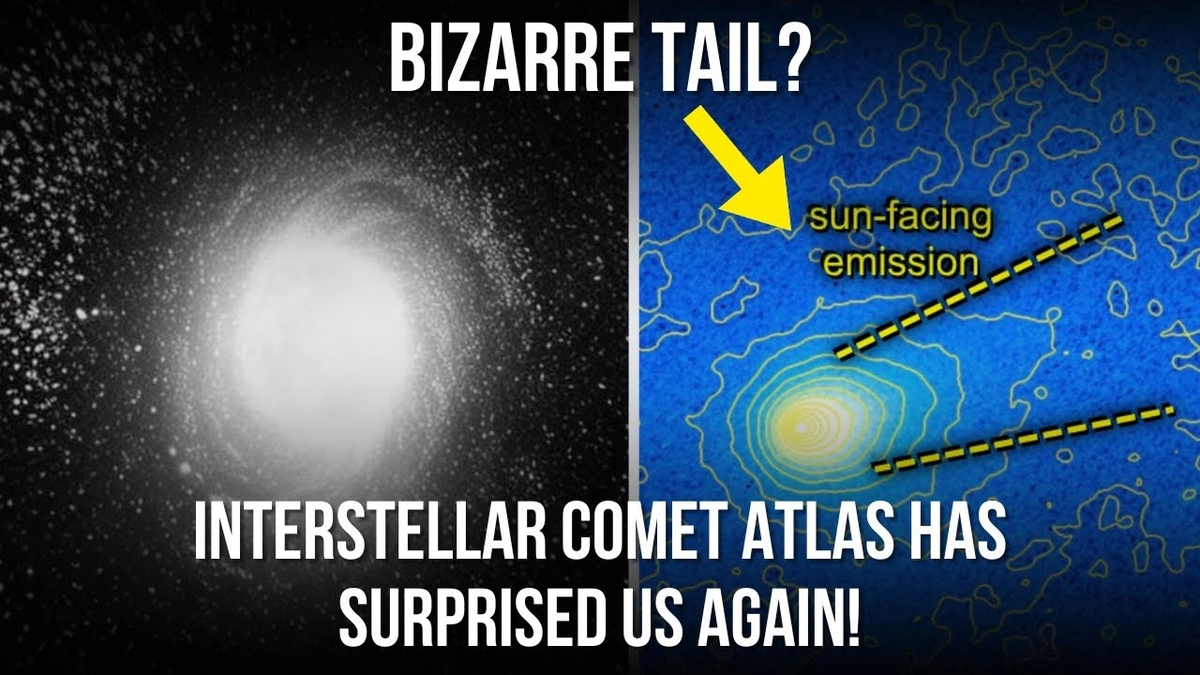
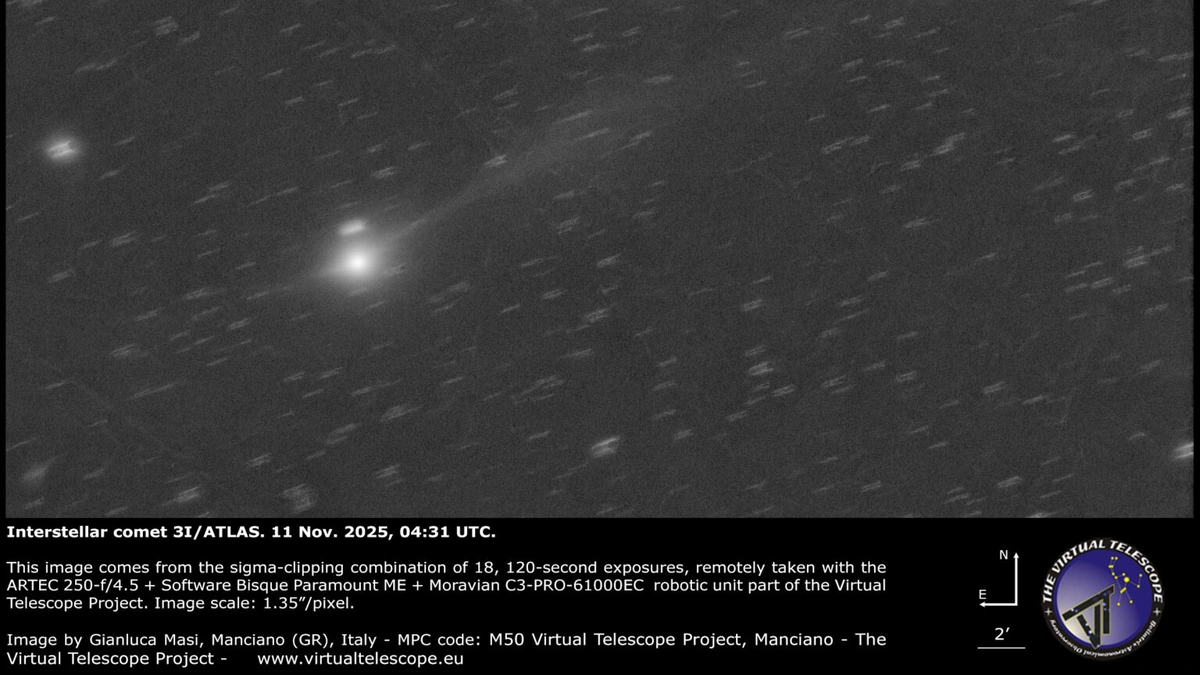
The glow, however, adds another layer of intrigue. Comets often glow as they approach the sun. Solar radiation energizes the gases escaping from the comet’s nucleus. But the intensity and color of the glow can vary depending on the comet’s composition and its interaction with the solar wind. Which brings us to the alien spaceship theory…
Alien Spaceship or Natural Phenomenon?
Let’s be real: the idea of an alien spaceship is tempting. Our minds leap to the extraordinary. But Occam’s Razor the principle that the simplest explanation is usually the correct one often applies. While it’s fun to speculate about extraterrestrial visitors, the more likely explanation for the comet’s glow is a natural phenomenon. It’s probably due to an unusual combination of gases and dust being released as the comet gets closer to our sun. NASA also explains this particular comet with a natural phenomena.
That doesn’t mean we should dismiss the possibility of alien life entirely. Exploring space and looking for signatures of other intelligent life forms are valid avenues of scientific inquiry. But extraordinary claims require extraordinary evidence. And so far, a glowing comet, while cool, doesn’t quite meet that threshold. What fascinates me is the human tendency to seek patterns and meaning, even when faced with the vast and seemingly random nature of the cosmos.
What we know for sure is this comet originated outside of our solar system. This fact alone makes it an oddity. An international team of astronomers are working to understand what they’re seeing. With larger telescopes we will have more clarity.
The Science Behind the Glow | Cometary Composition and Solar Interaction
Delving deeper, the “glow” is essentially a form of luminescence. The cometary composition interacts with the sun’s radiation. Ultraviolet light excites the molecules in the comet’s coma (the fuzzy atmosphere surrounding the nucleus). As these molecules return to their normal energy state, they release photons – light. The specific wavelengths of light emitted depend on the specific molecules present. Different gases glow with different colors. The color we saw in the viral video likely indicates the presence of specific elements and compounds. According to Wikipedia , comets are cosmic snowballs of frozen gases, rock, and dust.
The solar wind – a stream of charged particles constantly emitted by the sun – also plays a role. It can interact with the comet’s coma and tail, creating complex electromagnetic phenomena that can further enhance the glow. The intensity of the solar wind varies, which could explain why the glow appears to fluctuate in the video.
Why This Matters to You, Sitting Right Here in India
Okay, I get it. You might be thinking, “So what? It’s a comet, far, far away. What does this have to do with me?” Well, consider this: the universe is connected. What we learn about distant stars and comets can help us understand the origins of our own solar system, our own planet, and ultimately, ourselves. The study of interstellar comets pushes the boundaries of human knowledge. Moreover, it inspires curiosity and wonder – qualities that are essential for progress in any field.
The next time you look up at the night sky, remember 3I/ATLAS. Remember that there are objects out there, traveling across vast distances, carrying secrets from other worlds. And remember that even the most distant phenomenon can have profound implications for our understanding of the universe and our place within it. The night sky is within reach to anyone with a pair of binoculars or a telescope. Here’s a guide for finding the December night sky .
The Future of Interstellar Object Research
The discovery of 3I/ATLAS and other interstellar visitors has opened a new chapter in astronomical research. Scientists are now actively searching for more of these objects, using advanced telescopes and sophisticated data analysis techniques. They hope to learn more about the diversity of planetary systems in our galaxy, and to understand how these objects contribute to the overall composition of the interstellar medium. The hope is also to understand the conditions of the early solar system.
The study of interstellar objects also raises intriguing questions about the possibility of panspermia – the idea that life can spread throughout the universe via comets and asteroids. Could 3I/ATLAS be carrying organic molecules, or even microorganisms, from another star system? It’s a long shot, but it’s a question worth asking.
FAQ About Interstellar Comets
What exactly is an interstellar comet?
It’s a comet that originated outside our solar system and is just passing through.
How do scientists know it’s from another star system?
Its trajectory and speed are so high that it’s not gravitationally bound to our sun.
Could an interstellar comet hit Earth?
The chances are extremely low, given the vastness of space.
What if I missed the viral video?
Search online! Many sources show what the comet’s glow looked like.
Are more interstellar comets expected?
Yes, scientists are actively searching for them using advanced telescopes.
So, while the viral video might have sparked a flurry of speculation about alien spaceships, the reality of interstellar comets is far more profound and fascinating. They are messengers from distant stars, offering us a glimpse into the building blocks of other worlds. And that, my friends, is a story worth watching – even if it doesn’t involve little green men. The night sky is full of wonders, and it all starts with looking up. This leads to many discoveries, like kissing ancient origins.
About the Author