Comet Mystery | Did NASA Miss Something?
What fascinates me about space isn’t just the sheer size of it all it’s the mysteries that constantly pop up, challenging everything we think we know. And the story of Comet 3I/ATLAS, as interpreted (or perhaps misinterpreted?) by NASA, is a perfect example. Avi Loeb, the Harvard professor known for his, shall we say, unconventional views on extraterrestrial life, has thrown a fascinating wrench into the works. But, let’s be honest, is it truly a wrench, or just a well-reasoned alternative explanation? Let’s dive in and see why this matters to anyone who gazes up at the night sky and wonders.
A Cosmic Detective Story | Loeb’s Perspective on Interstellar Objects
Loeb, never one to shy away from a controversial opinion, has suggested that NASA might be overlooking crucial details about Comet 3I/ATLAS. According to him, the data collected by NASA, while extensive, could be interpreted differently pointing towards the possibility of something far more intriguing than a simple chunk of ice and rock. Consider this : What if the comet’s unusual behavior isn’t due to natural causes? What if it’s something… else?
Now, before you roll your eyes and dismiss it as pure speculation, remember that Loeb isn’t just pulling theories out of thin air. He’s basing his claims on observable data, specifically the comet’s trajectory, its speed, and its unusual disintegration pattern. The why behind his questioning comes from a place of scientific rigor, challenging the prevailing narrative and pushing for a deeper investigation.
He is urging us to consider the possibility of advanced alien technology. While this sounds like science fiction, it’s rooted in the anomaly that the comet doesn’t fit neatly into established models. This approach is key in scientific discovery. It forces us to ask harder questions.
NASA’s Response (or Lack Thereof) and the Implications
Here’s the thing: NASA hasn’t exactly rushed to embrace Loeb’s theories with open arms. Which is understandable; after all, suggesting alien involvement is a pretty big leap. But the lack of a robust counter-argument or a more in-depth investigation is, to some, a bit concerning. It raises the question: are we truly exploring all possibilities, or are we sticking to comfortable, pre-defined explanations? This ties to the mystery of interstellar objects .
The implications of this are huge. If Loeb is right, even partially, it means we need to rethink our approach to space exploration and data analysis. It means being more open to unconventional ideas and being willing to challenge our own assumptions. Let me rephrase that for clarity: It’s about maintaining scientific integrity and asking the “what ifs,” even when they seem outlandish.
Analyzing the Evidence | What Makes Comet 3I/ATLAS So Unique?
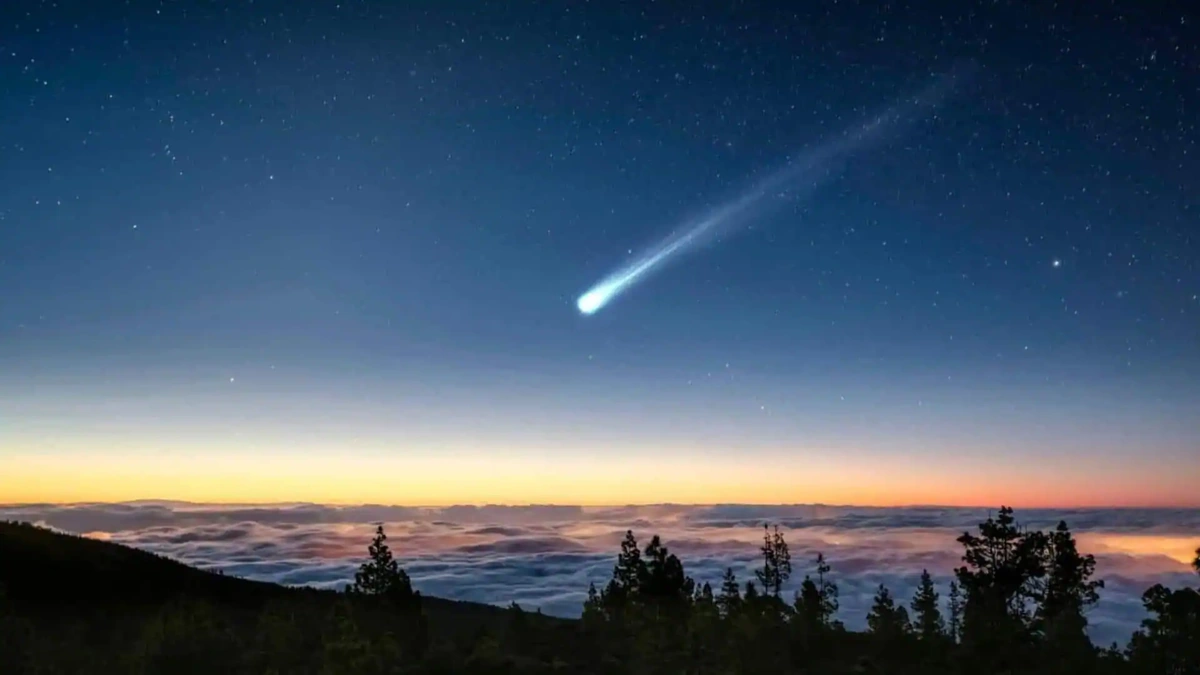
So, what makes this particular comet so special? Well, for starters, it’s an interstellar object, meaning it originated from outside our solar system. That alone makes it fascinating. Its composition, its speed, and the way it disintegrated as it approached the sun are all somewhat unusual. And you have to wonder , is the data complete, or are we missing critical pieces of the puzzle?
A common mistake I see people make is assuming that all comets behave the same way. They don’t. Each one is unique, with its own history and characteristics. However, 3I/ATLAS stands out due to its extremely rapid fragmentation, which has led some scientists to speculate on its weak internal structure or unusual composition. What fascinates me is the potential for cometary dust to reveal the secrets of other star systems.
The Broader Context | The Search for Extraterrestrial Life and Our Biases
This whole situation touches upon a much larger topic: the search for extraterrestrial life. We are bound to have our own biases as we explore the universe. Are we only looking for what we already know exists? Should we consider the possibility of unknown lifeforms? As per the article on Oumuamua , some scientists suggest it could be extraterrestrial technology. It’s a concept that challenges traditional views of what life is and how it behaves.
And that, my friends, is the core of the issue. Are we limiting ourselves by only considering possibilities that fit within our current understanding of the universe? Are we afraid to entertain the idea that something truly extraordinary might be out there? This reminds me of the time I thought a blurry photo was a UFO, but it was just a bird reflecting the sunlight – we often see what we want to see. The key to unlocking our understanding might be observational astronomy and being open to new explanations.
Beyond the Comet | A Call for Open-Minded Scientific Inquiry
Ultimately, the story of Comet 3I/ATLAS and Avi Loeb’s interpretation isn’t just about a single space rock. It’s about the scientific process itself. It’s about questioning assumptions, exploring alternative explanations, and being willing to admit that we might not have all the answers. It is about the importance of pushing boundaries and daring to think differently. But at the same time, it’s about respecting established science and basing our theories on evidence, not just wishful thinking.
It’s about encouraging a more open and collaborative approach to scientific discovery. Perhaps NASA and Loeb could work together, combining their expertise and resources to conduct a more thorough investigation. The search for cosmic understanding might lead us to the possibility of alien artifacts and extraterrestrial intelligence .
The pursuit of knowledge is never linear. It’s full of twists and turns, disagreements and debates. And it’s through these challenges that we ultimately learn and grow. The why of this whole saga is to expand our understanding of the universe. We should strive to ask questions that challenge our beliefs. So, let’s keep looking up, keep questioning, and keep exploring the mysteries that lie beyond our world.
FAQ Section
What is Comet 3I/ATLAS?
It’s an interstellar comet, meaning it originated outside our solar system. It’s been the subject of much scientific interest due to its unusual behavior.
Why is Avi Loeb questioning NASA’s interpretation?
Loeb believes that the data collected on 3I/ATLAS could be interpreted differently, potentially pointing towards something more intriguing than just a regular comet.
What kind of evidence is Loeb using to support his claims?
Loeb bases his theories on the comet’s trajectory, speed, and unusual disintegration pattern.
Is NASA actively investigating Loeb’s claims?
While NASA hasn’t fully embraced Loeb’s theories, it’s likely they are aware of his perspective and may be considering it in their ongoing research.
What are the implications if Loeb is correct?
If Loeb is right, it could mean we need to rethink our approach to space exploration and data analysis. The nature of space exploration could change dramatically.
Where can I find more information about Comet 3I/ATLAS?
You can check NASA’s official website or scientific publications for the latest updates and research findings. Always look to trusted and official resources.
About the Author