Telescope Moving? The Shocking Reason Why!
The news rippled through the astronomy community like a solar flare: the Thirty Meter Telescope (TMT), one of the most ambitious scientific instruments ever conceived, might be packing its bags and moving from its planned location on Mauna Kea in Hawaii to the Canary Islands in Spain. But, why the potential relocation? And what does it mean for the future of astronomical research, especially for us here in India?
The Heart of the Matter | Why the Potential Move?
Let’s be honest, the story behind the TMT’s possible move is complex, steeped in cultural sensitivities and scientific ambition. The telescope was originally slated for construction atop Mauna Kea, a dormant volcano in Hawaii considered sacred by Native Hawaiians. Protests and legal challenges, rooted in concerns about the mountain’s cultural significance and environmental impact, have stalled the project for years. This is not just about building a telescope; it’s about respecting indigenous rights and finding a balance between scientific progress and cultural preservation. The controversy around the telescope has been ongoing.
The official website provides moreinformation about the TMT project.
And so, the TMT International Observatory (TIO) – the consortium backing the project – began exploring alternative sites. The Roque de los Muchachos Observatory on La Palma in the Canary Islands, Spain, emerged as the leading contender. But even with an alternative location, questions remain.
Spain vs. Hawaii | A Tale of Two Observatories
So, how do these locations stack up against each other? Mauna Kea, with its high altitude, dry atmosphere, and minimal light pollution, is considered one of the best astronomical observing sites on Earth. The Canary Islands, while not quite as pristine, still offer excellent observing conditions. The Roque de los Muchachos Observatory already hosts a suite of world-class telescopes, benefiting from stable atmospheric conditions and robust infrastructure.
But the scientific community is concerned about potential weather differences between the sites. As reported on Wikipedia , The atmospheric seeing at the planned location on La Palma may not always be as good as on Mauna Kea. What fascinates me is how the scientific community balances optimal atmospheric conditions with sociopolitical concerns. The discussion includes observational astronomy.
Here’s the thing: the move isn’t just about finding a new patch of land. It’s about adapting the entire project to a new environment. This means re-evaluating everything from the telescope’s design to the observing strategies. It also means potentially increased costs and delays, further complicating an already complex situation. This all affects astronomical research.
The Implications for India | A Closer Look
India is a significant partner in the TMT project, contributing expertise, technology, and funding. The potential relocation has significant implications for Indian astronomers and the country’s role in cutting-edge astronomical research. Indian scientists are involved in the development of key components for the Thirty Meter Telescope , including its sophisticated mirror control system. A move to Spain could affect the logistics of these contributions, potentially requiring adjustments to shipping, installation, and collaboration protocols.
But, it’s not all doom and gloom. A stable, operational TMT in Spain could actually provide more reliable access for Indian astronomers, who have faced challenges accessing Mauna Kea due to the ongoing protests. It presents a unique opportunity for international collaboration in astronomical explorations. It is hoped that this collaboration will promote scientific discoveries.
Furthermore, the shift highlights the growing importance of international partnerships in big science projects. It underscores the need for careful consideration of cultural and environmental factors in the planning and execution of large-scale scientific endeavors. Let’s consider the challenges of space exploration .
TMT and the Future of Astronomy
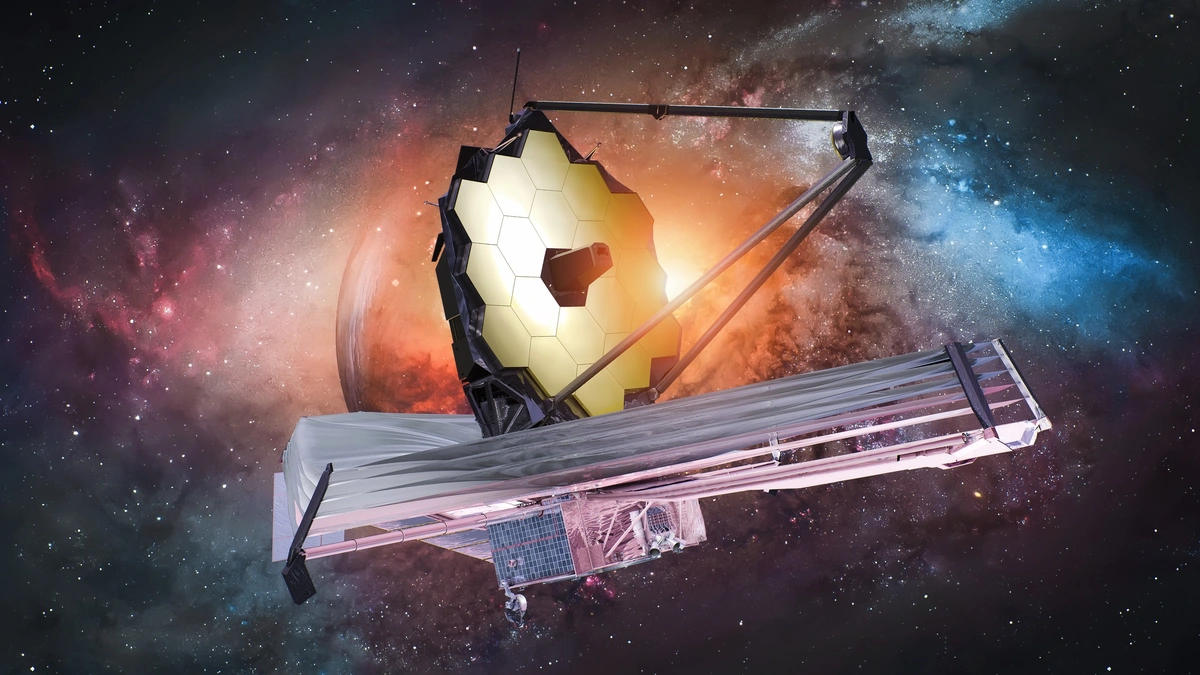
Regardless of its final location, the TMT represents a giant leap forward in our ability to observe the universe. With its massive 30-meter primary mirror, it will be able to collect significantly more light than existing telescopes, allowing astronomers to probe deeper into the cosmos and study fainter, more distant objects. The relocation decision impacts the future trajectory of observational capabilities.
The TMT will enable us to study the formation of galaxies, the evolution of stars, and the search for exoplanets – planets orbiting stars beyond our solar system. It will also allow us to test fundamental laws of physics and explore the nature of dark matter and dark energy, two of the biggest mysteries in modern cosmology. It’s not just about seeing farther; it’s about understanding more. The future of astronomy may depend on this telescope.
So, What’s Next?
The final decision on the TMT’s location rests with the TIO board. A comprehensive assessment of the Roque de los Muchachos Observatory is underway, and a decision is expected in the near future. Meanwhile, efforts to address the concerns of Native Hawaiians and find a path forward for the TMT on Mauna Kea continue. The TMT project is a complex endeavor with lots of moving parts.
Ultimately, the TMT’s journey highlights the complex interplay of science, culture, and politics in the 21st century. It serves as a reminder that scientific progress must be pursued in a responsible and respectful manner, taking into account the needs and concerns of all stakeholders. And for us in India, it’s a chance to be at the forefront of astronomical discovery, no matter where the giant telescope eventually calls home.
FAQ Section
What exactly is the Thirty Meter Telescope?
The Thirty Meter Telescope (TMT) is an extremely large telescope (ELT) with a 30-meter primary mirror, designed for astronomical observations across a wide range of wavelengths.
Why is the TMT considering moving from Hawaii?
Construction on Mauna Kea has been stalled due to protests and legal challenges related to the mountain’s cultural significance to Native Hawaiians.
What are the alternative locations being considered?
The Roque de los Muchachos Observatory on La Palma in the Canary Islands, Spain, is the leading alternative site.
How is India involved in the TMT project?
India is a partner in the TMT project, contributing expertise, technology, and funding.
What kind of research will the TMT enable?
The TMT will enable studies of galaxy formation, star evolution, exoplanets, and fundamental physics.
Will the telescope actually be 30 meters?
Yes, the telescope’s primary mirror will be 30 meters in diameter, making it one of the largest and most powerful telescopes on Earth.
About the Author