Universe End Date | The Exact Doomsday?
Okay, folks, buckle up. Because we’re about to dive into a topic that’s both mind-bendingly huge and surprisingly… finite. Scientists are making some pretty bold claims about the universe end date, and how it’s all going to go down. Not in a metaphorical, “end of the world” kinda way. We’re talking the actual end. Everything. Vanished. Forever. Sounds like a sci-fi movie, right? But this is real science, and honestly, it’s making me question my evening chai plans.
The Big Freeze | A Cosmic Deep Dive
So, how do scientists even begin to predict something as colossal as the universe’s demise? Here’s the thing: they’re not just gazing into crystal balls (although, wouldn’t that be cool?). They’re using the laws of physics, extrapolating from what we know about the universe’s expansion, and running simulations that make my laptop weep. And the prevailing theory? It’s called the “Big Freeze,” also known as heat death of the universe .
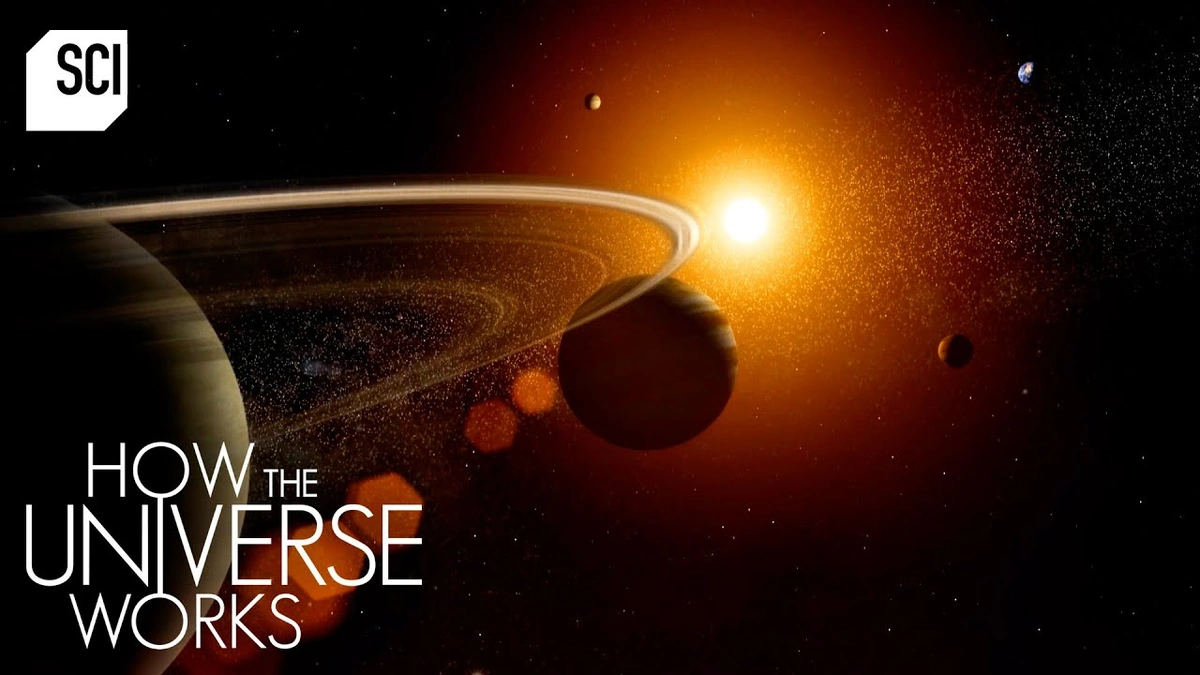
Now, the Big Freeze isn’t some sudden, dramatic event. Think of it more like a slow, agonizing fade. The universe is constantly expanding and as it expands, it cools. Eventually, it’ll reach a point where everything is so spread out and cold that no more stars can form. No new energy, no new life – just a vast, dark, and incredibly lonely emptiness. I initially thought this was just speculation, but when you dive into the astrophysics, the sheer scale of time involved is staggering. We’re talking trillions upon trillions of years. The human mind barely comprehends it.
Why Should We Care About the Universe’s Inevitable End?
Let’s be honest – most of us are more concerned with paying the bills and dealing with traffic than the eventual fate of the cosmos . But here’s why this matters, even to you and me, sipping our chai in Mumbai or Bangalore. Thinking about the ultimate fate of the universe forces us to confront some pretty profound questions. What is our place in this grand cosmic tapestry? What is the meaning of life, the universe, and everything when, eventually, it all disappears?
It’s not about morbid fascination; it’s about perspective. Understanding the sheer scale of time and the universe makes our daily problems seem a little smaller. It reminds us to appreciate the beauty and wonder of the present moment. And, perhaps more practically, it fuels scientific curiosity. The more we understand about the universe, the better equipped we are to protect our own little corner of it. Plus, understanding the cosmic timeline is just plain cool. It makes for great conversation at parties, trust me!
The Exact Date and Method | Digging into the Details
Okay, so let’s get to the juicy part: the date. Scientists aren’t pinpointing an exact day and time (sorry, doomsday preppers). But they’re talking about a timeframe – and it’s mind-bogglingly far into the future. We’re talking about 10^100 years (that’s a 1 followed by 100 zeros). To put that in perspective, the universe is currently about 13.8 billion years old. So, we’ve got a bit of time left. The method, as mentioned earlier, is the Big Freeze. The universe will continue to expand, and the temperature will approach absolute zero. Stars will burn out, black holes will eventually evaporate through Hawking radiation (yes, even black holes die!), and everything will eventually reach a state of maximum entropy – basically, complete disorder.
The research regarding future of the universe is based on complex mathematical models and simulations. These models take into account various factors, including the expansion rate of the universe, the distribution of matter and energy, and the properties of dark energy. According to the latest research, the heat death scenario is the most probable outcome for the universe, given our current understanding of physics. But, and this is a big but, our understanding is constantly evolving. New discoveries could change the predictions.
Challenges and Alternative Theories | It’s Not a Done Deal
Science is never settled. While the Big Freeze is the leading theory, there are other possibilities. The Big Rip, for example, suggests that dark energy could become so strong that it eventually tears apart all matter, from galaxies to atoms. Then there’s the Big Crunch, a sort of reverse Big Bang where the universe collapses back in on itself. And let’s not forget the possibility of something completely unexpected – a scientific revolution that rewrites our understanding of the cosmos. It’s important to remember that the far future is, well, far away. Our current models are based on the physics we know today, but who knows what we’ll discover tomorrow?
One of the biggest challenges in predicting the end of the universe is the mystery surrounding dark energy. Dark energy is a mysterious force that is causing the universe to expand at an accelerating rate. Its nature and behavior are still not fully understood, and it could play a crucial role in determining the ultimate fate of the cosmos. It’s the cosmic equivalent of that one relative who always throws a wrench in your carefully laid plans. But it’s this uncertainty that makes science so exciting. There are still so many mysteries to unravel, and the quest to understand the universe is far from over.
Living in the Shadow of Eternity | A Philosophical Reflection
So, what does all this mean for us, the tiny inhabitants of a small planet orbiting an average star in a vast and ever-expanding universe? Maybe it’s a call to appreciate the fragility and preciousness of life. Maybe it’s a reminder to cherish our connections with others and to make the most of our time here. Or maybe it’s just a really good excuse to contemplate the universe while sipping your evening chai. Whatever your takeaway, the thought of the universe’s eventual demise is undeniably profound. It challenges us to think big, to question everything, and to appreciate the sheer wonder of existence. And that, my friends, is something worth pondering.
The impermanence of the universe might seem depressing, but it can also be liberating. Knowing that everything will eventually vanish frees us from the burden of taking ourselves too seriously. It allows us to embrace the present moment and to find joy in the simple things. It’s like realizing that you’re a character in a play. Once the final curtain falls, you won’t be remembered as the main character or even the antagonist, but just a tiny cog in the larger scheme of things. It makes the cosmic insignificancealmost… peaceful. A sobering thought, indeed.
FAQ | Your Universe End Date Questions Answered
Frequently Asked Questions
What exactly is the Big Freeze?
The Big Freeze is the theory that the universe will continue to expand and cool until it reaches a state of maximum entropy, where no new stars can form and all energy is evenly distributed.
Is the Big Freeze the only possible end for the universe?
No, there are other theories, such as the Big Rip and the Big Crunch, but the Big Freeze is currently the most widely accepted.
When is the universe predicted to end?
Scientists estimate the universe will end around 10^100 years from now.
Should I be worried about the universe ending?
Not really. It’s going to happen trillions of years from now, there are far more pressing matters to focus on in the meantime.
Could new discoveries change these predictions?
Absolutely! Science is always evolving. New discoveries about dark energy or other cosmic phenomena could change our understanding of the universe’s fate.
What is Hawking radiation?
Hawking radiation is a theoretical process by which black holes emit radiation and eventually evaporate over extremely long timescales.
About the Author