

Swift Observatory's SOS | Can Robots Save It?
Here’s the thing: We’ve all seen those movies where a satellite is about to crash to Earth, and some plucky team has to race against time to fix it. Well, real life sometimes imitates art, and that’s precisely what’s happening with the Swift Observatory . This incredible piece of equipment, hurtling through space and diligently observing gamma-ray bursts, is facing a potential crisis. And the solution? A robotic rescue mission spearheaded by Katalyst, using a Pegasus rocket. Sounds like science fiction, right? But it’s very real, and it’s important. Let’s dive into why.
Why the Swift Observatory Needs Rescuing – and Why You Should Care
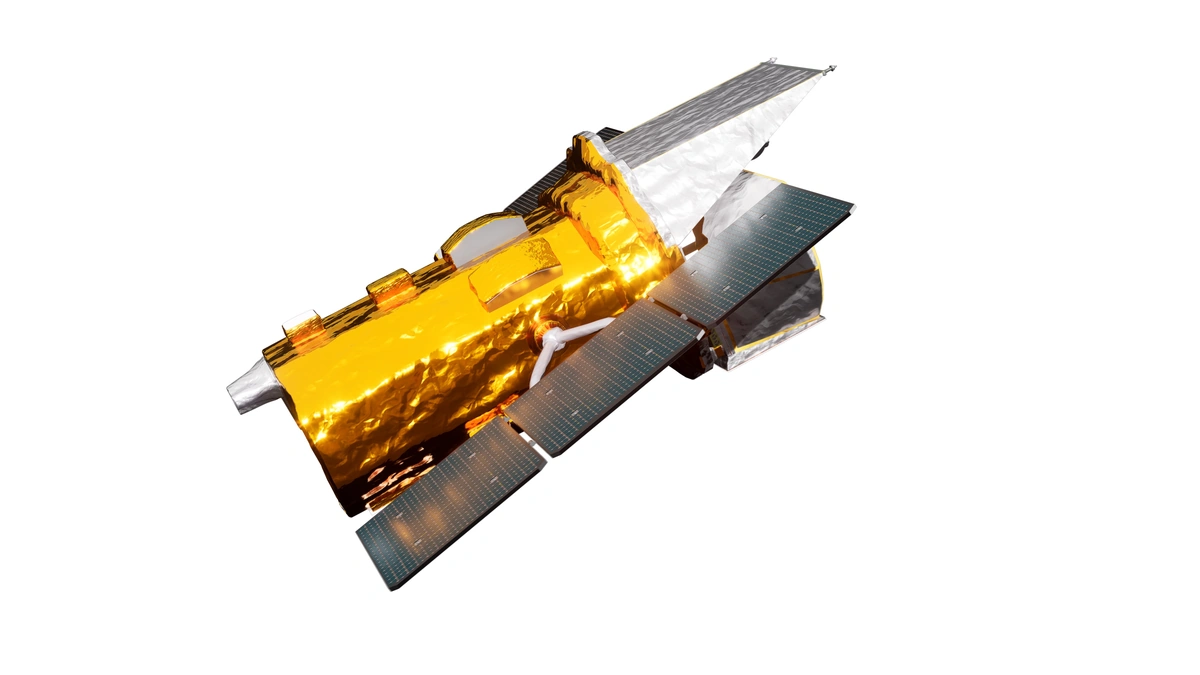
Let’s be honest, space missions are expensive. Insanely expensive. So, when something goes wrong, it’s not just a minor inconvenience; it’s a potential disaster for scientific progress. The Swift Observatory , launched back in 2004, has been a workhorse for astronomers. It’s provided invaluable data about gamma-ray bursts – the most powerful explosions in the universe. These bursts can tell us about the formation of black holes, the death of massive stars, and even the early universe itself. So, the risk is far beyond just one satellite.
But here’s the catch: over time, the Swift Observatory’s orbit has been decaying. It’s slowly losing altitude, and without intervention, it could eventually re-enter the Earth’s atmosphere and burn up. That would mean losing all that valuable data and the potential for future discoveries. This is where Katalyst comes in. They’re not just planning a mission; they’re planning a robotic ballet in space. Katalyst is taking on the monumental task of boosting Swift’s orbit and ensuring its continued operation, and it’s doing so via a robotic mission launched from a Pegasus rocket.
The Katalyst Solution | A Pegasus Rocket to the Rescue
So, how does one actually go about rescuing a satellite in space? It’s not like you can just send up a mechanic with a wrench (though, that would be a pretty cool movie). Katalyst’s plan involves using a Pegasus rocket, which is launched from an aircraft, to deliver a robotic spacecraft to the Swift Observatory . This robotic spacecraft will then dock with the observatory and use its own thrusters to nudge it back into a higher, more stable orbit. It’s a delicate operation that requires precise timing and engineering. If this rescue attempt is unsuccessful, there will be a significant loss of astronomical data .
What fascinates me is the elegance of this solution. Instead of building a brand new, expensive satellite, Katalyst is leveraging existing technology to extend the life of a valuable asset. This approach could revolutionize how we think about space missions and satellite maintenance in the future. It’s sustainable thinking, and it’s good for space exploration . But there are other reasons why this is an exciting development.
Why This Matters to India
Now, you might be thinking, “Okay, this is cool, but what does it have to do with me in India?” Well, here’s the thing: space exploration is a global endeavor, and India is playing an increasingly important role. The success of missions like Chandrayaan-3 has demonstrated India’s growing capabilities in space technology. Moreover, the data collected by observatories like Swift are shared with scientists around the world, including those in India. Access to this data allows Indian researchers to contribute to our understanding of the universe and to develop their own expertise in astrophysics. So, the more data, the better for the Indian scientific community. Thesuccess of Swiftalso leads to possibilities of future international collaboration.
And let’s not forget the inspiration factor. Seeing a private company like Katalyst take on such a challenging mission can inspire young Indians to pursue careers in science, technology, engineering, and mathematics (STEM). It shows them that anything is possible with creativity, determination, and a little bit of rocket science.
The Future of Satellite Rescue Missions
This robotic rescue of the Swift Observatory could be a game-changer for the future of satellite maintenance. If Katalyst succeeds, it could pave the way for similar missions to extend the lifespan of other valuable satellites in orbit. This would not only save money but also reduce the amount of space debris – a growing concern in the space industry. Think about it: instead of launching new satellites every few years, we could simply send up robotic repair crews to fix and upgrade the ones we already have. It’s a more sustainable and efficient approach to space exploration.
The other possibility is that this paves the way for asteroid mining. Now, a lot of the news coming out of space exploration right now is related to new launch vehicle technology . However, there are an almost unlimited number of useful elements and resources on asteroids in the solar system. A mission like this shows that we could eventually get the materials we need from the cosmos, which leads to fewer issues here on our own planet.
What’s Next for Gamma-Ray Burst Research?
Even if Katalyst is successful, this is not the end of the story. This means that more research can be done. Future discoveries can potentially unlock even more doors. Whatreally excites meis the possibility of discovering even more unusual phenomena in the universe. Here are a few of the areas that the Swift Observatory can continue to investigate:
- Study of gravitational waves
- Discovery of new black holes
- Observation of supernovas
So, keep an eye on this mission. It’s not just about saving a satellite; it’s about pushing the boundaries of human ingenuity and expanding our understanding of the universe. And who knows, maybe one day, a team of Indian scientists will be using the data from the Swift Observatory to make the next groundbreaking discovery. That would be something truly special.
FAQ About the Swift Observatory Rescue Mission
What exactly is the Swift Observatory?
The Swift Observatory is a NASA-led space telescope dedicated to studying gamma-ray bursts (GRBs), which are the most powerful explosions in the universe.
Why is it important to rescue the Swift Observatory?
Without intervention, the Swift Observatory’s orbit will decay, causing it to re-enter the Earth’s atmosphere and burn up, resulting in the loss of valuable scientific data.
How will Katalyst rescue the Swift Observatory?
Katalyst plans to use a Pegasus rocket to launch a robotic spacecraft that will dock with the observatory and boost it back into a higher, more stable orbit.
What if the rescue mission fails?
If the rescue mission fails, there will be a significant loss of astronomical data , hindering future research on gamma-ray bursts and other celestial phenomena.
Where can I find more information about the Swift Observatory and the rescue mission?
You can find more information on the NASA website here or by searching for articles about Katalyst’s mission.
About the Author