Perseverance Rover's Odd Find | Alien Visitor?
Okay, let’s be honest. When we hear about the Perseverance rover on Mars, we usually expect images of red dust, sweeping landscapes, and maybe some geological formations. But what if I told you the rover stumbled upon something… different? Something that has scientists scratching their heads and sparking debates about Martian history? A weird, metallic rock – possibly an alien visitor – has turned up, and it’s more intriguing than you might think.
The Mysterious Rock | What We Know
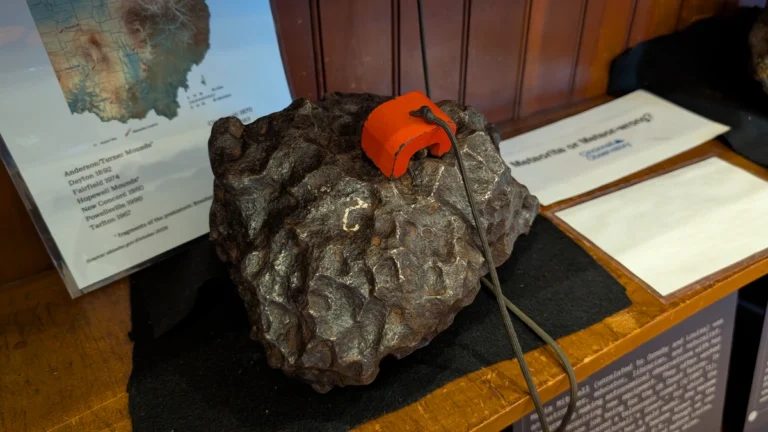
The find isn’t just some random pebble. This is an iron-nickel rock, and its composition is throwing researchers for a loop. The immediate question that pops into mind is whether it is a meteorite. Martian meteorites, ejected from the surface after asteroid impacts, are relatively common finds on Earth; so perhaps the inverse can happen? But how would this ‘visitor’ get here? This isn’t your garden-variety space rock; it’s got an unusual blend of elements that suggests a potentially different origin story. And that’s where things get really interesting. We are talking about the potential for understanding planetary geology better.
Why This Discovery Matters | The Analyst’s Angle
Here’s the thing: a discovery like this isn’t just a cool snapshot for the news. It’s potentially a game-changer for how we understand Mars and the solar system itself. It forces us to ask some big questions. Did this rock originate from a different part of Mars, flung to the location by some cataclysmic event? Or did it hitch a ride from elsewhere in the solar system, making its way to the Martian surface? Understanding the composition and origin of this extraterrestrial material could give us insights into the early solar system’s formation and the processes that shaped the planets. It could also offer clues about the delivery of key elements – like water – to early Mars. What fascinates me is that this could rewrite textbooks. Not immediately, of course. But discoveries like this chip away at our established knowledge.
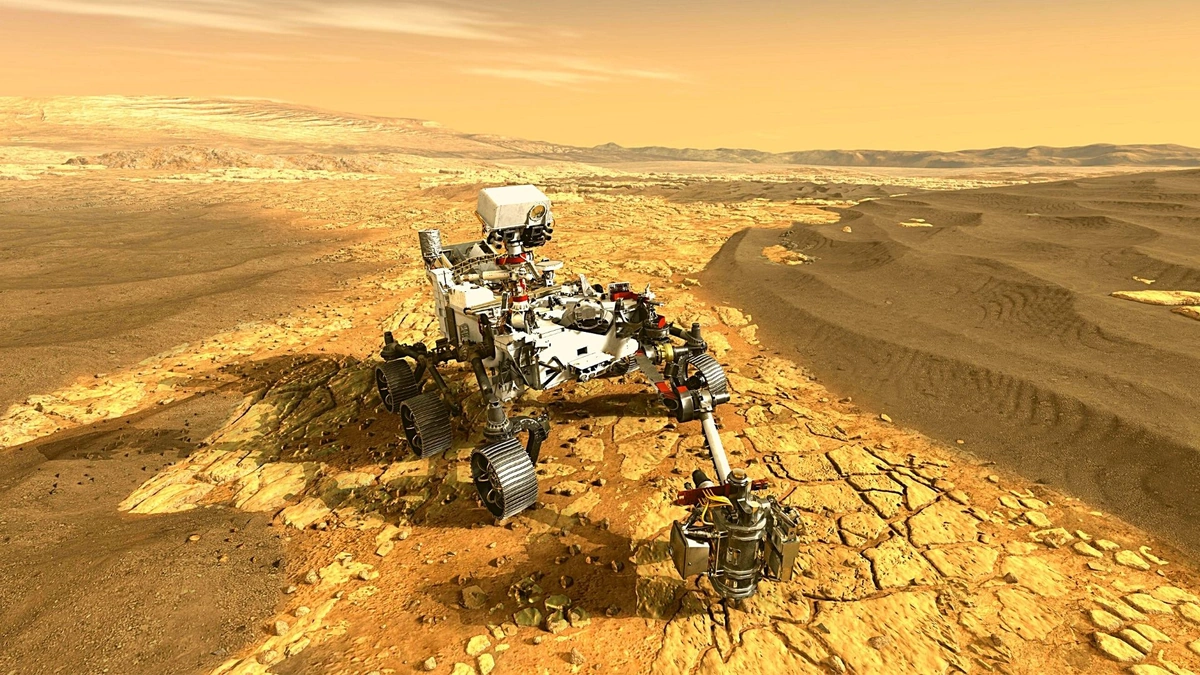
And the fact that the Perseverance rover , a sophisticated piece of technology designed to hunt for signs of past life, found this anomaly adds another layer of intrigue. It highlights the unpredictable nature of scientific exploration; sometimes, the most significant discoveries are the ones you least expect. It’s a testament to the importance of having the right tools in the right place at the right time. Let’s be honest, this wasn’t on anyone’s bingo card.
A Martian ‘Visitor’ | How It Challenges Our Assumptions
Let’s dive deeper into the possibilities, shall we? If this rock is indeed a meteorite, it raises some fascinating questions about the exchange of material between planets. We know that impacts can eject debris into space, and some of that debris can eventually land on other planetary bodies. But the frequency of these events, and the types of materials that can survive the journey, are still open questions. This discovery provides a tangible data point that can help us refine our models of interplanetary transfer . Imagine the implications if we can trace the rock back to its original source – perhaps an asteroid belt, or even another planet entirely!
But, there’s also the possibility that the rock isn’t a meteorite at all. Maybe it’s a fragment of Mars that was ejected during a major impact event, and then re-landed in a different location. Or perhaps it’s a piece of ancient Martian crust with a unique composition that we haven’t encountered before. That’s where further investigation will be needed. The rover’s instruments will need to analyze the rock’s mineralogy and geochemistry to determine its origin and history. This could involve using the rover’s laser to vaporize a small portion of the rock and then analyzing the light emitted to identify its constituent elements. It’s like a high-tech detective story, and the Perseverance rover is our Sherlock Holmes.
What’s Next? The Search for Answers
So, what happens now? Well, the Perseverance rover isn’t going to just shrug its metallic shoulders and move on. The science team will undoubtedly be focusing its instruments on this oddball rock, trying to gather as much data as possible. This will likely involve a detailed analysis of its chemical composition, its texture, and its relationship to the surrounding geology. The goal is to try and piece together the rock’s history and determine its origin.
And, of course, the discovery will spark a flurry of theoretical work back on Earth. Scientists will be dusting off their models of planetary formation, impact dynamics, and cosmic dust dispersal , trying to see if they can explain the rock’s existence. It’s a classic case of observation driving theory, and it’s one of the things that makes science so exciting.
It is also important to put this discovery in perspective with the overall mission of the Perseverance rover . The primary goal is to search for signs of past microbial life. This find, while exciting, is not directly related to that objective. However, it highlights the potential for unexpected discoveries and the importance of exploring the unknown. Sometimes, the most interesting findings are the ones you don’t set out to find.
The Broader Context | Why Martian Exploration Matters
Let me rephrase that for clarity. Why should someone sitting in Delhi or Mumbai care about a weird rock on Mars? Well, for one thing, it’s about expanding our understanding of the universe and our place within it. Exploring Mars helps us learn about the processes that shaped our own planet, and it gives us insights into the potential for life beyond Earth. But there’s also a more practical side to it. The technologies developed for space exploration often have applications here on Earth. From advanced materials to medical devices, the innovations that come from pushing the boundaries of science can benefit us all. Not to mention inspiring the next generation of scientists and engineers. We should not underestimate the value of science education; visit this article to learn more.
And, of course, there’s the sheer human spirit of exploration. The desire to venture into the unknown, to push the limits of what’s possible, is a fundamental part of who we are. It’s what drove our ancestors to cross oceans and climb mountains, and it’s what drives us to explore the solar system today. Perhaps this iron-nickel rock from somewhere else will lead to a new theory regarding martian geological history .
In conclusion, the discovery of this odd rock by the Perseverance rover is more than just a quirky news story. It’s a reminder that there’s still much we don’t know about Mars, and that the process of exploration is full of surprises. It’s a testament to the power of scientific curiosity and the importance of pushing the boundaries of knowledge. Keep checking here to keep up with this story.
FAQ About the Perseverance Rover and Its Discoveries
What exactly is the Perseverance rover’s mission?
The Perseverance rover’s main goal is to look for signs of past microbial life on Mars. It’s also collecting rock and soil samples for a potential future return to Earth.
What if this rock is a meteorite from another planet?
If it is, it would be a huge deal! It could give us insights into the composition and history of other planetary bodies in our solar system.
How does Perseverance actually analyze rocks on Mars?
Perseverance has a suite of sophisticated instruments, including lasers and spectrometers, that can analyze the chemical composition and mineralogy of rocks from a distance.
Will this discovery delay the search for past life?
Not likely. While this is an interesting find, the primary mission remains the search for biosignatures. It is important to keep up with new developments on sites like NASA’s official page.
What is the significance of finding iron-nickel on Mars?
Iron-nickel alloys are often found in meteorites, making this discovery particularly interesting. It could indicate an extraterrestrial origin for the rock.
Could this discovery lead to future missions?
Absolutely! Discoveries like this can spark new research questions and inspire future missions to explore Mars in even greater detail.
About the Author