Mars Water Mystery | Radar Signals Deceive?
Okay, let’s be honest: the idea of liquid water sloshing around under the Martian South Pole? It’s ridiculously exciting. For years, hints from radar data pointed to this very possibility – a tantalizing prospect for potential Martian life and a treasure trove for understanding the planet’s geology. But… and it’s a big “but” new research is throwing a wrench into that wonderfully watery vision.
Here’s the thing: it’s not that the radar data is wrong, per se. It’s that we might be misinterpreting it. Instead of large pools of liquid water, these radar signals could be explained by something far less romantic: the composition of the Martian soil itself. So, what does this all really mean? And why does it even matter in the grand scheme of space exploration ?
The “Why” Angle | Why This Matters
Let’s dig into the “why” here. It’s easy to say, “Oh, scientists found something, then they un-found it.” But that’s a massive oversimplification. The search for liquid water on Mars is more than just a hunt for cool puddles . It’s fundamentally linked to the possibility of past or present life. Liquid water is essential for all life as we know it. If we find it, especially in a relatively stable form, it dramatically increases the chances of discovering signs of biological activity.
What fascinates me is that this entire debate highlights how much we don’t know about Mars’ subsurface . We’re interpreting data from hundreds of millions of kilometers away based on our understanding of Earth-based geology. But Mars isn’t Earth. Its history is different, its composition is different, and its environment is wildly different. We need to be cautious about projecting our assumptions onto another planet.
And that’s precisely why this research is so important. It forces us to re-evaluate our methods, challenge our assumptions, and develop more sophisticated ways of interpreting data from other planets. It’s not a setback; it’s a course correction. It means we need to get smarter, more nuanced, and more creative in our search for life beyond Earth. Consider the implications of these radar reflections .
What the Radar Actually Shows (and Doesn’t Show)
Okay, let’s break down the radar data. The MARSIS (Mars Advanced Radar for Subsurface and Ionosphere Sounding) instrument aboard the European Space Agency’s Mars Express orbiter has been beaming radar waves at Mars for years. When these waves hit a boundary between materials with different electrical properties, they reflect back to the spacecraft. The strength and timing of these reflections provide clues about what lies beneath the surface.
Initially, bright reflections under the South Polar Layered Deposits (SPLD) were interpreted as evidence of liquid water. The SPLD is a massive stack of ice and dust, and liquid water at its base would be incredibly interesting. But new research, like that published in Geophysical Research Letters, suggests that these bright reflections could be caused by the presence of certain types of clay minerals or even salty perchlorates in the ice. Salty perchlorates are known to lower the melting point of water, potentially creating brine-like solutions even at very low temperatures. But it’s important to remember that brine composition significantly influences interpretations.
So, the radar is showing something unusual. The question is, what? And the answer is proving far more complex than a simple “yes” or “no” to liquid water.
The Role of Martian Soil Composition
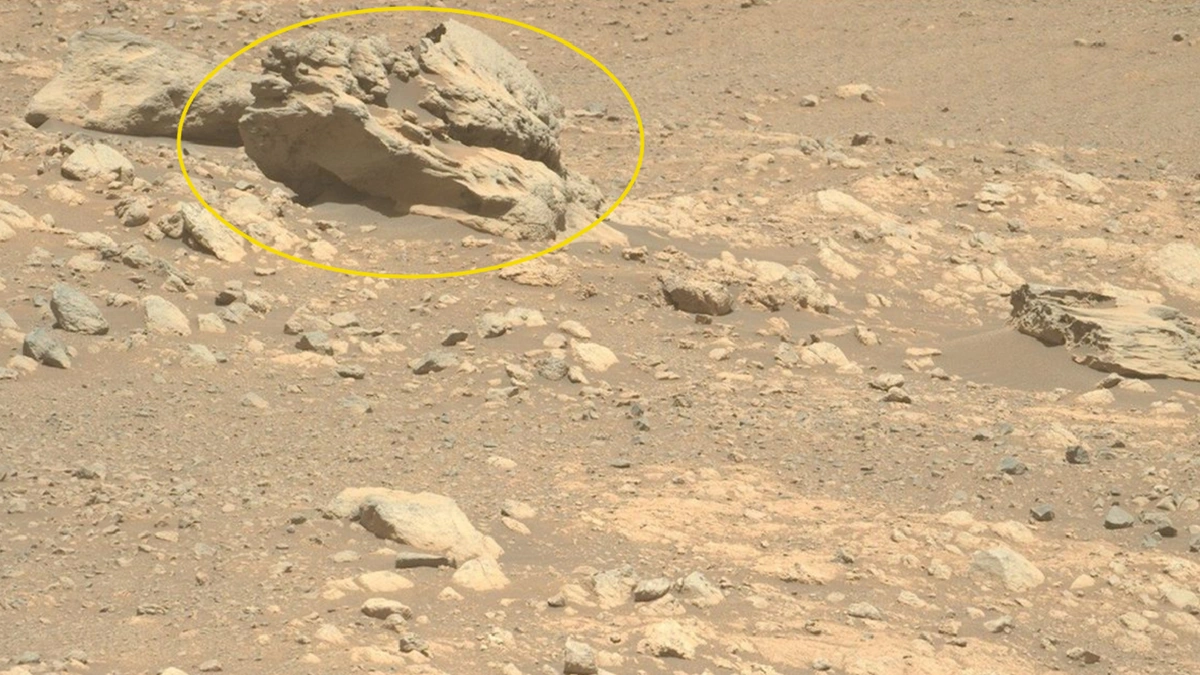
This is where things get really interesting. Let’s talk about Martian soil composition . What fascinates me is that Mars is famously red, thanks to iron oxide (rust) on its surface. But the composition of the subsurface is far less well-understood. What if pockets of highly conductive materials, like specific clays or mineral deposits, are scattered throughout the ice? These could mimic the radar signature of liquid water without actually being liquid water.
Scientists are now working on laboratory experiments to test how different materials, under Martian-like conditions (low temperature, low pressure), interact with radar waves. These experiments are crucial for calibrating our interpretations of the data coming from Mars . They allow us to create a kind of “radar Rosetta Stone” that can help us translate the signals we’re receiving into accurate information about the planet’s subsurface.
What This Means for Future Exploration
Does this mean we should abandon the search for liquid water on Mars ? Absolutely not! It means we need to refine our techniques and broaden our search parameters. The possibility of liquid water – and, by extension, the possibility of life – is still very much on the table. What we need are better tools, more sophisticated models, and a willingness to challenge our own assumptions. This also affect planetary protection protocols .
Future missions, equipped with more advanced radar systems and even subsurface probes, will be crucial for resolving this mystery. Imagine a probe that can actually drill down into the SPLD and directly sample the materials at its base. That would be a game-changer! But until then, we need to rely on careful analysis of existing data, combined with cutting-edge laboratory experiments, to piece together the puzzle of Mars’ subsurface . The ongoing debate sparks innovations .
The Broader Implications for Science
Beyond Mars , this whole situation highlights a fundamental challenge in planetary science: interpreting remote data. We’re essentially trying to understand incredibly complex systems based on limited information. It’s like trying to diagnose a medical condition based on a blurry X-ray – you can get some clues, but you need to be cautious about drawing definitive conclusions. The data regarding subglacial lakes remains challenging to interpret.
This challenge applies not only to Mars , but to every planet and moon we study. From the icy moons of Jupiter and Saturn to the scorching surface of Venus, we’re constantly pushing the boundaries of what we can know from afar. And that requires a healthy dose of skepticism, a willingness to question our own interpretations, and a constant pursuit of better data and better models.
FAQ About Water on Mars
Is there definitely no liquid water on Mars?
Not necessarily! The new research simply complicates the picture. It suggests that some radar signals previously interpreted as liquid water might have other explanations. The possibility of liquid water still exists, but it’s not as clear-cut as we once thought.
What are the implications if there’s no liquid water?
It would significantly reduce the chances of finding extant (currently living) life on Mars , as liquid water is essential for life as we know it. However, it wouldn’t rule out the possibility of past life. Fossils or other biosignatures could still be preserved in the Martian soil.
Could there be ice instead of liquid water?
Absolutely. There’s plenty of evidence for water ice on Mars , especially at the poles. The SPLD itself is primarily composed of water ice mixed with dust. The question is whether any of this ice melts to form liquid water under certain conditions.
What’s next in the search for water on Mars?
Future missions with more advanced instruments are needed. Subsurface probes that can directly sample the Martian soil would be ideal. In the meantime, scientists will continue to analyze existing data and conduct laboratory experiments to better understand the radar signals.
How does the polar ice cap affect the search for water?
The polar ice cap and its layers can insulate subsurface areas, potentially creating conditions where liquid water could exist. However, the same ice can also complicate radar readings and make it difficult to distinguish between water and other substances.
Why is radar used instead of just taking photos?
Radar can penetrate beneath the surface, allowing us to “see” what lies hidden beneath the ice and soil. Optical cameras can only image the surface. This is crucial for searching for subsurface water or other resources.
About the Author