Kissing Origins | A 21-Million-Year-Old Secret?
Have you ever stopped to wonder where kissing came from? I mean, really wonder ? We do it all the time – pecks on the cheek, lingering goodbyes, passionate embraces. It’s so ingrained in our culture, our movies, our very idea of romance. But how did it all start? And why do we do it?
That’s what I found myself pondering the other day while watching a particularly cheesy rom-com. And let me tell you, the answer is far more complex – and far more interesting – than I ever imagined. Forget the simple explanations; the story of the kiss goes way back, potentially even 21 million years, intertwining with primate behavior, hygiene habits, and the very evolution of our species.
The Primate Connection | Did Kissing Evolve From Food Sharing?
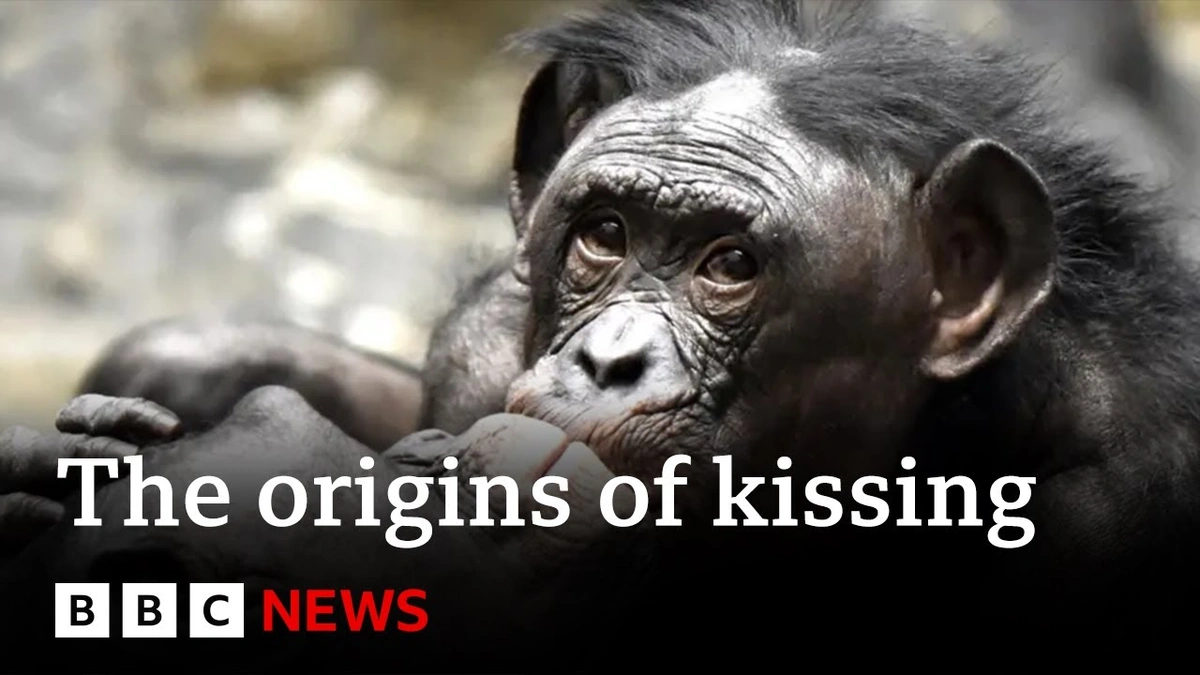
Here’s the thing: pinpointing the exact kissing origins is tricky. Unlike fossilized bones, kisses don’t leave a trace. So, scientists have to rely on comparative studies, looking at the behavior of our closest relatives: primates.
One leading theory suggests that kissing evolved from food sharing between mothers and their offspring. Think about it: many primates, even today, pre-chew food for their babies, passing it mouth-to-mouth. Some researchers believe this affectionate act of sharing, over millions of years, morphed into the kissing we know today. Animal kissing might not be quite as romantic but is a demonstration of affection.
What fascinates me is that this theory isn’t just about nourishment. It’s about bonding, trust, and the creation of social connections. That first mouth-to-mouth contact established a powerful link between mother and child, a link that likely carried over into other relationships as primates evolved.
Hygiene Hypothesis | Kissing as a Germ Exchange?
Okay, so this might sound a little gross, but stick with me. Another intriguing theory proposes that kissing evolved as a way to exchange germs, potentially boosting our immune systems. It’s like a tiny, consensual vaccination!
The idea is that by swapping saliva, we expose ourselves to a small dose of our partner’s microbes, which can help our bodies build up resistance to illness. Now, before you go around kissing everyone you meet, let’s be clear: this is just a theory. And let’s be honest, there are far better – and safer – ways to boost your immunity. Hand washing is key, according to numerous CDC reports.
But what I find compelling about this idea is that it highlights the complex relationship between humans and microbes. We often think of germs as the enemy, but the reality is that we live in a symbiotic relationship with trillions of microorganisms. Kissing, in this context, becomes a ritualistic exchange of information at a microscopic level.
The Role of Culture | Is Kissing Universal?
Here’s where things get really interesting. While the biological roots of kissing might be ancient, the cultural expression of kissing is incredibly diverse. In some cultures, kissing is a common greeting, while in others, it’s reserved for intimate partners. And in some, it’s not practiced at all!
Anthropological studies have shown that kissing isn’t a universal human behavior. In fact, some researchers estimate that only about half of all cultures engage in romantic kissing. This suggests that while the capacity for kissing might be innate, the actual practice of kissing is heavily influenced by social norms and cultural traditions.
What I initially thought was a straightforward biological question turned out to be a fascinating exploration of cultural diversity. It reminds us that even the most seemingly natural behaviors are often shaped by the societies we live in.
The 21-Million-Year-Old Smooch | Decoding the ‘Pouting’ Primate
A recent study has thrown a fascinating wrinkle into the evolutionary history of kissing . Researchers examining the behavior of extinct primates suggest that the act of pressing lips together — a precursor to kissing — could be as old as 21 million years. Their evidence lies in the ‘pouting’ behavior observed in primates, particularly when nursing. The findings suggest that the neurophysiological pathways that facilitated lip contact for feeding and comfort later became linked to social bonding. This connection provides an intriguing perspective on how mouth-to-mouth contact has been repurposed over millennia.
This theory suggests primate kissing behavior , wasn’t just about food but created neural links that support long term relationships. This helps to explain why mouth-to-mouth contact can be so important to humans.
Why Kissing Matters | The Science of Attraction and Bonding
So, we’ve explored the possible origins of kissing, from food sharing to germ exchange to cultural traditions. But one question remains: why do we like to kiss? What’s the biological payoff?
The answer, it turns out, is a complex cocktail of hormones and neurotransmitters. When we kiss, our bodies release a flood of dopamine, the pleasure chemical, and oxytocin, the bonding hormone. This creates a powerful feeling of attraction and connection, reinforcing the relationship between the kissers. This chemical release explains why kissing is such an integral part of a budding romance.
Moreover, kissing allows us to exchange sensory information – taste, smell, touch – that helps us assess our partner’s genetic compatibility. It’s like a subconscious compatibility test, ensuring that we choose the best possible mate. Let me rephrase that for clarity: while you’re lost in the moment, your body is also gathering crucial data about your partner’s suitability.
Ultimately, the evolutionary history of kissing is a testament to the power of connection. It’s a story of how a simple act of mouth-to-mouth contact has evolved into a complex and meaningful expression of love, affection, and social bonding. It’s proof of how critical community and close relationships are to humans. Next time you share a kiss, remember you are tapping into a behavior that is millions of years old. You’re participating in a ritual that has shaped our species and continues to bind us together. Plus, kissing can boost self-esteem and reduce stress, which are valuable contributions to your overall well-being.
FAQ
Why do we close our eyes when we kiss?
Closing your eyes reduces visual input, allowing you to focus more intensely on the tactile and sensory experience of the kiss. It enhances the pleasure and intimacy of the moment.
Is kissing good for your health?
Kissing can have several health benefits, including boosting your immune system (by exchanging microbes), reducing stress, and increasing feelings of happiness and connection.
Are there cultures where kissing is not practiced?
Yes, anthropological studies suggest that kissing is not a universal human behavior. Some cultures do not engage in romantic kissing at all.
What’s the evolutionary purpose of kissing?
There are several theories, including that it evolved from food sharing between mothers and offspring, as a way to exchange germs to boost immunity, and as a means of assessing genetic compatibility in potential mates. Evolutionary advantages and purpose continues to be a point of study and conversation.
How does kissing affect our brains?
Kissing triggers the release of dopamine (pleasure), oxytocin (bonding), and serotonin (mood regulation) in the brain, creating feelings of happiness, connection, and attraction.
About the Author