Oumuamua 2.0? New Space Mystery!
Okay, let’s talk about something truly mind-bending. You know how sometimes you stare up at the night sky and wonder if we’re really alone? Well, astronomers keep throwing us curveballs that make that question even more intriguing. The latest? A space rock (or is it?) called 3I/ATLAS, and the buzz is whether it’s another Oumuamua . Yeah, that Oumuamua – the interstellar object that zipped through our solar system a few years back and left everyone scratching their heads. This time, the stakes feel even higher. Why? Let’s dive in.
The Oumuamua Enigma | A Quick Refresher
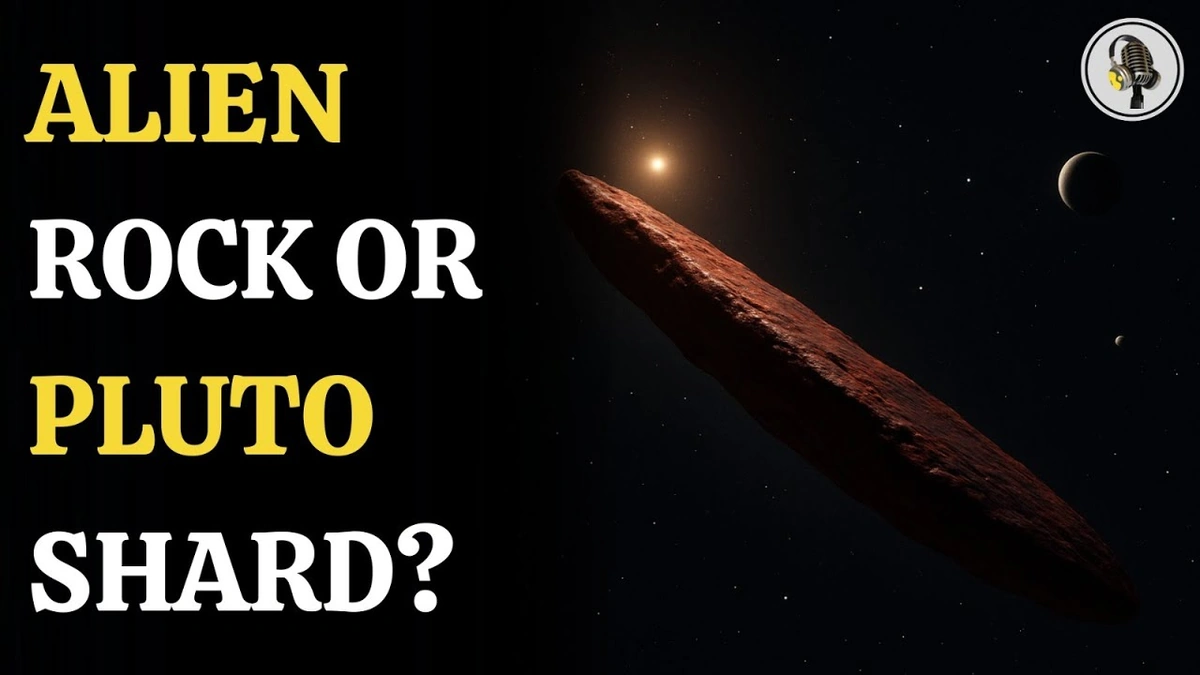
Before we get into 3I/ATLAS, let’s rewind a bit. Oumuamua , Hawaiian for “scout,” was spotted in 2017. The thing that made it so special wasn’t just that it came from outside our solar system – that’s a big deal in itself – but also its weird shape and trajectory. It was long and thin, like a cosmic cigar, and it accelerated away from the sun faster than expected. Seriously, it was weird. I mean, what’s normal about a space cigar?
Theories ranged from the mundane (a strangely shaped asteroid) to the downright wild (an alien probe). Scientists are amazing, they always come up with the best ideas! The bottom line? We just didn’t know, and that’s what made it so fascinating. That’s also what made some folks think it could have been of alien origin. If you want to dive deeper on interstellar objects, check this article about NASA’s Interstellar Object mission. Now, does 3I/ATLAS bring us closer to an answer?
3I/ATLAS | Déjà Vu in Deep Space?
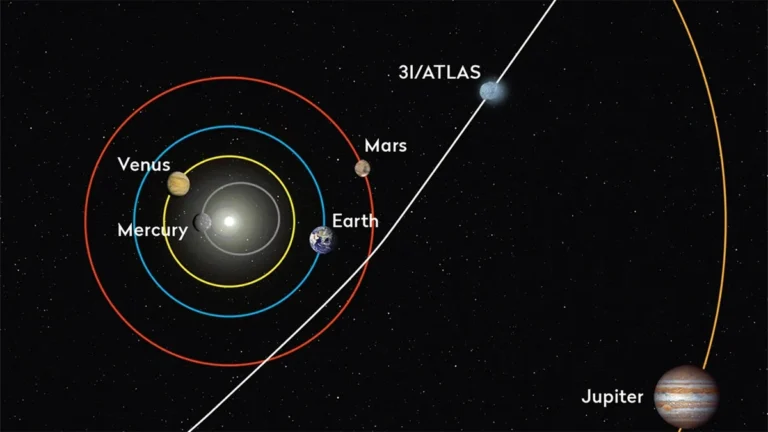
So, here comes 3I/ATLAS. This one was discovered in early 2024, and it’s another interstellar object. Meaning, it’s not from around here, just like Oumuamua . Already, people are drawing parallels. The big question is, are these similarities superficial, or are we seeing a pattern? Is the universe sending us messages in the form of peculiar space rocks? Well, let’s not get ahead of ourselves. But let’s be honest – the suspense is real!
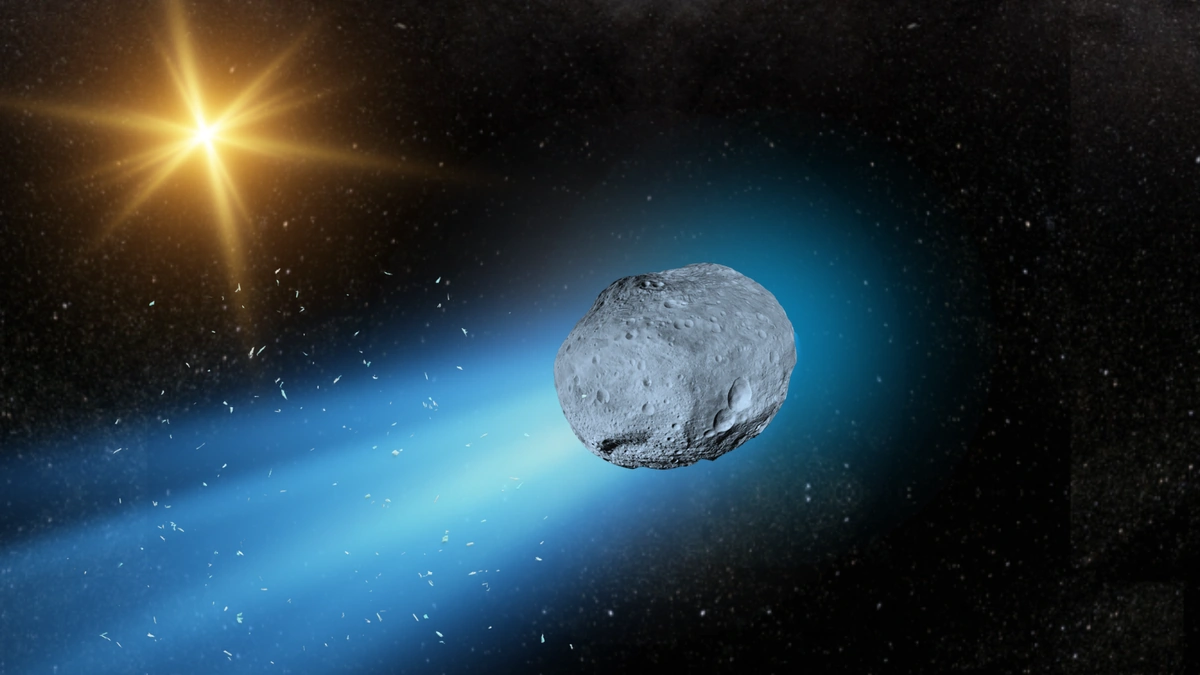
Here’s the thing: 3I/ATLAS is giving off strong cometary activity. It’s spewing gas and dust as it gets closer to the sun. This is quite different from Oumuamua , which showed no such activity. While some studies of Oumuamua’s unusual acceleration suggested outgassing, astronomers could never observe that directly. That already separates the two interstellar interlopers, in my opinion. Still, what if 3I/ATLAS gives astronomers better information that retroactively allows us to understand Oumuamua ? I am looking forward to that scenario.
Why This Matters | The Broader Implications
Okay, why should someone in India, sitting in a coffee shop or commuting on the metro, care about a couple of space rocks? Because it speaks to something fundamental about our place in the universe. The discovery of interstellar objects challenges our assumptions about how planetary systems form and what’s floating around in the vast emptiness between stars. This is not just about astronomy; it’s about cosmology, planetary science, and maybe, just maybe, answering the big question of whether we are alone.
See, the more of these objects we find, the better we can understand their origins, composition, and frequency. Are they common? Are they rare? And what does that tell us about the formation of planetary systems throughout the galaxy? If interstellar objects like Oumuamua and 3I/ATLAS are common, it suggests that planet formation is a messy process, with lots of material being ejected into interstellar space. I initially thought that the search for interstellar objects would lead to a deeper understanding of our own solar system. I still think that’s true, but I know it could also reveal how planetary systems form everywhere.
And let’s be honest: there’s also the sheer thrill of the unknown. These objects are like cosmic postcards from distant lands, each one potentially holding clues to the universe’s biggest secrets. And isn’t that a thought worth pondering while stuck in traffic?
How Can We Learn More? The Challenges Ahead
Studying interstellar objects isn’t easy, let’s be clear. They’re small, faint, and move quickly. By the time we spot them, they’re often already on their way out of the solar system. That’s why quick detection and follow-up observations are crucial. In order to know what to look for, you need to know where to look. And space is big. Really big.
Future telescopes and space missions will play a key role. The Vera C. Rubin Observatory, currently under construction in Chile, will scan the entire sky every few nights, which should dramatically increase the number of interstellar objects discovered. Also, the European Space Agency’s Comet Interceptor mission, scheduled to launch in 2029, aims to rendezvous with a long-period comet, but could also be redirected to intercept an interstellar object if one is discovered on a suitable trajectory.
According to NASA’s website, scientists are already thinking about dedicated missions to study interstellar objects up close. A common mistake I see people make is dismissing the funding of these missions as frivolous. They are far from it. Imagine the knowledge that we might gain! The one thing you absolutely must consider is that these missions are the only way to get detailed data on these cosmic travelers. But for now, we’ll have to rely on remote observations and a bit of educated guesswork. In the meantime, here’s a link about Playstation and space.
What Does 3I/ATLAS Tell Us?
So, is 3I/ATLAS another Oumuamua ? The short answer is: probably not. But that doesn’t make it any less interesting. It’s still a visitor from another star system, and it’s giving us a chance to study interstellar material up close. According to the latest circular on the official Minor Planet Center website, more data are needed to fully characterize its properties and trajectory. It’s best to keep checking the official astronomy portals.
What fascinates me is the possibility that Oumuamua and 3I/ATLAS represent two different types of interstellar objects : one rocky and inert, the other icy and active. If that’s the case, it could tell us something about the diversity of planetary systems throughout the galaxy. What can we do with the new information we have? How can it help us understand our own little place in the universe?
Ultimately, the mystery of Oumuamua and the ongoing investigation of 3I/ATLAS remind us that the universe is full of surprises. And that’s a good thing. It means there’s always something new to discover, something new to learn, and something new to wonder about. So, next time you’re looking up at the night sky, remember Oumuamua and 3I/ATLAS, and let your imagination wander.
FAQ About Interstellar Objects
What exactly is an interstellar object?
It’s a space object, like an asteroid or comet, that originates from outside our solar system.
How are these objects discovered?
Usually by telescopes that scan the sky for moving objects.
What if I forgot everything from this article?
Just remember the universe is vast and full of surprises!
Will 3I/ATLAS hit Earth?
No, its trajectory takes it away from our planet.
Could these objects carry life?
It’s a possibility, but there’s no evidence to support it yet.
And here’s the real kicker: While we’re busy looking out there, imagine what other civilizations might be thinking as they spot us for the first time. Maybe someday, one of these interstellar objects will be a message, and not just a mystery. But for now, let’s keep looking up, keep wondering, and keep pushing the boundaries of what we know. The universe is waiting.
About the Author