Interstellar Comet Spotted! UN Confirms!
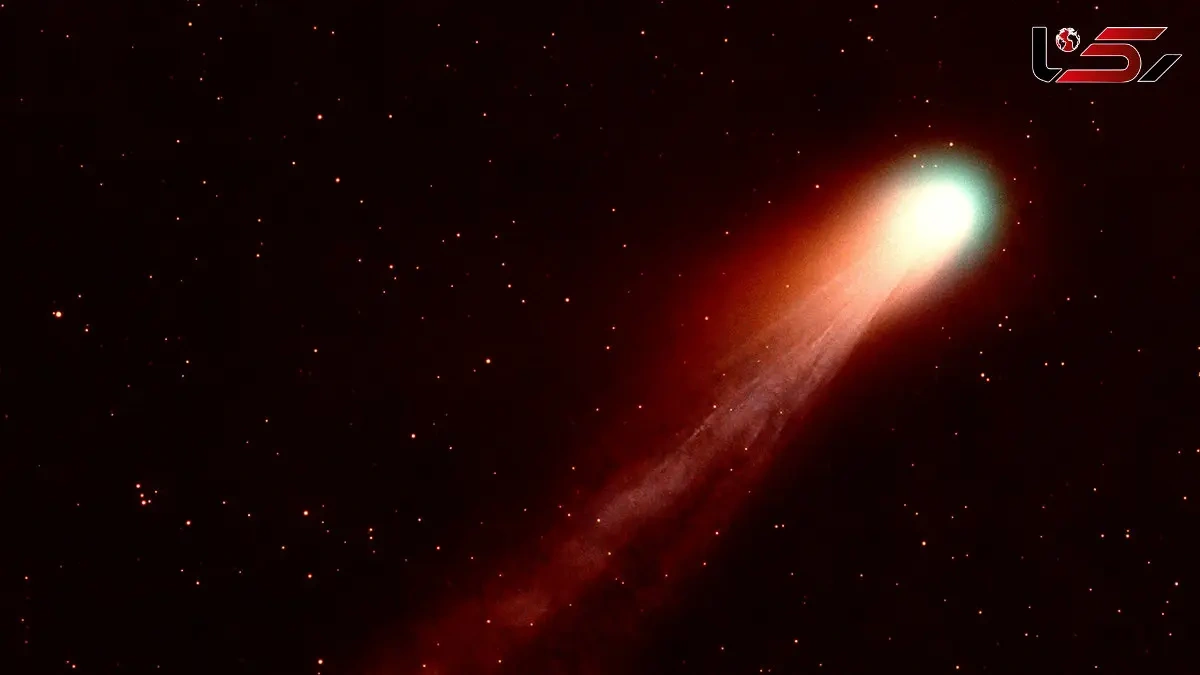
Alright, space enthusiasts, buckle up! News just dropped that the United Nations, yes, that United Nations, has validated the sighting of an interstellar comet , officially named 3I/ATLAS, zipping through our neck of the cosmic woods. Now, I know what you might be thinking: “Another comet? So what?” But here’s the thing – this isn’t just any space rock. This is a visitor from another star system, a cosmic tourist if you will, and its presence near our solar system is kind of a big deal.
Why This Interstellar Comet Matters
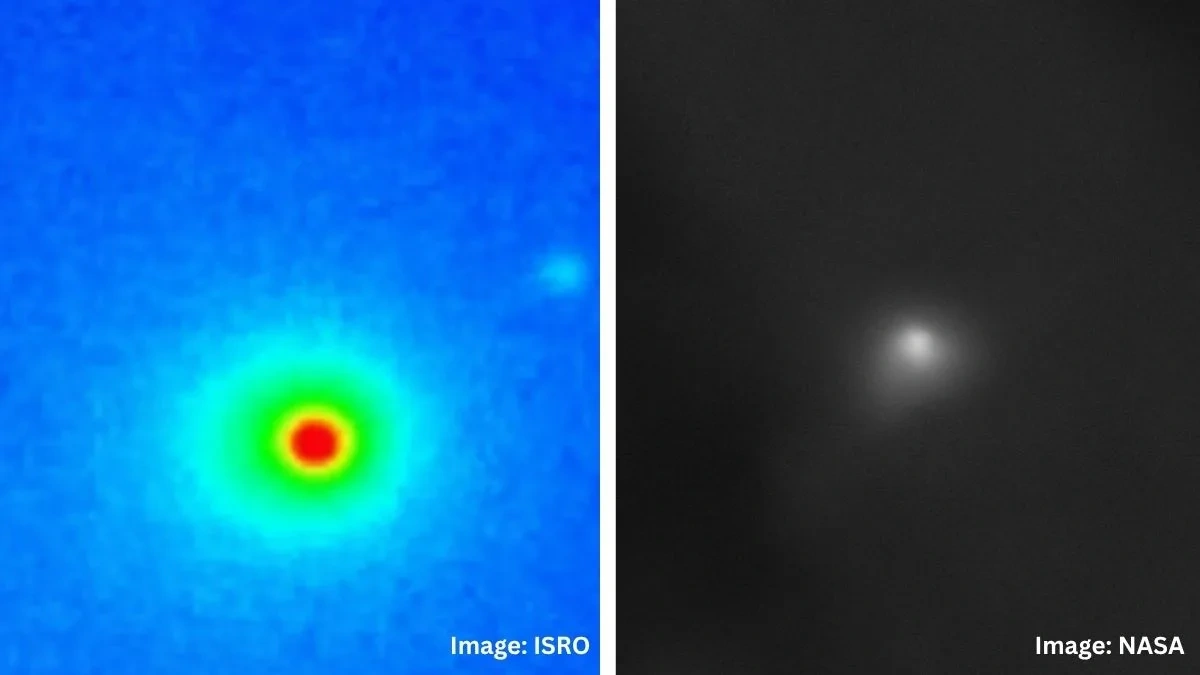
Let’s be honest, comets are cool. They’re like the snowballs of space, leaving behind shimmering tails as they get closer to the sun. But an interstellar comet ? That’s a whole different level of awesome. Here’s why this sighting matters, especially to us here in India, a country with a rich history of astronomical observation and a growing space program:
- Rarity: These events are rare. This is only the second confirmed interstellar object ever observed. The first was ‘Oumuamua, which caused quite a stir a few years back (more on that later, perhaps).
- Insights into Other Star Systems: This comet is a time capsule from another star system. Analyzing its composition can give scientists clues about the conditions and materials present in distant planetary systems. Think of it as getting a sample from a faraway land without actually having to travel there – saving a whole lot of fuel and time!
- Understanding Our Own Solar System: By studying how this interstellar object interacts with our solar system, we can learn more about the dynamics and forces at play within our own cosmic neighborhood. It’s like learning about yourself by observing someone else’s behavior.
What fascinates me is the sheer scale of the cosmos. This comet has traveled an unfathomable distance to reach us, carrying secrets from a place we can only dream of visiting right now. It’s a humbling reminder of our place in the universe – and the boundless possibilities that lie beyond.
How Do We Know It’s Interstellar?
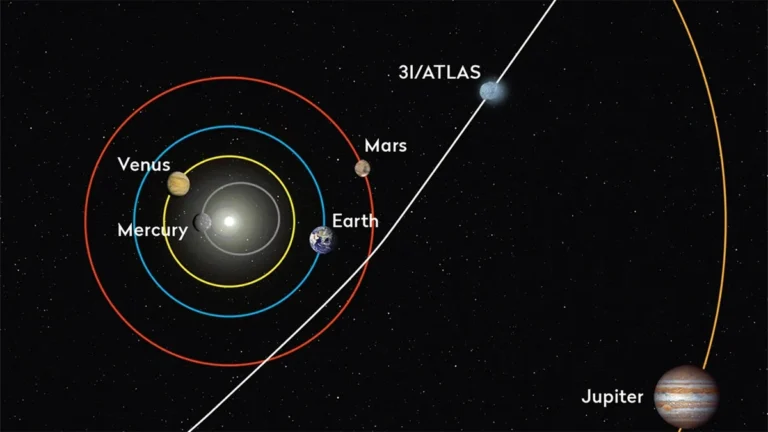
Good question! It’s not like astronomers just glanced at it and said, “Yep, definitely from another star!” The key is its trajectory. Interstellar objects have trajectories that are so hyperbolic (meaning, extremely open and not bound to our Sun) that they can’t be explained by the gravity of our Sun alone. They’re moving too fast and on paths that are too extreme to have originated within our solar system. Wikipedia explains it well. Think of it like this: if you throw a ball, it will eventually fall back down to Earth. But if you somehow throw it with enough force, it will escape Earth’s gravity altogether. That’s what’s happening with these interstellar travelers .
The UN’s validation through the International Astronomical Union (IAU) is significant because it means the scientific community has rigorously examined the data and confirmed that 3I/ATLAS indeed possesses these characteristics. It’s not just some fringe theory; it’s a scientifically accepted fact.
What Can We Learn From 3I/ATLAS?
Here’s where it gets really interesting. Scientists are using powerful telescopes to study 3I/ATLAS in detail, hoping to unlock some of its secrets. They’re analyzing its:
- Composition: What elements and molecules make up this comet? Is it similar to comets in our solar system, or is it radically different?
- Size and Shape: How big is it, and what shape is it? This can tell us about the conditions in its home star system.
- Rotation: How fast is it spinning? This can provide clues about its history and how it interacted with other objects in space.
The answers to these questions could revolutionize our understanding of how planetary systems form and evolve. Imagine discovering that comets in other star systems are made of completely different materials than our own! That would force us to rethink everything we thought we knew about the universe.
And, while we are at it, let’s link to Saturn’s rings for the people interested in other worldly things.
The Indian Connection
So, how does all this relate to India? Well, India has a growing space program and a vibrant community of astronomers and astrophysicists. Indian telescopes and researchers could potentially contribute to the study of 3I/ATLAS, adding to the global effort to understand this interstellar visitor . Furthermore, the discovery can inspire the next generation of Indian scientists and engineers to pursue careers in space exploration.
Think about it: a young student in Chennai, inspired by the news of 3I/ATLAS, might one day develop the technology to travel to another star system. That’s the power of scientific discovery – it sparks curiosity and fuels innovation.
Also, check this article out . You may like it!
What’s Next for Interstellar Object Research?
The discovery of 3I/ATLAS is just the beginning. As our telescopes become more powerful and our search strategies become more sophisticated, we’re likely to discover many more interstellar comets and asteroids. This will open up a new window into the universe, allowing us to study the building blocks of other planetary systems in unprecedented detail.
There’s also the tantalizing possibility of sending a spacecraft to intercept an interstellar object and bring back a sample to Earth. This would be an incredibly ambitious mission, but the potential scientific rewards are enormous.
FAQ about Interstellar Comets
Frequently Asked Questions
What is the difference between a comet and an asteroid?
Comets are icy bodies that release gas and dust as they approach the Sun, creating a visible tail. Asteroids are rocky bodies that generally don’t have tails.
How many interstellar comets have been discovered?
So far, only two have been confirmed: ‘Oumuamua and 3I/ATLAS.
Can I see 3I/ATLAS with my own telescope?
Probably not. It’s very faint and requires large telescopes to observe.
What is the International Astronomical Union (IAU)?
The IAU is the internationally recognized authority for assigning designations to celestial bodies.
Will 3I/ATLAS collide with Earth?
No, it poses no threat to Earth. Its trajectory takes it far from our planet.
Where can I find more information about 3I/ATLAS?
Check out the websites of NASA, the European Space Agency (ESA), and the International Astronomical Union (IAU).
So, the next time you look up at the night sky, remember that there are visitors from other star systems zipping around our solar system. They’re a reminder that the universe is vast, mysterious, and full of surprises. And who knows, maybe one day we’ll be the ones sending our own interstellar explorers out into the cosmos.
About the Author