Earth's Lost Sibling? Moon's Secret Origin!
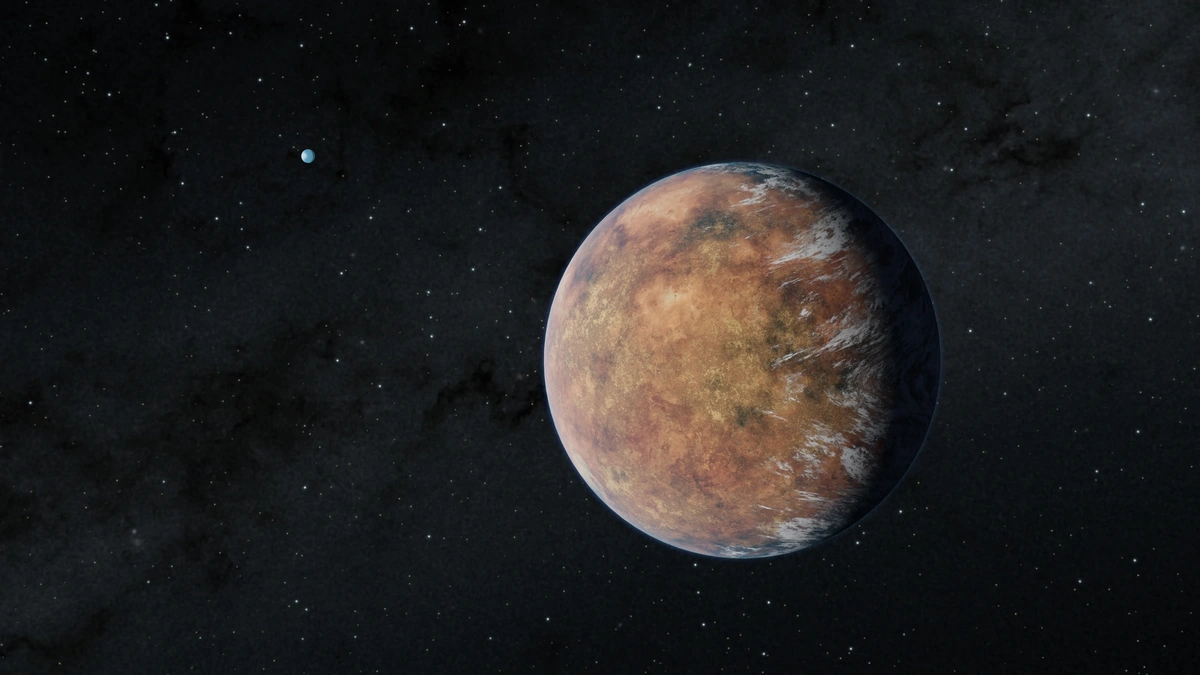
Have you ever looked up at the Moon and wondered about its origins? It’s a question that has puzzled scientists for centuries. What if I told you that the Moon’s formation might be linked to a long-lost sibling of Earth? Sounds like science fiction, right? But recent research suggests that a Mars-sized planet, sometimes called Theia, may have once shared our orbit and played a crucial role in creating our lunar companion. Here’s the thing: This isn’t just about dusty rocks in space; it’s about rewriting our understanding of how planets form and the violent cosmic dance that shaped our very existence.
The Giant Impact Hypothesis | A Cosmic Collision
The prevailing theory for the Moon’s origin is the Giant Impact Hypothesis. This theory proposes that early in Earth’s history, around 4.5 billion years ago, a massive object – Theia – collided with the proto-Earth. This collision wasn’t a gentle nudge; it was a cataclysmic event. The impact vaporized a significant amount of Earth’s mantle and Theia itself, creating a debris disk around our planet. Over time, gravity coalesced this debris, eventually forming the Moon. What fascinates me is the sheer scale of this event. Imagine the energy released, the molten rock swirling in space – it’s mind-boggling!
But here’s where it gets even more interesting. Scientists have long struggled to fully explain the Moon’s composition. Lunar rocks brought back by the Apollo missions are remarkably similar to Earth’s mantle, a puzzle if the Moon was formed primarily from Theia. If Theia was a completely different planet formed elsewhere in the solar system, shouldn’t its composition be noticeably different? This discrepancy has led researchers to explore alternative scenarios, one of which involves Theia being not just a collision partner, but a co-orbital companion.
Theia | Not a Stranger, But a Near Twin
What if Theia wasn’t a rogue planet that just happened to smash into Earth? What if, instead, it was a planetary sibling that shared Earth’s orbit, trailing along in a stable configuration for millions of years? This is where the concept of Lagrangian points comes into play.Lagrangian pointsare locations in space where the gravitational forces of two large bodies (like the Sun and Earth) balance out, creating a stable spot where a smaller object can reside. It’s possible that Theia occupied one of these Lagrangian points, growing alongside Earth before an eventual destabilization led to the giant impact.
The implications of this are profound. If Theia and Earth co-existed for an extended period, they would have likely had similar compositions, explaining the close match between lunar rocks and Earth’s mantle. It also means that the early solar system might have been a much more crowded and dynamic place than we previously thought, with multiple planetary bodies jostling for position in the habitable zone. A planetary collision of this magnitude significantly shaped the Earth moon system we know today. This type of celestial collision event is a cosmic impact that is not uncommon.
Unraveling Lunar Mysteries | New Clues and Future Missions
The quest to understand the Moon’s origin and the role of Earth’s lost sibling Theia is far from over. Scientists are continually analyzing lunar samples, developing sophisticated computer models, and planning future missions to gather more data. One promising avenue of research is to look for subtle differences in the isotopic composition of lunar and terrestrial rocks. Isotopes are variations of elements with different numbers of neutrons, and they can act as fingerprints, revealing the origin of different materials.
Future lunar missions, such as those planned under NASA’s Artemis program, aim to collect samples from previously unexplored regions of the Moon, including the lunar south pole. These samples could provide crucial insights into the Moon’s formation and potentially reveal traces of Theia’s material. It is crucial to collect data for understanding the lunar formation theories .
Let me rephrase that for clarity… The more we learn about the Moon, the better we can understand the processes that shaped Earth and the other planets in our solar system. And who knows? Maybe one day we’ll even find definitive proof of Theia’s existence, confirming its role as Earth’s long-lost sibling and the architect of our Moon.
Why Does Any of This Matter to You and Me?
Okay, I get it. You might be thinking, “So what if Earth had a planetary sibling? How does this affect my life?” Well, here’s the thing: Understanding the origins of our planet and its place in the cosmos is fundamental to understanding ourselves. It helps us appreciate the delicate balance that makes life on Earth possible. But, more pragmatically, the study of planetary formation also helps us understand the potential for life elsewhere in the universe.
By studying the processes that led to the formation of Earth and the Moon, we can gain insights into the conditions necessary for the emergence of habitable planets around other stars. This knowledge is crucial in our search for extraterrestrial life and our understanding of our place in the grand cosmic scheme. A common mistake I see people make is to assume that science is something abstract and detached from everyday life. But in reality, it’s the engine that drives our understanding of the world and our ability to solve the challenges facing humanity. Besides, doesn’t it give you a sense of perspective to know that our planet was forged in the crucible of a massive cosmic collision? Interstellar Comet NASA data
FAQ | Earth’s Lost Sibling and the Moon’s Origin
What exactly is Theia?
Theia is the name given to the hypothetical Mars-sized planet that is believed to have collided with Earth early in its history, leading to the formation of the Moon.
How does the Giant Impact Hypothesis explain the Moon’s formation?
The Giant Impact Hypothesis proposes that the collision between Earth and Theia vaporized a significant amount of material, creating a debris disk that eventually coalesced to form the Moon.
What’s a Lagrangian point?
Lagrangian points are locations in space where the gravitational forces of two large bodies balance out, creating a stable spot where a smaller object can reside.
What if I want to read more about the Artemis program?
You can read all about it onNASA’s official website.
Why is the Moon’s composition similar to Earth’s mantle?
If Theia was a co-orbital companion of Earth, they would have likely had similar compositions, explaining the close match between lunar rocks and Earth’s mantle.
Are scientists still working on this?
Yes, researchers are continually analyzing lunar samples, developing sophisticated computer models, and planning future missions to gather more data. BitLocker Bug
So, the next time you gaze at the Moon, remember the incredible story of its birth – a story of cosmic collisions, planetary siblings, and the enduring mysteries of the universe. It’s a story that continues to unfold, revealing new insights with each passing day.
About the Author