Earth's Lost Sister? New Moon Origin Theory!
Okay, so the Moon. We see it every night, right? Big, bright, and seemingly always there. But have you ever stopped to think about where it actually came from? For decades, the prevailing theory has been the “Giant Impact Hypothesis” – basically, a Mars-sized object (named Theia) smashed into early Earth, and the debris coalesced into our Moon. Makes sense, right? But what if I told you there’s a new kid on the block, a fresh take on the moon origin theory that’s got scientists buzzing? It involves a long-lost sister planet of Earth, and honestly, it’s wild.
The Theia Hypothesis | A Few Lunar Hiccups
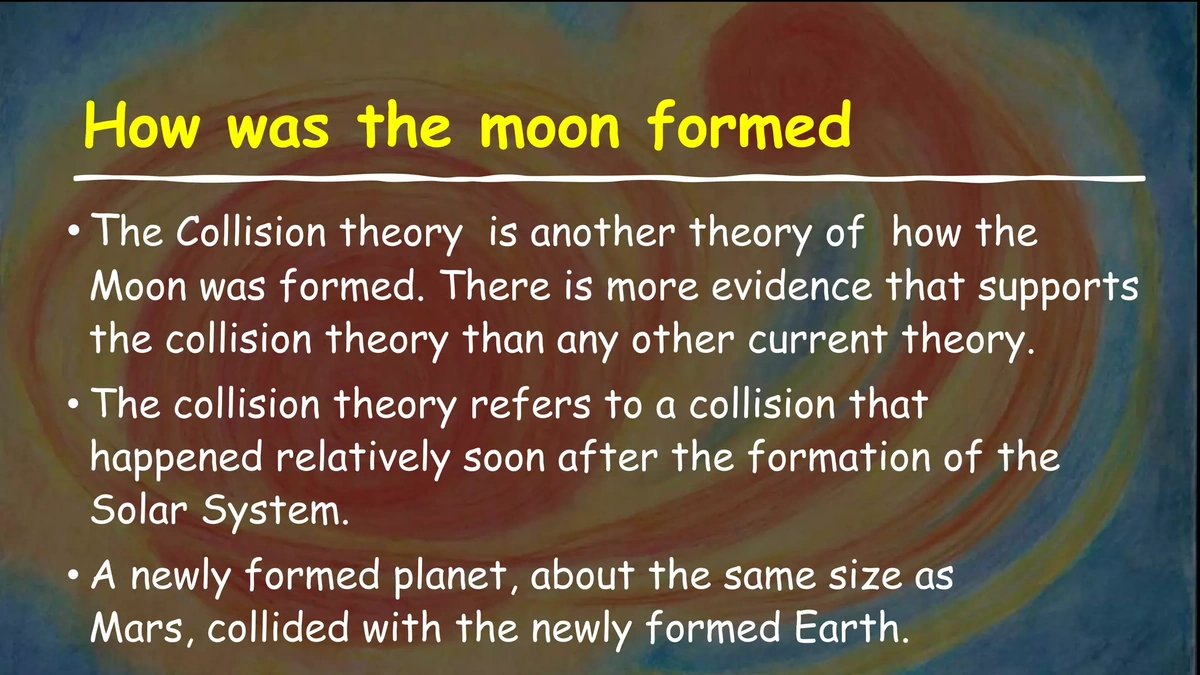
Let’s quickly recap the classic scenario. The Giant Impact Hypothesis has been the reigning champ for a while, and it explains a lot. It explains the Moon’s size, its composition (mostly similar to Earth’s mantle), and its orbital characteristics. But – and this is a big ‘but’ – there are some nagging issues. If the Moon was primarily formed from Theia, shouldn’t it have a significantly different composition than Earth? The isotopic ratios are eerily similar, and that’s hard to explain if it was born from two completely different celestial bodies. This isotopic similarity is one of the major questions surrounding the formation of the moon . What fascinates me is, scientists have been trying to solve this mystery for so long.
Enter the Synestia | A Molten, Doughnut-Shaped Earth
Now, let’s get to the really cool stuff. This new theory proposes that early Earth experienced a far more energetic impact than previously thought. Instead of a clean hit-and-run, the collision was so intense that both Earth and the impactor (let’s call it Theia 2.0 for now!) vaporized and mixed together, forming a giant, spinning, doughnut-shaped mass of molten and vaporized rock called a synestia. Yes, a synestia. Think of it as a proto-Earth-Moon system in a completely chaotic state.
And here’s where the lost sister planet comes in. According to this model, within the synestia, the Moon didn’t coalesce from a cloud of debris, but rather condensed directly from the vaporized rock. As the synestia cooled and contracted, the Moon gradually emerged from within it. That’s different, right? Learn more about Earth collisions here .
Why This Matters | A Deeper Look at Planetary Formation
Okay, so why should you care about all this celestial drama? Because understanding how the Moon formed gives us vital clues about the formation of Earth, and potentially other planets as well. This isn’t just about ancient history; it’s about understanding the fundamental processes that shape the worlds we see in the night sky. Think about it – the Moon has been Earth’s constant companion, influencing our tides and stabilizing our axial tilt. If we understand its origins, we gain a deeper understanding of our own planet’s evolution. It provides an insight into early earth and the conditions that gave rise to our planet today. What’s even more fascinating is the role a sister planet may have played.
Furthermore, this new theory addresses some of the shortcomings of the Giant Impact Hypothesis. The similar isotopic composition? Explained by the complete mixing of Earth and Theia 2.0 within the synestia. The Moon’s orbital characteristics? Influenced by the dynamics of the cooling and contracting synestia. It’s a more comprehensive and elegant explanation, even if it does involve a giant molten doughnut planet.
The Emotional Angle | A Lost World Remembered
There’s something almost poetic about this theory, isn’t there? The idea that Earth once had a sister, a companion that played a crucial role in shaping our world. It’s a reminder that our planet’s history is filled with cataclysmic events and unimaginable transformations. It evokes a sense of wonder and awe at the sheer scale of cosmic processes. We’re talking about events that happened billions of years ago, shaping the very landscape of our existence. It gives you a new perspective, doesn’t it? This concept of a planetary collision , creating our moon, is a striking idea.
And, let’s be honest, there’s a touch of melancholy to the idea of a lost planet. Theia 2.0, swallowed up in the fiery embrace of early Earth, leaving behind only its legacy in the form of our Moon. It’s a reminder of the transient nature of even the most monumental celestial bodies. Imagine if we could somehow glimpse that ancient synestia, that swirling vortex of molten rock and vaporized planet. What a sight that would be!
Ultimately, this research on the giant impact hypothesis offers a deeper view into planetary science.
Future Research | Peering Deeper into the Lunar Rock
Of course, this is just a theory (albeit a compelling one), and more research is needed to confirm it. Future lunar missions, aimed at collecting and analyzing samples from deeper within the Moon’s mantle, could provide crucial evidence to support or refute the synestia hypothesis. Scientists are also developing sophisticated computer models to simulate the dynamics of synestias and test different scenarios for lunar formation. The goal is to recreate the conditions that led to the birth of the Moon and to understand the role of giant impacts in shaping the early solar system. The more we know about lunar formation , the more we know about ourselves. You can read more on the research here .
FAQ About the Moon’s Origin
Frequently Asked Questions
What’s the main problem with the old Giant Impact Hypothesis?
The main issue is the Moon’s surprisingly similar isotopic composition to Earth, which is hard to explain if it primarily came from a different object like Theia.
How does the synestia theory explain the Moon’s composition?
The synestia theory suggests that Earth and the impactor fully mixed, creating a uniform composition from which the Moon then formed.
Is this “lost sister planet” theory widely accepted?
It’s a relatively new and developing theory, gaining traction but still requiring further research and evidence to be fully accepted.
What kind of evidence would support the synestia theory?
Finding specific isotopic signatures or unique mineral compositions in the Moon’s mantle that align with synestia models would be strong supporting evidence.
Could this theory change how we view the formation of other planets?
Absolutely! Understanding the Moon’s formation can provide valuable insights into the processes that shape planetary systems throughout the universe.
Will there be more missions to the moon to learn more?
Yes, many space agencies are planning future lunar missions to collect more data and samples to test different lunar formation theories.
So, there you have it. The next time you look up at the Moon, remember that it might not just be a chunk of space rock. It might be a piece of a lost world, a testament to a cosmic collision that shaped our own planet. And who knows what other secrets the Moon still holds? I initially thought that the old theory would hold, but then I realized this new perspective has much to offer.
About the Author