Beaver Supermoon | Why You NEED to See It!
Okay, let’s be honest, you’ve probably seen the headlines: “Beaver Supermoon is coming!” But what is a Beaver Supermoon, and why should you even care? Is it just another Instagrammable moment, or is there something more to it? I initially thought it was just a cool name, but then I dove deeper, and trust me, there’s way more to this lunar event than meets the eye. It’s not just about pretty pictures; it’s about understanding our connection to the cosmos and, surprisingly, a bit of history too.
Why is it Called a “Beaver” Moon? A Look Back at History
So, where does the name “Beaver Moon” even come from? It’s not like there are beavers floating around on the lunar surface (though, wouldn’t that be something!). Actually, the name originates from the Native American tradition. As per the reports it was named because this full Moon occurred at the time of year when beavers were actively preparing for winter. According to the Old Farmer’s Almanac , historically, this was the time to set beaver traps before the swamps froze, ensuring a supply of warm winter furs. Pretty practical, right? What fascinates me is how deeply connected these names are to the natural rhythms of the world around us.
Supermoon Science: Understanding the Phenomenon
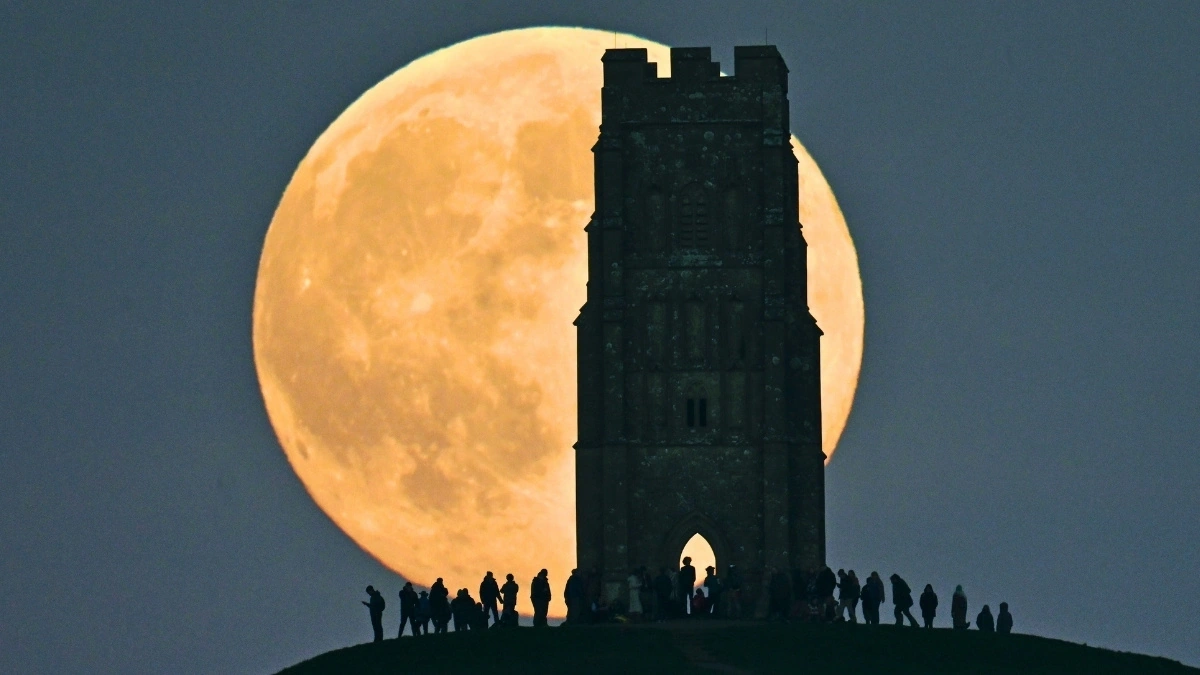
Now, let’s tackle the “supermoon” part. A supermoon isn’t just any full moon; it’s a full moon that occurs when the Moon is at or near its closest point to Earth in its orbit, known as perigee. Because the moon orbits Earth in an oval shape, one part of the orbit is closer to Earth than the other. The point of closest approach is called perigee and appears about 14% bigger and 30% brighter. This makes the Moon appear significantly larger and brighter in the night sky than a typical full moon. Think of it as the Moon putting on its best show! According to NASA , this difference in size and brightness is noticeable, even to the naked eye. And, let’s be honest, anything that makes us look up and marvel at the universe is a good thing, right?
The November full moon or full moon in November is special to many stargazers in India.
The Emotional Connection: Why the Supermoon Resonates With Us
But here’s the thing: it’s not just about the science or the history. There’s an emotional element to these celestial events, isn’t there? Think about it. For millennia, humans have looked up at the Moon and felt a sense of wonder, a connection to something bigger than themselves. And in today’s hyper-connected, always-on world, a supermoon offers a moment to pause, to disconnect from the noise, and to simply appreciate the beauty of the natural world. I mean, when was the last time you just stood outside and looked up? It’s a simple act, but it can be profoundly grounding, especially amidst the chaos of modern life. This lunar event reminds us of the cyclical nature of time and our relationship with our planet.
Supermoons are often associated with heightened tides, and while this is true, the effect is usually quite small. A common mistake I see people make is overestimating the impact on tides. The increase is typically only a few inches, so don’t expect any dramatic flooding! Check your local tide charts for accurate details.
How to View and Photograph the Beaver Supermoon
Okay, so you’re convinced. You want to see this Beaver Supermoon for yourself. Great! How do you do it? Well, the good news is that you don’t need any fancy equipment. Your eyes are the best tools you have. Find a spot away from city lights, if possible. The darker the sky, the better the view. But, even in urban areas, the supermoon will still be noticeably brighter than usual. See our other posts.
And for those aspiring photographers out there, the Beaver Supermoon presents a fantastic opportunity. Use a tripod for stability, and experiment with different camera settings. A telephoto lens can help you capture more detail, but even a smartphone can take stunning photos these days. The one thing you absolutely must double-check is your focus. Nothing’s worse than blurry moon pictures! Try to time your shots with interesting foreground elements, like trees or buildings, to add depth and context to your images.
Consider using apps to locate the moon. And a crucial tip: shooting during the golden hour, that period right after sunset or before sunrise, can result in spectacular photographs.
The Supermoon and Its Impact on Astrology and Culture
Let me rephrase that for clarity. While I don’t personally subscribe to astrology, it’s undeniable that lunar events have held significance in various cultures for centuries. In astrology, a supermoon is often seen as a time of heightened emotions and increased energy. Some believe it can amplify existing feelings and bring about significant life events. Whether you believe in astrology or not, it’s interesting to consider how the Moon has influenced human beliefs and practices throughout history. Different cultures have their own unique interpretations and traditions associated with the full moon. For example, in some cultures, it is believed to be a time for reflection and introspection. In others, it is a time for celebration and festivities. Exploring these different perspectives can enrich our understanding of the cultural significance of the Moon.
FAQ About the Beaver Supermoon
Frequently Asked Questions
What time will the Beaver Supermoon be visible?
The best time to view the Beaver Supermoon is typically around moonrise, but it will appear bright and large throughout the night. Check your local moonrise times for the most accurate information.
Will I need special equipment to see it?
No, the Beaver Supermoon is easily visible to the naked eye. However, binoculars or a telescope can enhance the view.
Is the Beaver Supermoon dangerous?
No, the Beaver Supermoon is not dangerous. It’s a natural celestial event that poses no threat to humans or the planet.
How often do supermoons occur?
Supermoons typically occur several times a year, but each one may vary slightly in size and brightness depending on its distance from Earth.
What’s the next supermoon after the Beaver Moon?
The next supermoon after the Beaver Moon will depend on the lunar calendar. Keep an eye on astronomy websites and apps for updates.
Is it okay to capture the moon with my camera?
Yes, feel free to take pictures of the supermoon phenomenon and enjoy viewing the moon!
So, there you have it. The Beaver Supermoon is more than just a pretty sight in the sky. It’s a connection to history, science, and our own sense of wonder. So, step outside, take a look up, and let yourself be amazed. And remember, even in the darkest of nights, there’s always light to be found.
About the Author