
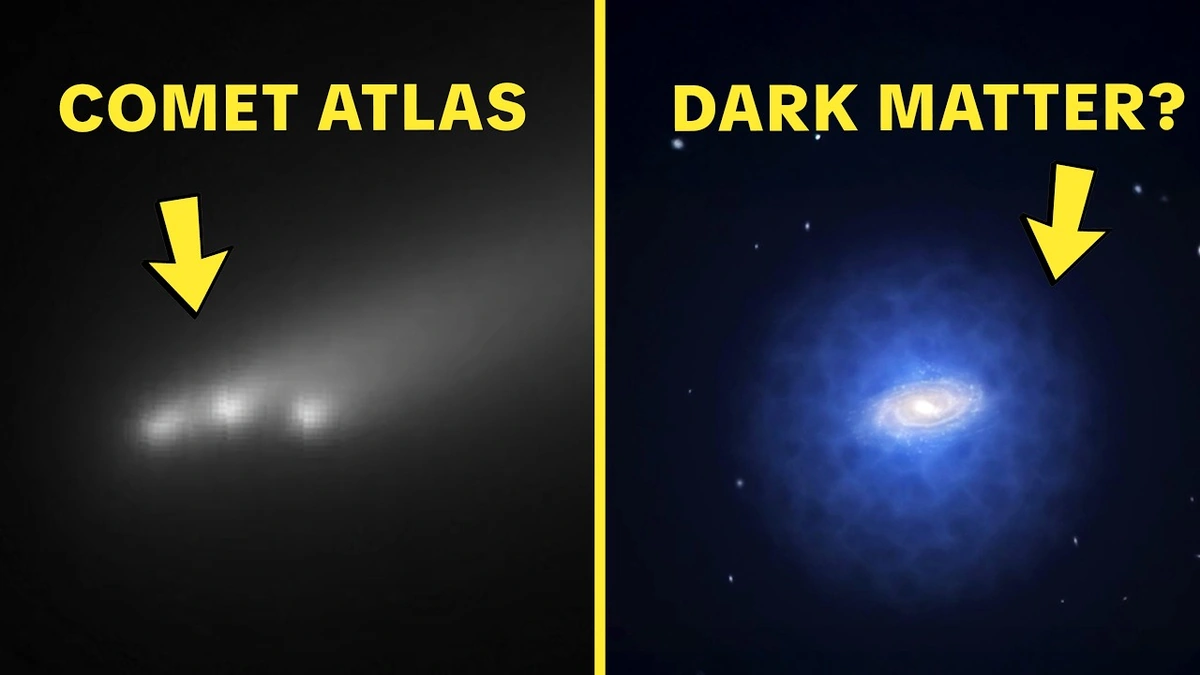
Dark Matter Found? A Century-Long Mystery!
For nearly a century, scientists have chased shadows the shadows of dark matter . We know it’s there; its gravitational pull shapes galaxies and dictates the universe’s large-scale structure. But seeing it? That’s been the challenge. Until possibly now. There’s been a major development in the search, and while nothing is confirmed, the buzz is palpable. But here’s the thing: why should you, sitting in India, care about something so… well, out there?
That’s what I want to unpack. Not just the news, but why it matters to you, even if you’re more concerned with getting that perfect cup of chai than the composition of the cosmos. Let’s dive into the potential detection of dark matter and what it could mean for our understanding of…everything.
The “Why” | Unveiling the Universe’s Hidden Architect
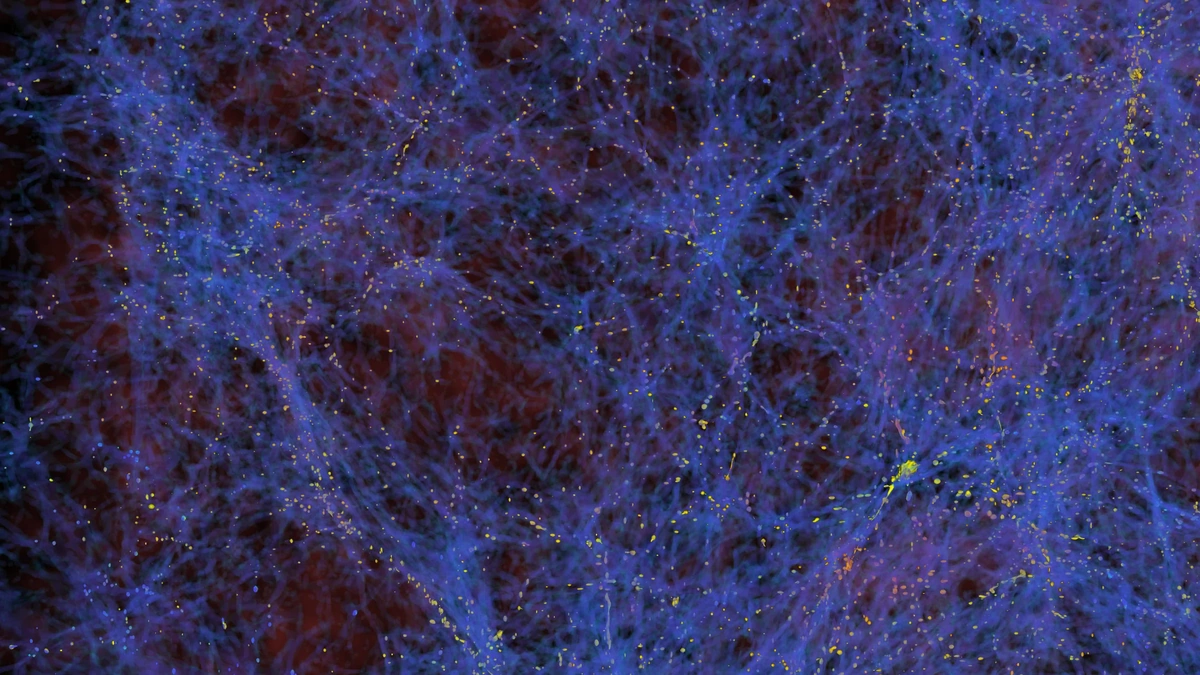
Okay, so scientists might have seen evidence of dark matter. A new study, using data from incredibly sensitive detectors, hints at interactions we can’t explain with our current understanding of physics. These underground experiments, shielded from most forms of radiation, are looking for the faintest whispers of a collision between dark matter particles and regular matter. Think of it like trying to hear a pin drop in the middle of a rock concert – incredibly difficult, but not impossible.
But why is this a big deal? Because dark matter isn’t just some exotic substance; it’s the scaffolding upon which the universe is built. Without it, galaxies wouldn’t have formed as they did. The stars that make up the constellations you see at night, the planets orbiting those stars – none of it would exist in its current form without the gravitational influence of non-baryonic matter . So, understanding dark matter is understanding our cosmic origins, our place in the universe.
And let’s be honest, who doesn’t want to know where they come from? The quest to decode the secrets of Weakly Interacting Massive Particles (WIMPs) , one of the leading models for dark matter, is a fundamental human endeavor. It’s about pushing the boundaries of knowledge, exploring the unknown, and answering questions that have plagued us for generations.
The Ripples of Discovery | From the Cosmos to Your Life
Now, you might be thinking, “Okay, that’s interesting, but how does this affect me?” Fair question. The truth is, the implications of a confirmed dark matter detection are far-reaching, even if they’re not immediately obvious. Consider these things:
Technological Advancements: The technologies developed to detect dark matter are cutting-edge. We are dealing with incredibly sensitive and sophisticated detectors that require novel solutions to shield them from all other kinds of interference. The tech developed could have applications in other areas, from medical imaging to materials science. Saturn’s rings may not be made of dark matter, but studying the universe is still helpful.
Revolutionizing Physics: Our current understanding of physics, the Standard Model, doesn’t account for dark matter. Detecting it would be a massive hint that there are more fundamental laws of nature that we don’t yet know. Think of it as discovering a new continent on a map – it changes everything we thought we knew about the world. This could lead to new theories, new technologies, and a completely different way of looking at the universe.
Inspiring Future Generations: Discoveries like this capture the imagination. They inspire young people to pursue careers in science, technology, engineering, and mathematics (STEM). And let’s face it, we need more brilliant minds tackling the challenges facing our world. What fascinates me is the potential for this to spark curiosity in young minds in India, leading to new innovations and breakthroughs. You see, it is an important field in astroparticle physics .
Navigating the Uncertainty | What to Expect Next
Here’s where we need to be realistic. While the recent hints are exciting, they are far from conclusive. There needs to be rigorous testing and verification before we can definitively say that dark matter has been detected. The scientific process is slow and methodical for a reason – it’s about ensuring accuracy and avoiding false positives.
What does this mean for you? Don’t expect a dramatic announcement tomorrow. But do keep an eye on the news. Over the coming months and years, scientists will be working tirelessly to confirm or refute these findings. They will be collecting more data, refining their models, and collaborating with researchers around the world. The effort to understand dark matter halos is extensive. It’s an international effort, involving some of the brightest minds on the planet. This ongoing process is what allows us to build certainty.
Let me rephrase that for clarity. What this finding shows is that cosmological models must adapt. In the meantime, trust the process. Trust the scientists. And trust that humanity will eventually solve this puzzle.
What I initially thought was straightforward quickly had me realizing there were several layers to unpack. So let’s keep digging…
The Indian Connection | Our Role in the Cosmic Story
India has a rich history of contributing to scientific advancements, and the search for dark matter is no exception. Indian scientists and institutions are actively involved in various international collaborations, working on the development of detectors, analyzing data, and contributing to theoretical models. Caves around the world are helping scientists to understand more than just dark matter. One of the main goals is to better understand the universe. From supercomputers to high-altitude observatories, Indian researchers are playing a vital role in this global quest.
What’s fascinating is the growth of interest in astrophysics and cosmology among young Indians. The availability of online resources, educational programs, and career opportunities is fueling a new generation of scientists eager to explore the mysteries of the universe. This is not just about discovering dark matter; it’s about building a vibrant scientific community in India and fostering a culture of innovation and discovery.
Also, there are many Indian scientists in the US and Europe working on various research regarding dark matter. Detecting dark matter is not a country-specific competition. This is a global mission and Indian scientists are also an integral part of it.
Beyond the Detection | A New Era of Exploration
Ultimately, the search for dark matter is about more than just finding a new particle. It’s about pushing the boundaries of human knowledge, inspiring future generations, and understanding our place in the cosmos. It’s a reminder that there’s still so much we don’t know about the universe, and that the quest for discovery is never-ending.
And that’s what makes it exciting! The possibility of unveiling one of the universe’s deepest secrets is a powerful motivator, driving scientists to push the limits of technology and their own ingenuity. It is an example of human ingenuity. What I like most is that it shows that there’s still room for new and more innovative ideas. What’s next after dark matter detection ?
Here’s the final, powerful insight: the search for dark matter isn’t just about finding a missing piece of the puzzle; it’s about transforming our understanding of the entire picture. It’s about opening up new avenues of exploration, inspiring new discoveries, and ultimately, revealing the true nature of the universe we inhabit. Now, go grab that chai and contemplate the cosmos!
FAQ About Dark Matter Detection
What exactly is dark matter?
Dark matter is a mysterious substance that makes up about 85% of the matter in the universe. We can’t see it directly, but we know it exists because of its gravitational effects on galaxies and other cosmic structures.
How do scientists try to detect it?
Scientists use a variety of methods, including underground detectors designed to catch dark matter particles colliding with ordinary matter, and telescopes that search for the indirect signals of dark matter annihilation.
What if this “detection” turns out to be wrong?
That’s always a possibility in science. But even if this specific result doesn’t hold up, it will still provide valuable information and guide future research. The process of elimination is just as important as finding a direct detection.
Why has it taken so long to possibly detect dark matter?
Detecting dark matter is incredibly challenging because it interacts very weakly with ordinary matter. This means that the signals are very faint and difficult to distinguish from background noise.
Are there any other explanations for the universe’s “missing mass”?
While dark matter is the leading explanation, there are alternative theories, such as Modified Newtonian Dynamics (MOND), which propose that our understanding of gravity needs to be revised.
What’s the next step in the dark matter search?
Scientists will continue to collect more data, refine their models, and explore new detection techniques. The goal is to either confirm the current hints of a detection or rule them out and move on to new possibilities.
About the Author