Interstellar Comet Captured! Why It Matters
Okay, let’s be honest. When you hear ” interstellar comet ,” your brain probably goes straight to science fiction. Images of spaceships and wormholes, right? Mine too! But this isn’t some far-off fantasy. This is real science, happening right now, captured in stunning detail by a Canadian astrophotographer named Paul Craggs. And trust me, it’s way more mind-blowing than any movie.
So, why should you care about a blurry ice ball zipping through space? That’s what I’m here to explain. It’s not just about pretty pictures (though they are pretty spectacular). It’s about understanding our place in the universe, piecing together the history of our solar system, and maybe, just maybe, figuring out if we’re alone.
Why This Interstellar Visitor Matters
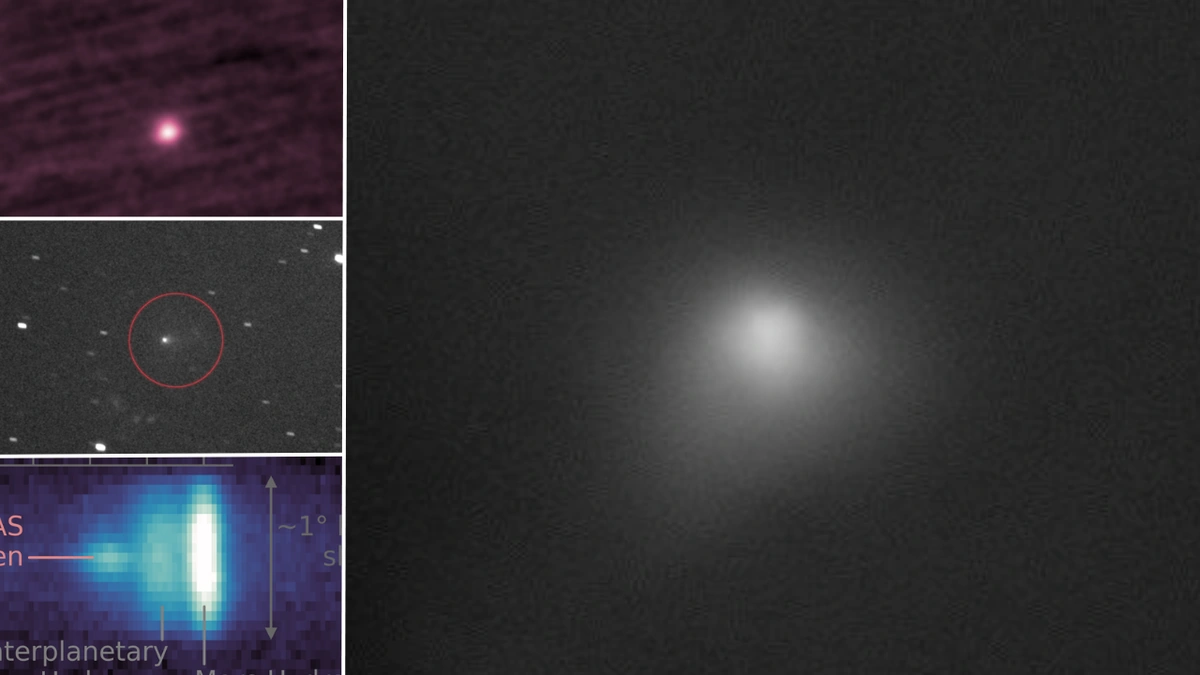
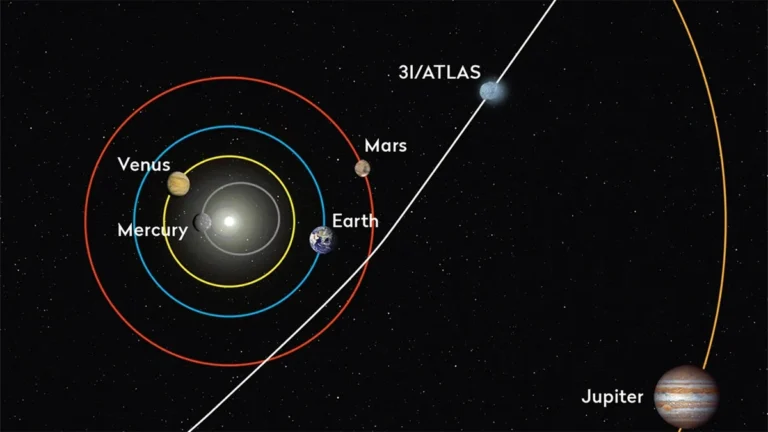
Here’s the thing: Comet 3I/ATLAS , also known as an interstellar object , is a rock star – a cosmic rock star! Unlike the comets that were born right here in our solar system, 3I/ATLAS comes from somewhere else entirely. Like, another star system! That’s huge. Imagine getting a package in the mail, and the return address is a planet orbiting Alpha Centauri. That’s kind of what this is like.
But and this is a big BUT, What fascinates me is the journey that 3I/ATLAS has taken. It’s traveled for potentially millions or even billions of years across the vast gulf of interstellar space. So, it’s basically a time capsule. And by studying it, we can learn about the building blocks of other solar systems – what they’re made of, how they formed, and whether they might contain the ingredients for life.
We can compare 3I/ATLAS’s composition to our own comets. Scientists can glean insights into the diversity of planetary systems. This is like comparing apples and oranges, or rather, icy rocks from different stellar orchards. The differences could tell us a lot about the conditions necessary for planet formation.
Paul Craggs and the Art of Capturing the Impossible
Now, let’s talk about Paul Craggs. This isn’t some giant telescope run by NASA. Paul is an amateur astrophotographer – someone who dedicates their time, skill, and resources to capturing images of the night sky. I can not emphasize enough that, the fact that he was able to capture such clear images of something so far away and so faint is a testament to his skill and dedication. It’s like taking a picture of a firefly from across a football field – at night!
His images are more than just pretty pictures. They’re valuable scientific data. Scientists use these images to track the comet’s trajectory, study its composition, and learn more about its behavior as it interacts with our sun. It’s citizen science at its finest, and it shows that you don’t need a PhD and a million-dollar telescope to make a real contribution to our understanding of the cosmos.
Plus, Craggs’ work inspires people. Seeing those images and knowing they’re real ignites a sense of wonder. It reminds us that the universe is vast, mysterious, and full of amazing things waiting to be discovered. It encourages us to look up and ask questions.
The Future of Interstellar Exploration (From Our Backyard)
Okay, so 3I/ATLAS is zipping away from us now, on its way back out into interstellar space. Will we ever get another chance to study it up close? Probably not this particular comet. But here’s the cool part: scientists are already working on missions to intercept future interstellar objects. Imagine sending a spacecraft to rendezvous with one of these cosmic travelers, collecting samples, and bringing them back to Earth for analysis. It sounds like science fiction, right? But it’s becoming increasingly realistic.
The European Space Agency’s Comet Interceptor mission, for instance, is designed to do just that: wait in space for a suitable comet to come along and then flyby. The European Space Agency’s Comet Interceptor mission is an interesting project. Missions like these will provide unprecedented insights into the origins of our solar system. And perhaps even other alien systems.
And who knows what we might find? Maybe we’ll discover organic molecules, the building blocks of life. Maybe we’ll find evidence of past or present life on other planets. Or maybe we’ll just find a bunch of ice and dust. Even that would be valuable, as it would help us understand the processes that shape planetary systems throughout the galaxy.
But even if we never send a spacecraft to another star system, we can still learn a lot from afar. Ground-based telescopes and space-based observatories are constantly improving, allowing us to study these distant objects in ever-greater detail. And as Paul Craggs has shown, amateur astrophotographers can play a vital role in this process, too.
So, What’s the Big Takeaway?
The thing is, the discovery and study of interstellar comets , like 3I/ATLAS, is more than just an academic exercise. It’s about expanding our horizons, challenging our assumptions, and exploring the unknown. It’s about understanding our place in the cosmos and figuring out where we came from and where we’re going. And it’s about inspiring the next generation of scientists, engineers, and explorers. What could be more important than that?
This isn’t just about a blurry photo of a distant comet. It’s about the human spirit of curiosity, the drive to explore, and the desire to understand. And that’s something worth celebrating – and supporting.
FAQ About Interstellar Comets
What exactly is an interstellar comet?
An interstellar comet is a comet that originated outside of our solar system and has traveled through interstellar space before entering our solar system.
How do scientists know it came from another star system?
By calculating its trajectory. Interstellar objects have velocities and paths that are significantly different from objects that originated in our solar system.
Are interstellar comets dangerous to Earth?
The chances of an interstellar comet colliding with Earth are extremely low due to the vastness of space.
Can I see an interstellar comet with my own telescope?
Most interstellar comets are too faint to be seen with small telescopes, but dedicated astrophotographers can capture images of them using specialized equipment.
What does it mean for the study of cometary science?
The study of interstellar comets has provided great learning opportunities for the scientists and cometary science has evolved a lot in recent years.
In closing, the universe is a vast and wondrous place, and comets like 3I/ATLAS offer a glimpse into its mysteries. Keep looking up, keep asking questions, and never stop exploring.
About the Author