
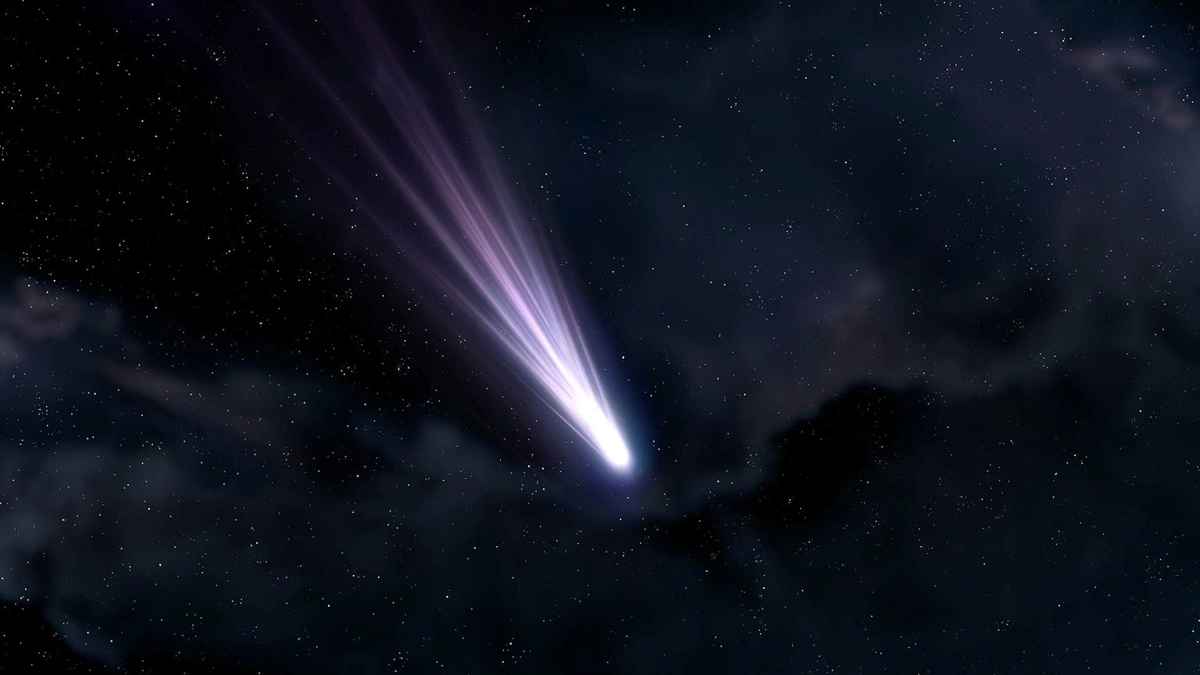
3I/ATLAS | Utah Image Reveals Comet's Hidden Secret!
Alright, space enthusiasts, buckle up! We’ve got a cosmic head-scratcher on our hands, fresh from the digital telescopes of Utah. A new image of comet 3I/ATLAS , that interstellar wanderer, has revealed something… unusual. And when it comes to space, “unusual” is our favorite flavor of the week. So, let’s dive into this, shall we? What’s this anomalous asymmetry all about, and why should you, sitting there with your chai, care?
What’s the Big Deal with Comet 3I/ATLAS?
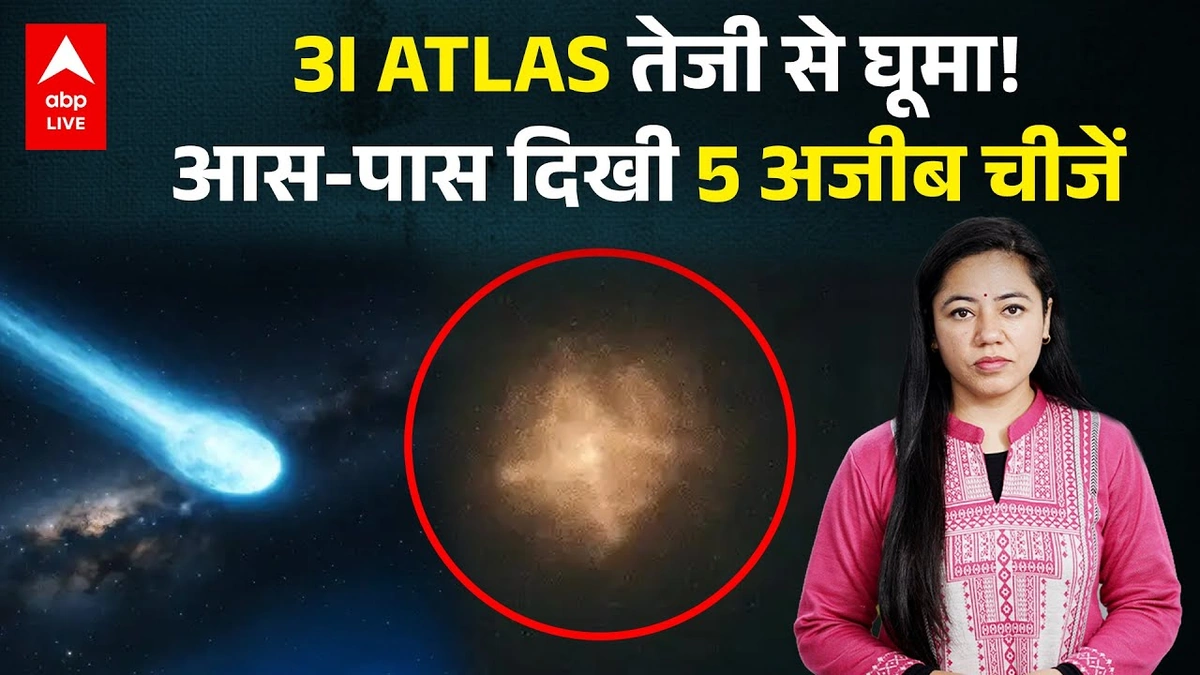
First, a quick recap. 3I/ATLAS isn’t your average, run-of-the-mill comet from our solar system’s backyard. This baby is an interstellar visitor – meaning it originated from another star system entirely. Think of it as a cosmic tourist, popping by for a quick visit. That alone makes it interesting.
But here’s where it gets spicy. Comets, as they approach the sun, tend to release gas and dust, forming a coma (that fuzzy atmosphere around the nucleus) and often a tail. Usually, this activity is somewhat symmetrical, at least in the initial stages. What’s captured in this new image, however, defies that expectation. The activity seems… lopsided. We are talking about the sunward activity here.
“But why does it matter?” I hear you ask. Well, the way a comet behaves as it interacts with the sun tells us a lot about its composition, its structure, and the environment it came from. Any deviation from the norm – this unusual cometary activity — offers a peek into the exotic and potentially never-before-seen characteristics of another solar system.
Decoding the Asymmetry | Possible Explanations
So, what could be causing this asymmetry? Several theories are floating around, and honestly, they’re all pretty darn cool.
- Uneven Composition: The comet’s nucleus (its solid, icy core) might not be uniform. Maybe one side is richer in volatile compounds (stuff that easily turns into gas) than the other. As it heats up, the “gassy” side flares up more dramatically, creating the asymmetry.
- Rotational Effects: The comet’s rotation could be playing a role. If it’s spinning in a particular way, the sun’s radiation might hit certain areas more intensely, leading to localized bursts of activity.
- Surface Features: Think of it like this: imagine a ball of ice with a tiny patch of dark material on one side. That dark patch would absorb more heat, causing a localized outburst. Comets could have similar features on their surfaces, leading to asymmetrical activity.
It is important to remember that the observations of interstellar objects are crucial to understand our universe better. It’s like trying to understand the Earth by studying a rock from Mars – you’re bound to learn something new! And that’s why astronomers are burning the midnight oil trying to decipher the secrets of comet 3I/ATLAS .
Why This Matters to You (Yes, You!)
“Okay, okay,” you might say, “cool space stuff. But I’m more worried about what’s for dinner.” And that’s fair! But here’s the thing: studying comets – especially interstellar ones – gives us clues about the formation of solar systems, including our own. It helps us understand the building blocks of planets and, potentially, the origins of life itself. Comets may have delivered water and organic molecules to early Earth. So, in a way, this funky comet might be distantly related to your cup of chai!
Besides, space exploration is a driver of innovation. The technologies developed for studying comets and other celestial objects often trickle down into everyday life. Better sensors, advanced materials, improved communication systems – all these can have roots in space research.
What fascinates me is how interconnected everything is. You start with a weird-looking comet and end up learning something profound about our place in the universe. Speaking of profound, have you ever wondered how the moon was formed? It’s another cosmic mystery with fascinating implications.
The Role of the Utah Telescope and Future Observations
The fact that this image came from a telescope in Utah is also pretty neat. It highlights the fact that you don’t need to be a giant, government-funded observatory to make significant contributions to astronomy. Smaller, dedicated telescopes can play a crucial role in monitoring comets and other dynamic objects in our solar system. Moreover, advancements in digital imaging and processing techniques are allowing even backyard astronomers to capture stunning images of the night sky.
What’s next for 3I/ATLAS ? Astronomers will undoubtedly continue to monitor it as it travels through our solar system. They’ll be using different telescopes and instruments to gather more data on its composition, its activity, and its trajectory. The goal is to create a comprehensive picture of this interstellar visitor and learn as much as possible before it heads back out into the vast expanse of space.
And who knows? Maybe this unique behavior of 3I/ATLAS will force us to rethink our current models of cometary activity. That’s how science progresses, after all – by challenging assumptions and embracing the unexpected.
3I/ATLAS and the Understanding of Interstellar Objects
Understanding the behavior of interstellar objects like 3I/ATLAS is essential for expanding our knowledge of planetary systems beyond our own. The comet’s composition and activity can offer valuable clues about the conditions in the star system where it originated, helping us paint a more complete picture of the diversity of planetary environments in the galaxy.
Here’s the thing: Interstellar object observation allows scientists to compare the materials and processes in different star systems, leading to new insights into the formation and evolution of planets. By studying these cosmic travelers, we gain a better understanding of the building blocks of planets and the potential for life elsewhere in the universe.
FAQ Section
Frequently Asked Questions
What exactly does “anomalous asymmetry” mean?
It means the comet isn’t behaving as expected. The release of gas and dust isn’t uniform; it’s lopsided, suggesting something unusual is going on beneath the surface.
Is Comet 3I/ATLAS dangerous to Earth?
No. Its trajectory poses absolutely no threat to our planet. It’s just passing through.
How can I see 3I/ATLAS?
Unfortunately, 3I/ATLAS is extremely faint and requires powerful telescopes to observe. You won’t be able to see it with the naked eye or even with binoculars.
Will there be more interstellar comets visiting our solar system?
Absolutely! Astronomers believe that interstellar objects are constantly entering our solar system. As our detection capabilities improve, we’re likely to discover many more of these cosmic travelers.
Why is studying comets important?
Studying comets helps us understand the formation of our solar system, the origins of water and organic molecules on Earth, and the potential for life elsewhere in the universe.
What if 3I/ATLAS’s asymmetry is caused by something completely unexpected?
That’s the beauty of science! If the observations defy current theories, it forces scientists to rethink their assumptions and develop new models. It’s all part of the process of discovery.
About the Author