Mars | Water Mystery Deepens After Spacecraft Shift!
We’ve all looked up at Mars at some point, haven’t we? That reddish dot in the night sky, sparking dreams of alien life and vast, unexplored landscapes. But what if I told you that our understanding of this fascinating planet is still evolving, and a recent spacecraft maneuver has thrown a wrench into our long-held beliefs about liquid water? Let’s dive in, because the implications are actually pretty big.
The Martian Water Mystery | A Deep Dive
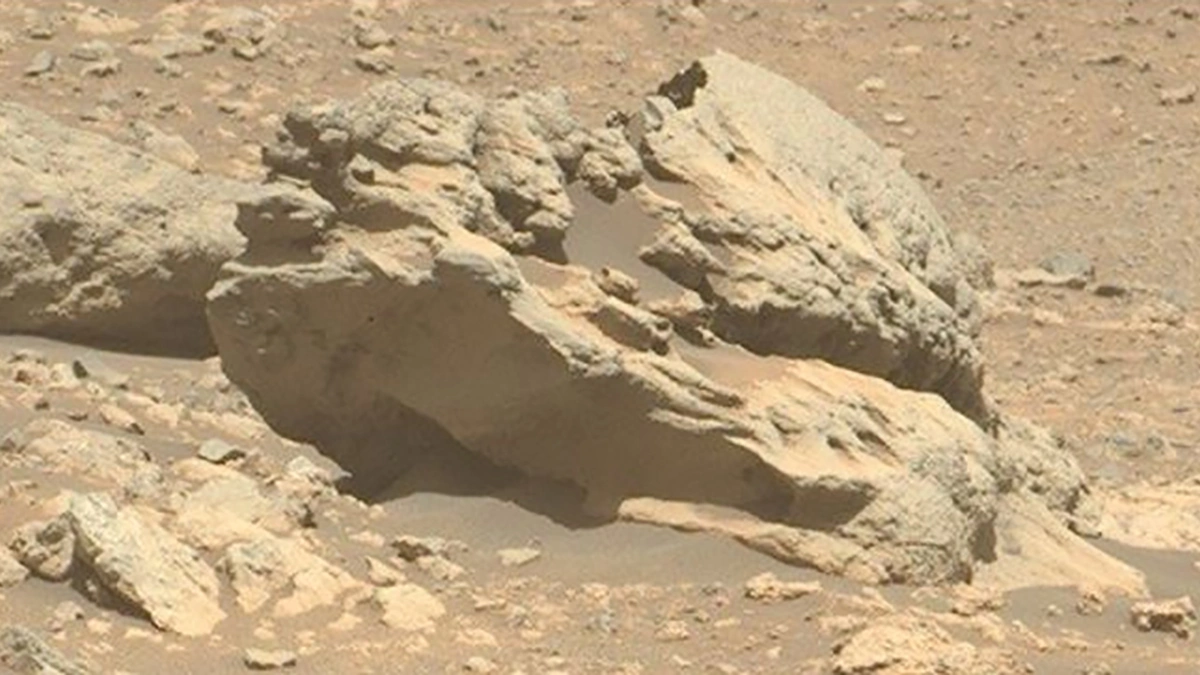
For years, scientists have debated the possibility of liquid water existing on the surface of Mars . After all, water is essential for life as we know it. The discovery of potential subsurface lakes fueled our imaginations. But, here’s the thing: new evidence suggests these initial findings might need a serious re-think. A recent spacecraft maneuver, analyzing radar data with higher precision, is now challenging those claims. What fascinates me is how this single maneuver can rewrite our textbooks – or at least a few chapters.
The question isn’t just “Is there water?” It’s ” How does water behave on Mars ?” We know Mars has ice – plenty of it, especially at the poles. The real mystery is whether that ice can melt into liquid form under the planet’s extremely cold temperatures and thin atmosphere. Finding evidence of perchlorate salts might have been a breakthrough. These salts lower the freezing point of water drastically, making liquid water a more viable possibility even in sub-zero conditions. But this is where things get complicated. Is the water actually there, or are we chasing a mirage created by misinterpreted data?
Radar Reflections and Data Interpretation | Understanding the Science
So, how did this spacecraft maneuver change things? It all boils down to radar reflections. Spacecraft equipped with radar instruments send radio waves toward the Martian surface. The way these waves bounce back provides clues about the composition and structure of the subsurface. Think of it like sonar for planets. But interpreting these reflections is tricky. Initial analysis of radar data suggested the presence of highly reflective materials beneath the surface, which were interpreted as potential pockets of liquid water. However, the new analysis considers alternative explanations for these reflections.
For example, certain types of rock formations or even extremely salty ice could produce similar radar signatures. It’s like looking at a blurry photo – you might think you see one thing, but with a sharper image, the reality could be completely different. The key is to eliminate other possibilities before jumping to conclusions about liquid water. This is where the updated data processing techniques come into play. Scientists are using more sophisticated models to account for the complex interactions of radar waves with the Martian surface. But, it’s a constant process of refining our understanding. And, let’s be honest, sometimes that means admitting we were wrong – which is just as important as making new discoveries.
The Search for Martian Life | Why This Matters
Here’s why this water debate is so important: the presence of liquid water is generally considered a prerequisite for life as we know it. If Mars lacks accessible liquid water, the chances of finding extant life – that is, life that exists now – diminish significantly. But, that doesn’t mean the search is over. The focus might shift to different strategies, such as exploring regions with known ice deposits or searching for evidence of past water activity. Perchlorate salts continue to play a vital role in water behavior. The possibility of past life remains open; after all, Mars was once a much warmer, wetter planet.
Even if we don’t find life on Mars , studying the planet’s geology and climate helps us understand the evolution of planetary systems, including our own. By understanding why Mars became the cold, dry desert it is today, we can gain insights into the factors that make a planet habitable – and perhaps even identify potential habitable planets beyond our solar system. The European Space Agency’s ( ESA ) ExoMars rover is an important program. The rover is searching for evidence of past life. The search for Martian life persists, and it’s a quest that will likely continue for decades to come.
Future Missions and the Ongoing Quest
What’s next for Mars exploration? Well, a lot! Future missions are planned to further investigate the Martian subsurface and search for definitive evidence of water – whether liquid or frozen. These missions will utilize more advanced instruments and techniques, including ground-penetrating radar, seismic sensors, and chemical analysis tools.
One exciting prospect is the potential for robotic drilling missions to sample the subsurface directly. This would allow scientists to analyze the composition of the Martian soil and rocks in unprecedented detail. I initially thought this was straightforward, but then I realized the technical challenges are immense. Drilling on another planet requires overcoming numerous hurdles, including extreme temperatures, radiation exposure, and the risk of contaminating potential life-bearing environments.
But the rewards are worth the effort. If we can definitively confirm the presence of liquid water – and characterize its properties – we’ll be one step closer to answering the fundamental question of whether Mars could have once supported life, or perhaps even still does.
The Human Element | Our Fascination with the Red Planet
Beyond the scientific discoveries, there’s also the human element. Our fascination with Mars stems from a deep-seated desire to explore the unknown and to understand our place in the universe. Methane detection remains an important area. What is the source of methane? The prospect of sending humans to Mars is a driving force behind many of these missions.
The challenges of human spaceflight are enormous. Radiation exposure, psychological effects of long-duration space travel, and the logistical hurdles of providing life support on another planet are just a few of the obstacles we need to overcome. A common mistake I see people make is underestimating those challenges, but here’s the thing: pushing the boundaries of human exploration is what drives innovation and inspires future generations. And honestly, who wouldn’t want to be among the first humans to set foot on Mars ?
The search for water on Mars – and the broader quest to understand the planet’s past, present, and future – is a testament to human curiosity and ingenuity. It’s a story that’s far from over, and one that promises to continue to captivate us for years to come. The analysis of radar data is changing our understanding. But this isn’t just about water or life on another planet. It’s about us, about our drive to explore, to discover, and to push the limits of what’s possible. We are all connected.
FAQ
What does this discovery mean for the possibility of life on Mars?
The lack of evidence for liquid water makes it less likely that life exists on Mars today. However, it doesn’t rule out the possibility of past life when Mars was warmer and wetter.
Could there still be water ice on Mars?
Yes, there’s plenty of evidence for water ice, especially at the polar regions. The challenge is whether this ice can melt into liquid form.
What kind of spacecraft are used to study Mars?
Various orbiters, landers, and rovers, equipped with instruments like radar, cameras, and spectrometers, are used to study Mars.
Why is finding water on Mars so important?
Liquid water is essential for life as we know it. Finding water on Mars would increase the possibility that the planet could have once supported life.
How accurate are radar measurements for studying Mars?
Radar measurements can be accurate, but interpretation is complex. Scientists must account for various factors to avoid misinterpreting the data.
What future Mars missions are planned?
Several missions are planned, including those focused on drilling into the subsurface and searching for biosignatures.
About the Author