Fate of the Universe | Shocking Twist Revealed?
Ever looked up at the night sky, a vast canvas speckled with starlight, and felt a shiver of awe mixed with a tinge of existential dread? Let’s be honest – we all have. What is this grand cosmic show all about, and more pressingly, how does it end? The fate of the universe is not just some abstract concept for astrophysicists; it’s a question that touches upon our very place in existence.
I initially thought this was a topic with a straightforward answer. You know, big crunch, heat death, the usual suspects. But the deeper I delved, the more I realized how much we don’t know, and how wild the possibilities truly are. So, grab your metaphorical spacesuit, and let’s embark on this cosmic journey together.
The Big Freeze | Heat Death and the Expanding Void
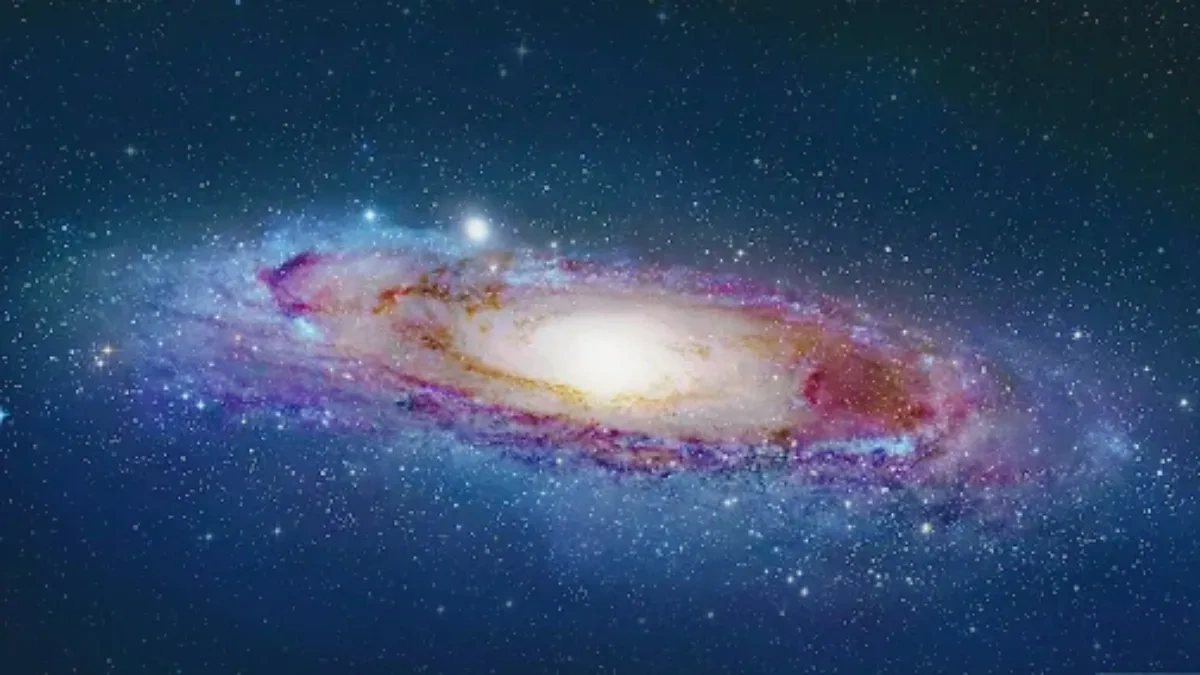
The most widely accepted theory, and honestly, the most depressing one, is the “heat death” scenario. Think of it as the ultimate cosmic entropy. According to this model, the expansion of the universe , which we know is accelerating, will continue indefinitely. This means galaxies will drift further and further apart, stars will eventually burn out, and black holes will slowly evaporate via Hawking radiation.
What’s left? A cold, dark, and almost entirely empty expanding void . No more energy, no more light, no more anything. It’s the universe winding down like a clock, until the spring is completely unwound. The implications of accelerated expansion are substantial . The chilling part? This isn’t some far-off possibility; current observations suggest this is the most likely outcome. But, and this is a big but, our understanding of dark energy, the mysterious force driving this expansion, is still incomplete. That leaves room for other, more interesting possibilities.
The Big Rip | When the Fabric Tears
Now, this is where things get really exciting, in a terrifying, end-of-all-things kind of way. The Big Rip is a more extreme version of heat death, fueled by an even more potent form of dark energy called phantom energy. Instead of just causing the universe to expand at an accelerating rate, phantom energy would become so powerful that it would eventually overcome all forces holding matter together.
Think about it: first, galaxies would be torn apart. Then, solar systems. Then, planets. Finally, even atoms themselves would be ripped asunder. It’s like the universe is trying to unzip itself, leaving nothing but fundamental particles flying apart at ever-increasing speeds. What fascinates me is that unlike the relatively slow burn of heat death, the Big Rip would happen relatively quickly – potentially within tens of billions of years. It’s cosmic drama at its finest.
The Big Crunch | A Cyclical Universe?
Ah, the Big Crunch – the optimistic option! This theory posits that the universe’s expansion will eventually halt and reverse. Gravity, the ultimate cosmic glue, would win out against dark energy, pulling everything back together. Imagine a movie of the Big Bang played in reverse: galaxies colliding, temperatures rising, until everything collapses into a single, infinitely dense point – a singularity. But this raises a fascinating question: What happens then?
Some physicists believe the Big Crunch could lead to another Big Bang, creating a cyclical universe that perpetually expands and contracts. It’s a cosmic phoenix rising from the ashes, an endless cycle of creation and destruction. While elegant and appealing, the Big Crunch faces some serious challenges. Current observations suggest that there isn’t enough matter in the observable universe to halt the expansion. Also, the existence of dark energy makes a reversal of expansion less likely. But hey, never say never in cosmology!
Quantum Fluctuations and Vacuum Decay | Wildcard Scenarios
Let’s be honest, the universe loves to throw curveballs. Beyond the Big Three (Heat Death, Big Rip, Big Crunch), there are some truly mind-bending possibilities lurking in the realm of quantum physics. One such scenario is vacuum decay. The vacuum of space, which we think of as empty, actually possesses a certain energy level. But what if our vacuum isn’t in its lowest possible energy state? What if there’s a “true vacuum” with a lower energy level out there?
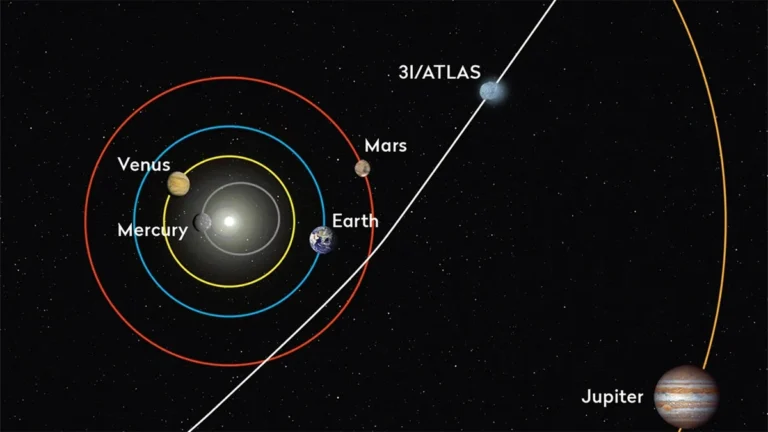
If a bubble of this true vacuum were to spontaneously appear (thanks to quantum fluctuations), it would expand at the speed of light, converting everything it touches into a different kind of universe with different physical laws. Sounds like science fiction, right? But it’s a legitimate theoretical possibility. The good news is, the chances of this happening anytime soon are incredibly slim. But the thought that our entire universe could be wiped out by a rogue quantum bubble is enough to keep anyone up at night. Speaking of keeping up, do you know about the I ATLAS comet? Find more information here .
The Multiverse | Are We Just One of Many?
Then there’s the multiverse – the ultimate escape hatch for cosmic existential dread. The idea is that our universe is just one of countless others, each with its own physical laws and constants. These other universes could be bubbling off from our own, existing in parallel dimensions, or even residing within black holes.
The implications are staggering. If the multiverse exists, then the fate of our expanding universe becomes less significant. Even if our universe meets a cold, dark end, other universes might be thriving. It’s like a cosmic insurance policy against oblivion. Of course, the multiverse is highly speculative. We have no direct evidence for its existence, and it may remain forever beyond our ability to observe. But it’s a concept that continues to fuel the imagination of physicists and science fiction writers alike. It is certainly interesting to think about the multiverse.
So, what’s the ultimate fate? The truth is, we don’t know for sure. Our understanding of the universe is constantly evolving, and new discoveries could completely change the game. What we do know is that the universe is a dynamic, mysterious, and often terrifying place. And that’s what makes it so endlessly fascinating. The future of the universe is uncertain.
FAQ Section
What if dark energy changes over time?
That’s a great question! If the strength of dark energy were to decrease, it could potentially lead to a reversal of the universe’s expansion and a possible Big Crunch scenario. However, current observations suggest that dark energy is constant, but it’s an area of ongoing research.
Could new physics change everything?
Absolutely! Our current understanding of physics is incomplete. The discovery of new particles or forces could completely alter our understanding of the cosmic destiny . That’s why scientists are constantly pushing the boundaries of knowledge with experiments like the Large Hadron Collider.
Is there any way to prevent the heat death of the universe?
Unfortunately, according to our current understanding of physics, there’s no known way to prevent heat death. However, some speculative ideas involve harnessing energy from black holes or even manipulating the fabric of spacetime.
What about the possibility of life after the universe ends?
That’s a philosophical question more than a scientific one. If the universe ends in a Big Crunch, then all life would be destroyed. If it ends in heat death or the Big Rip, life as we know it wouldn’t be sustainable for trillions of years before the end. However, some speculative theories suggest that advanced civilizations could potentially transfer their consciousness to new universes or even create their own artificial universes.
How does the fate of the universe affect me today?
While the end of the universe may seem like a distant concern, it highlights the preciousness of our existence and the importance of understanding our place in the cosmos. It encourages us to cherish our relationships, explore the wonders of the universe, and strive to make a positive impact on the world around us. Consider the effects of voter fraud in today’s climate .
About the Author