Saturn's Rings Vanishing? Sky Mystery Solved!
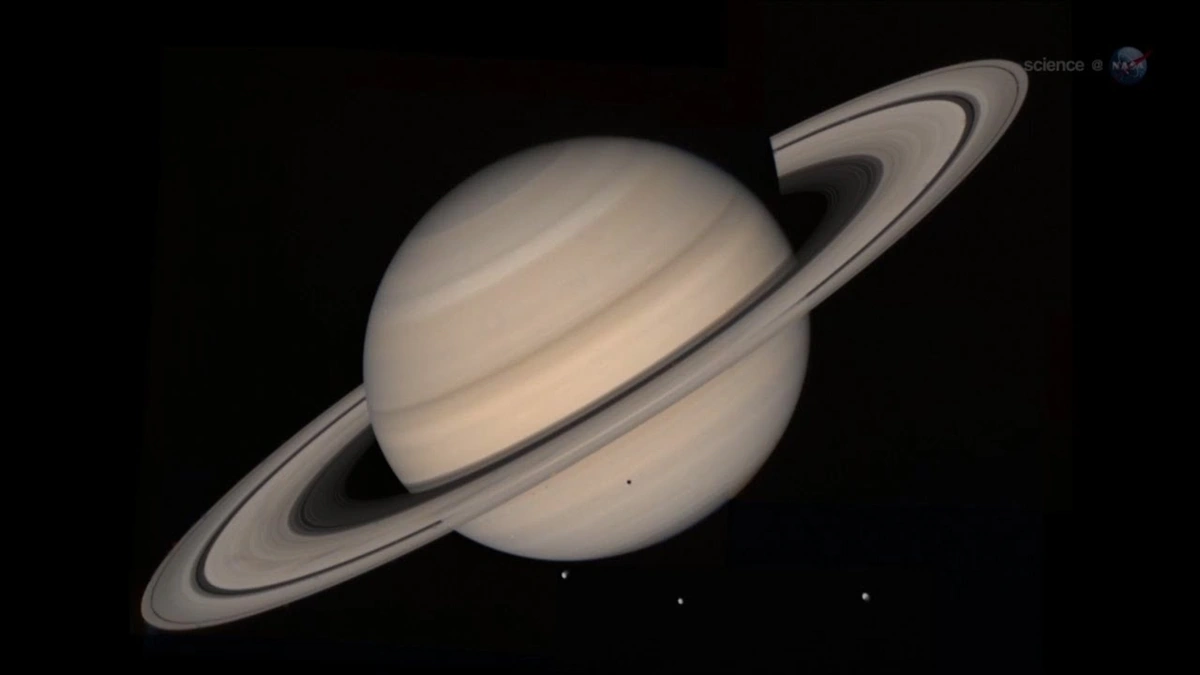
Have you ever looked up at the night sky and been utterly mesmerized by Saturn , the jewel of our solar system, with its magnificent rings? But what if I told you that, at certain times, those rings seem to… vanish? It’s not an illusion, folks. It’s a real celestial phenomenon, and understanding why it happens unlocks some fascinating secrets about our universe. Let’s dive in!
The Great Disappearing Act | Why Saturn’s Rings Seem to Vanish
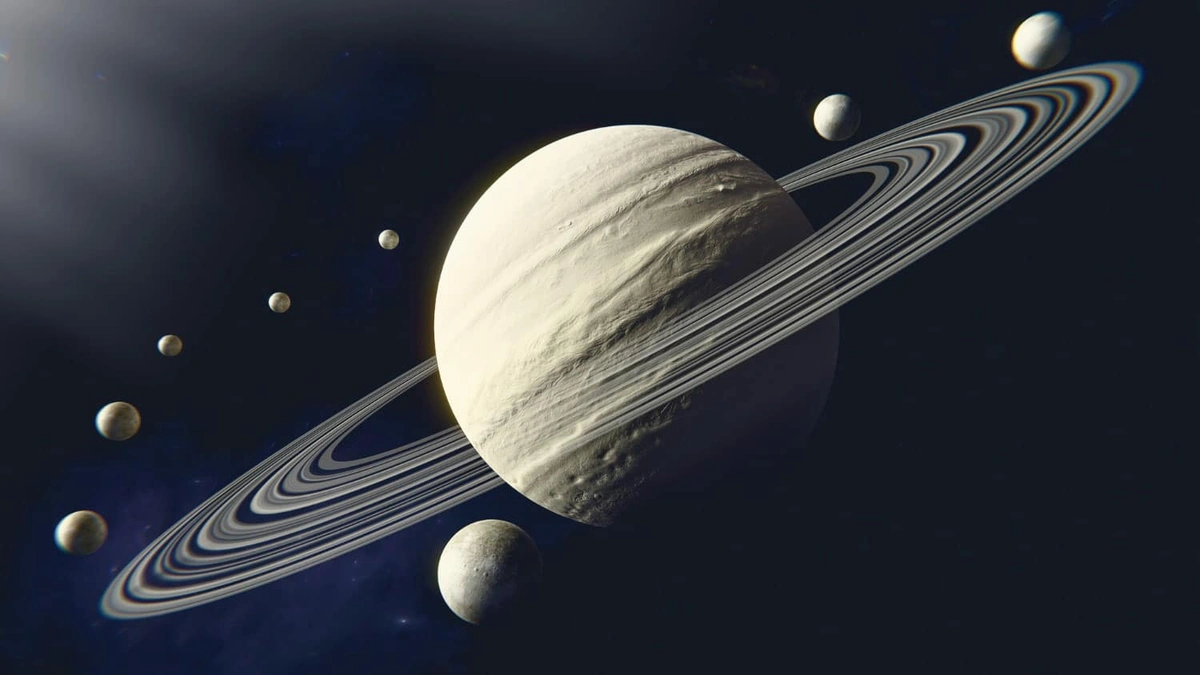
Here’s the thing: Saturn’s rings aren’t going anywhere. They’re still there, swirling around the planet as always. The apparent disappearance is all about perspective – specifically, our perspective from Earth. It all boils down to Saturn’s tilt and its orbit around the Sun. Imagine holding a plate and slowly tilting it away from you. At a certain angle, the plate seems to almost disappear when viewed edge-on, right? That’s precisely what is happening with Saturn and its rings.
Because Saturn’s axis is tilted, as it orbits the Sun, we sometimes see its rings from a tilted perspective. Other times, we view them nearly edge-on. When we see the rings edge-on, they appear incredibly thin – so thin that they seem to vanish altogether. It’s a cosmic trick of the eye! What fascinates me is how this seemingly simple explanation involves some pretty complex celestial mechanics.
Decoding the Dance | Saturn’s Tilt and Earth’s Viewpoint
So, how often does this happen? Saturn takes about 29.5 Earth years to orbit the Sun. Because of this lengthy orbital period, Saturn’s ring plane crosses our line of sight approximately every 13.75 to 15.75 years. These events aren’t perfectly regular because the orbits aren’t perfectly circular, but that’s a good rough estimate. During these periods, for a few months, the rings appear at their thinnest.
But, it’s not just about Saturn’s tilt; it’s also about Earth’s position relative to Saturn. The angle at which we view the rings changes constantly. Remember learning about the ecliptic plane in school? That’s the plane of Earth’s orbit around the Sun. And it’s the relationship between that plane and the orientation of Saturn’s rings that determines what we see. It sounds complicated, and let me be honest, it is a bit complicated. That’s what makes it so incredibly cool!
Beyond the Disappearance | What We Learn From Ring Orientation
The apparent disappearance of Saturn’s rings offers more than just a pretty optical illusion. These events give astronomers a unique opportunity to study Saturn and its moons without the glare of the bright rings obscuring the view. It’s like having a clear stage to observe the actors without the dazzling spotlight. For example, faint moons that are normally hidden by the rings become visible. Scientists can also use this opportunity to refine their understanding of the ring composition and structure. As per the studies on NASA’s official website , these events helps to examine Saturn’s atmosphere.
The rings are made of countless particles, ranging in size from tiny grains of dust to chunks as big as houses. These particles are primarily made of water ice, with traces of rock and other materials. And when the rings are edge-on, astronomers can measure the thickness of the rings with greater precision. A common mistake I see people make is thinking the rings are solid. They are not. The rings are a dynamic, ever-changing environment.
Visualizing the Unseen | Telescopes and the Ring Plane Crossing
If you have access to a telescope, observing Saturn’s ring plane crossing is an event you absolutely don’t want to miss. Even a small telescope can reveal the change in the rings’ appearance. The rings won’t vanish completely; they’ll appear as a very thin line across the planet. It requires patience and a clear night sky. If you are in India, plan accordingly to observe this celestial event .
But even if you don’t have a telescope, you can still follow the event online. Many observatories and astronomy websites broadcast live images of Saturn during these periods. It’s a fantastic way to experience the wonders of the universe from the comfort of your home. The one thing you absolutely must double-check is the timing of the event for your specific location.
Ring Composition and Structure
The ring system itself is incredibly complex, divided into several main rings and numerous fainter rings and gaps. Each ring is made up of countless particles, ranging in size from tiny grains of dust to chunks as big as houses. These particles are primarily made of water ice, with traces of rock and other materials. The gaps in the rings are caused by the gravitational influence of Saturn’s moons. For instance, the Cassini Division, the largest gap in the rings, is caused by the moon Mimas.
According to the latest data from the Cassini spacecraft, the rings are also surprisingly young, likely only a few hundred million years old. This is relatively recent in the grand scheme of the solar system, which is about 4.5 billion years old. Where did the rings come from? That’s still a subject of ongoing research. Some scientists believe they may be the remnants of a shattered moon or a captured comet.
The experience of watching this cosmic dance is truly humbling. It reminds us that we are part of something much larger than ourselves. And that, my friends, is a perspective worth holding onto. The study on rings provide a better understanding about planetary science .
FAQ | Decoding Saturn’s Ring Mystery
Will Saturn eventually lose its rings completely?
Yes, eventually. Scientists believe that Saturn’s rings are slowly disappearing due to a phenomenon called “ring rain.” Ring particles are being pulled into Saturn by gravity and are vaporizing in the planet’s atmosphere.
When will the rings be edge-on again?
The rings were edge-on in 2025. The next time they will be edge-on to our view from Earth will be in 2038.
Can I see the ring plane crossing with just my eyes?
No, the rings are too faint to be seen with the naked eye when they are edge-on. You’ll need at least a small telescope to observe the event. But be ready with telescope and proper guidance.
What if I miss the ring plane crossing?
Don’t worry! The rings will gradually become more visible again over the next few years. The show goes on!
Are Saturn’s rings unique in the solar system?
No, all the gas giants (Jupiter, Uranus, and Neptune) have rings, but Saturn’s are by far the most spectacular. Their brightness and size make Saturn the most recognizable planet.
About the Author