Space Station Mission | Why Now?
So, the International Space Station (ISS) just got a new batch of residents! A US-Russian crew launched on a mission that’s going to keep them orbiting Earth for a solid eight months. Now, on the surface, that sounds like a headline and a bunch of facts. But here’s the thing: it’s way more than just a routine trip. It’s a testament to something pretty remarkable – sustained cooperation in the face of, well, everything else happening down here on our little blue planet.
Why This Mission Matters – More Than Just Science
Let’s be honest, launching people into space isn’t exactly new. But what fascinates me is the ‘why’ behind this particular mission, especially now. It’s easy to get caught up in the technical details – the experiments, the maintenance, the spacewalks. But think about the geopolitical landscape. The US and Russia aren’t exactly best buddies at the moment. Yet, up there, 400 kilometers above us, they’re relying on each other for survival. That, my friends, is significant. It’s a practical example of how shared goals – in this case, scientific advancement and the continued operation of the space station – can transcend earthly conflicts. This mission underscores the critical role of international collaboration in pushing the boundaries of human knowledge and exploration. It shows that even amidst global tensions, cooperation in space remains a viable and vital endeavor.
And it’s not just about sticking a plaster on international relations. The ISS is a unique laboratory. The microgravity environment allows scientists to conduct experiments that are impossible on Earth. This 8-month mission will contribute invaluable data in fields like medicine, materials science, and our understanding of the universe. This data has potential benefits for all of humanity, not just the participating nations. It’s a reminder that while we may argue and disagree down here, we’re all part of the same species, sharing the same planet, and ultimately, the same destiny. The ISS mission is a proof of this.
Living and Working in Orbit | A Day in the Life
Ever wondered what it’s really like to live on the ISS mission for eight months? It’s not all gazing out the window at our beautiful planet (though, let’s be real, that’s got to be a perk). The astronauts and cosmonauts have a packed schedule. A typical day involves conducting experiments, maintaining the station’s systems, exercising (to combat the effects of microgravity on their bodies), and communicating with mission control back on Earth.
Space also poses unique challenges to daily life. Food needs to be specially prepared and packaged, hygiene requires innovative solutions, and even simple tasks like sleeping become different in a weightless environment. Imagine trying to eat a bowl of daal without it floating away! Space exploration is a high stake game.
One thing that I find particularly interesting is the psychological aspect of long-duration spaceflight. Spending months in a confined space with the same few people can take a toll. It requires strong teamwork, effective communication, and a healthy dose of resilience. The extended mission puts pressure on the crew. The crew needs to be able to handle pressure and stress.
The Future of Space Cooperation
But – what does this mean for the future of space exploration? Well, the success of the ISS is a blueprint for future international collaborations. As we set our sights on more ambitious goals, like returning to the Moon with the Artemis program and eventually sending humans to Mars, international partnerships will become even more critical. These missions are incredibly expensive and complex, requiring the expertise and resources of multiple nations. Sharing the costs and risks makes these grand endeavors more feasible.
Moreover, different countries bring unique skills and technologies to the table. By combining these strengths, we can achieve far more than any single nation could on its own. Think of the ISS as a stepping stone, preparing us for the even greater challenges and opportunities that lie ahead in the vast expanse of space. According toNASA, the ISS program’s collaborative model lays the foundation for future missions.
And, let’s not forget the younger generation. Seeing astronauts from different countries working together on the ISS inspires young people around the world to pursue careers in science, technology, engineering, and mathematics (STEM). It fosters a sense of global citizenship and reminds us that humanity’s potential is limitless when we work together.
The International Space Station is a global effort. But, the future of space exploration relies on collaboration.
Potential Risks
Now, it’s not all sunshine and zero gravity up there. Space missions have inherent risks. The astronauts face dangers ranging from equipment malfunctions to the harsh environment of space itself – radiation exposure, extreme temperatures, and the ever-present threat of micrometeoroids. These risks are meticulously assessed and mitigated through rigorous training, redundant systems, and constant monitoring from ground control.
What initially seemed like a straightforward mission has complexities. But the meticulous training and expertise ensure safety. But, risks are not the biggest hurdle. The biggest hurdle is the psychological one.
The longevity of the space program hinges on the ability to handle risks.
The Indian Perspective
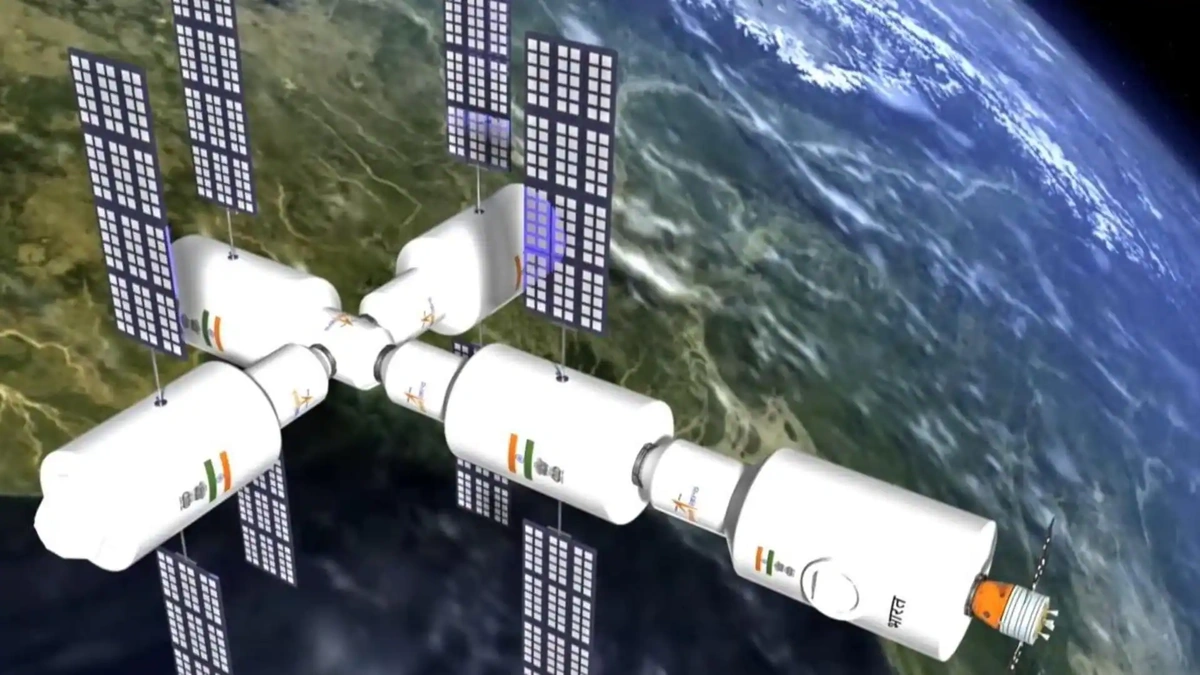
India, with its own growing space program, has a vested interest in the success of international missions like this one. ISRO, the Indian Space Research Organisation, is actively collaborating with other space agencies around the world on various projects. India recognizes that the future of space exploration is a collaborative one, and is keen to play a significant role in these global endeavors.
The knowledge and experience gained from these collaborations can help India further develop its own capabilities in space. It’s a two-way street – India benefits from the expertise of others, while also contributing its own unique skills and technologies. This spirit of cooperation is essential for pushing the boundaries of what’s possible in space. Scientific missions benefit greatly from collaboration.
FAQ
What kind of experiments will they be doing on this mission?
The experiments cover a wide range of fields, including human physiology, materials science, and fundamental physics. Some experiments will study the effects of microgravity on the human body, while others will investigate new materials for use in space and on Earth.
How do astronauts deal with being isolated for so long?
Astronauts undergo extensive psychological training to prepare them for the isolation and confinement of long-duration spaceflight. They also have regular communication with their families and mission control, and engage in activities like reading, exercising, and pursuing hobbies to stay mentally and emotionally healthy.
Is the ISS getting old? Will it be replaced?
Yes, the ISS is aging, but it’s still in good working order. There are ongoing discussions about the future of the ISS, including the possibility of extending its lifespan or replacing it with new space stations. Several private companies are also developing their own commercial space stations.
How does this mission benefit people on Earth?
The research conducted on the ISS has led to numerous innovations that benefit people on Earth, including advancements in medicine, materials science, and environmental monitoring. The mission promotes scientific discovery and innovation.
So, next time you look up at the night sky, remember that tiny speck of light that is the International Space Station . It’s not just a laboratory or a symbol of human ingenuity – it’s a beacon of hope, reminding us that even in the face of our differences, we can achieve amazing things when we work together. And isn’t that something worth celebrating?
About the Author