Saturn's Rings Vanishing?! See It Before It's Gone!
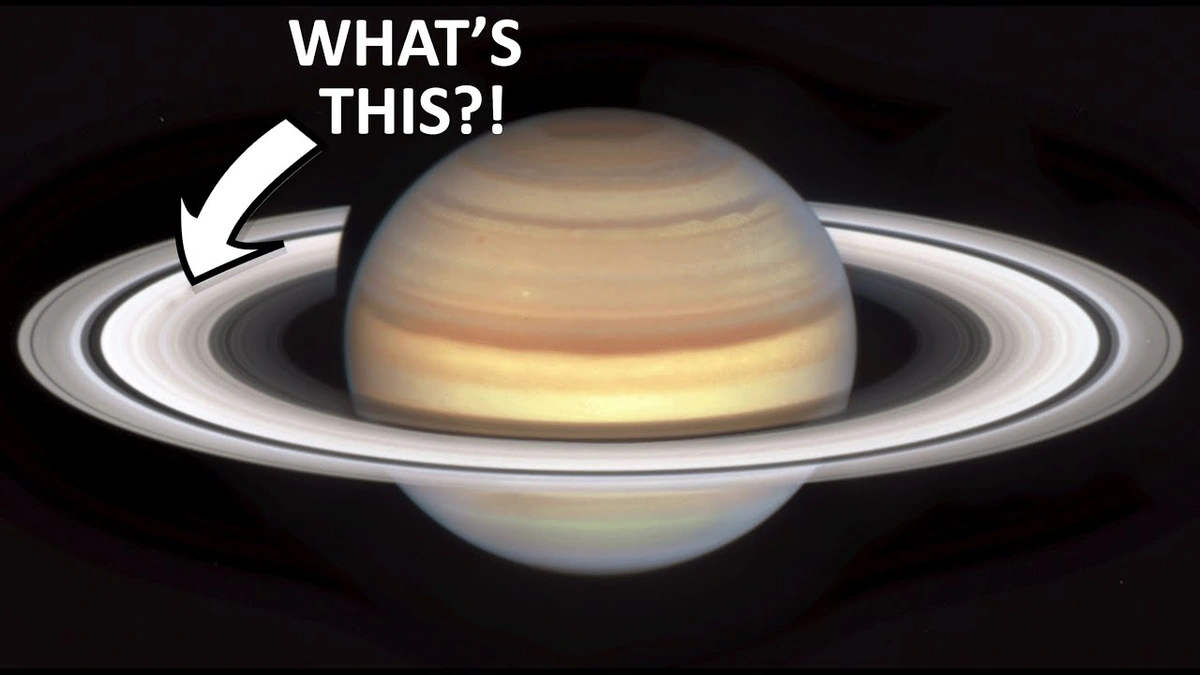
Okay, folks, let’s talk about something truly wild: Saturn’s rings are vanishing. I know, right? The iconic rings, the celestial halo we all instantly associate with the sixth planet from the sun, are slowly but surely disappearing. It sounds like the opening scene of a sci-fi movie, but it’s very real, and it’s happening faster than you might think. But, what does this mean for us?
The Great Disappearing Act | Why Saturn’s Rings Are Fading
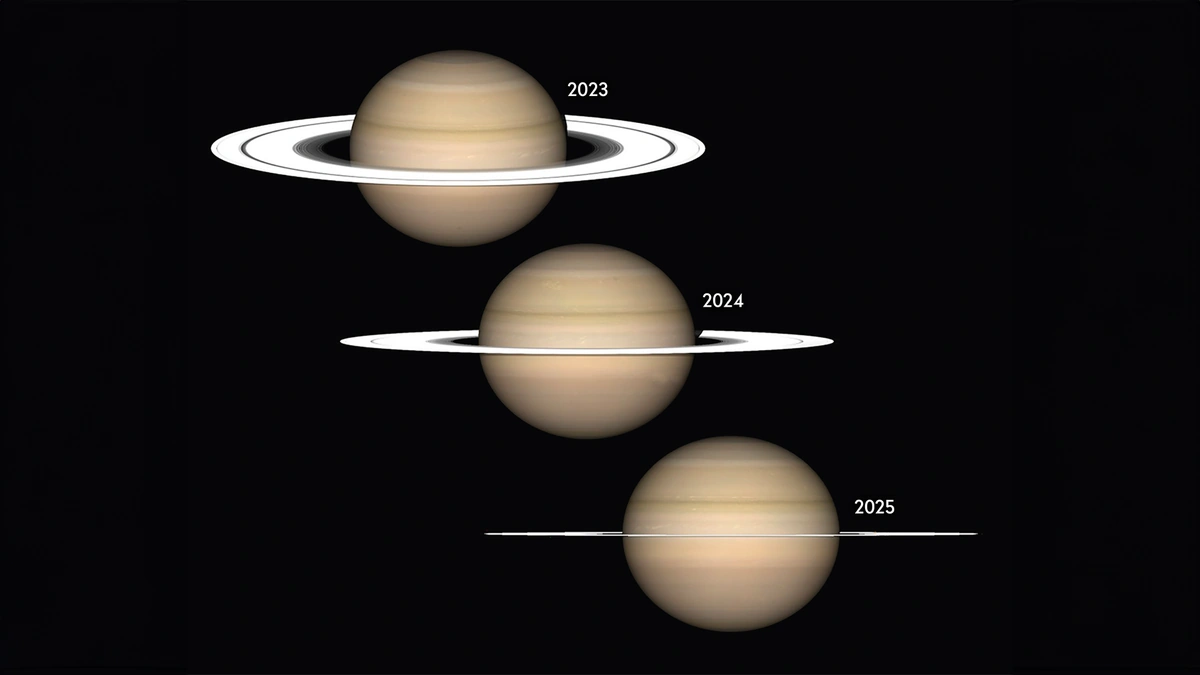
Here’s the thing: Saturn’s rings aren’t solid structures. They’re made up of billions of ice particles, ranging in size from tiny grains of dust to massive chunks several meters across. These particles are constantly colliding, grinding against each other, and generally causing cosmic chaos. So, why are they disappearing? It boils down to something called ‘ring rain.’
Ring rain, also known as ‘icy ring rain,’ is the phenomenon where these ice particles are pulled into Saturn’s atmosphere by gravity and then vaporize. Think of it like a gentle snowfall, but instead of landing on Earth, it’s dissolving into a giant gas planet. As per NASA’s calculations, the rings could be gone in a mere 100 million years – a blink of an eye on cosmic timescales! This is why the conversation around Saturn’s ring system is so relevant today. The rate at which they are disappearing is alarming.
Let me rephrase that for clarity: ring rain is one of the key causes of the diminishing Saturn’s rings .
The ‘Why’ Behind the Disappearance | Understanding the Implications
So, why does this matter? Well, for starters, Saturn’s rings have been a source of wonder and fascination for centuries. From Galileo’s first blurry glimpses through his telescope to the stunning images captured by the Cassini spacecraft, these rings have shaped our understanding of the solar system and inspired countless works of art and science. Losing them would be like losing a piece of our collective imagination. Beyond that, the rings act as a window into the planet’s history and evolution. Their composition, structure, and dynamics provide valuable clues about the formation of Saturn and its moons. Studying the rings helps us understand the processes that shaped our solar system billions of years ago.
And then there’s the bigger picture: the rings’ disappearance could have implications for Saturn’s atmosphere and magnetic field. The influx of water vapor from the ring rain might affect the planet’s chemical composition and weather patterns. It’s a complex interplay of forces, and we’re only just beginning to understand the full extent of it. This also leads to an increase in atmospheric particles and changes the planet’s albedo.
A Cosmic Perspective | The Transient Nature of Celestial Wonders
What fascinates me is the reminder that even the most seemingly permanent cosmic structures are, in fact, transient. Planets change, stars are born and die, and even entire galaxies evolve over time. Saturn’s ring particles are not immune to this cosmic dance of creation and destruction. The rings themselves might be relatively young, perhaps only a few hundred million years old. Which means they formed after the dinosaurs went extinct! The idea that something so spectacular could be temporary adds another layer of beauty and poignancy to its existence.
Consider this: the rings might disappear entirely, or they might be replenished by some future event, such as the breakup of a moon or the capture of an asteroid. The universe is full of surprises, and we never know what might happen next. This connects to the broader understanding of planetary science .
The fading of Saturn’s rings doesn’t diminish the planet’s majesty or importance. It simply adds another chapter to its story. It is also important to note that interplanetary dust and space debris also play a significant role in the dynamic nature of the rings.
How We Study the Rings | From Galileo to Cassini
Throughout history, scientists have used various tools and techniques to study the rings. From Galileo’s first blurry observations to the sophisticated instruments aboard the Cassini spacecraft, each generation has added to our knowledge of these celestial wonders. According to NASA, The Cassini mission, which orbited Saturn for 13 years, provided unprecedented insights into the rings’ structure, composition, and dynamics. It revealed the intricate patterns and features within the rings, the presence of ‘propellers’ caused by embedded moonlets, and the surprising complexity of the ring system.
And, it also delivered the sobering news about the ring rain.
What initially thought was straightforward, I now understand as a complex and fascinating area of study. The ongoing and future observations will undoubtedly reveal even more secrets about Saturn’s rings and their place in the solar system.
FAQ About Saturn’s Disappearing Rings
Will Saturn still be visible without its rings?
Yes, Saturn itself is a massive gas giant and will remain visible even after the rings are gone. The planet’s size and brightness will ensure that it remains a prominent object in the night sky. You can visit this pageto learn more about other planets.
How long until the rings completely disappear?
Scientists estimate that the rings could be gone in approximately 100 million years. While this may seem like a long time, it’s a relatively short period on cosmic timescales.
Could the rings reform in the future?
It’s possible, but not guaranteed. If another moon or asteroid were to break up near Saturn, the debris could potentially form new rings. However, this is just speculation.
What exactly is ‘ring rain’?
Ring rain is the phenomenon where ice particles from Saturn’s rings are pulled into the planet’s atmosphere by gravity and vaporize. It’s a primary cause of the rings’ gradual disappearance. Want to know how we can protect the planet? Check out the tips on this page.
What will happen when Saturn’s rings completely disappear?
When Saturn’s rings are completely gone, the planet itself will remain. While the rings are beautiful and have captivated us for years, the loss of Saturn’s rings will not affect the planet’s existence.
About the Author