Moon's Origin | Shocking New Discovery?
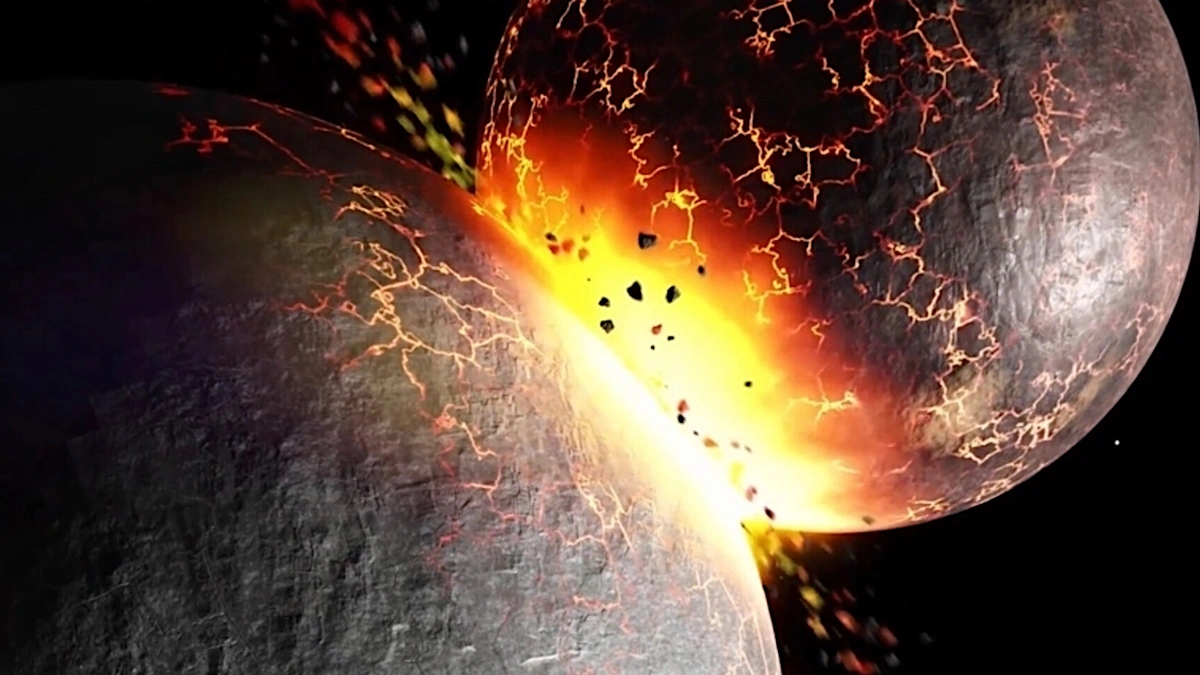
Here’s the thing: we all grew up with a story about the Moon. You know, the one where a Mars-sized object smashed into Earth, flinging debris into space that eventually coalesced into our lovely lunar companion. It’s a neat story, ties things up nicely. But what if – and this is a big ‘what if’ – that story isn’t quite right? Recent discoveries are poking holes in the established narrative, and honestly, it’s making things a whole lot more interesting. It is more than the Moon’s origin .
The Giant-Impact Hypothesis | Cracks are Starting to Show
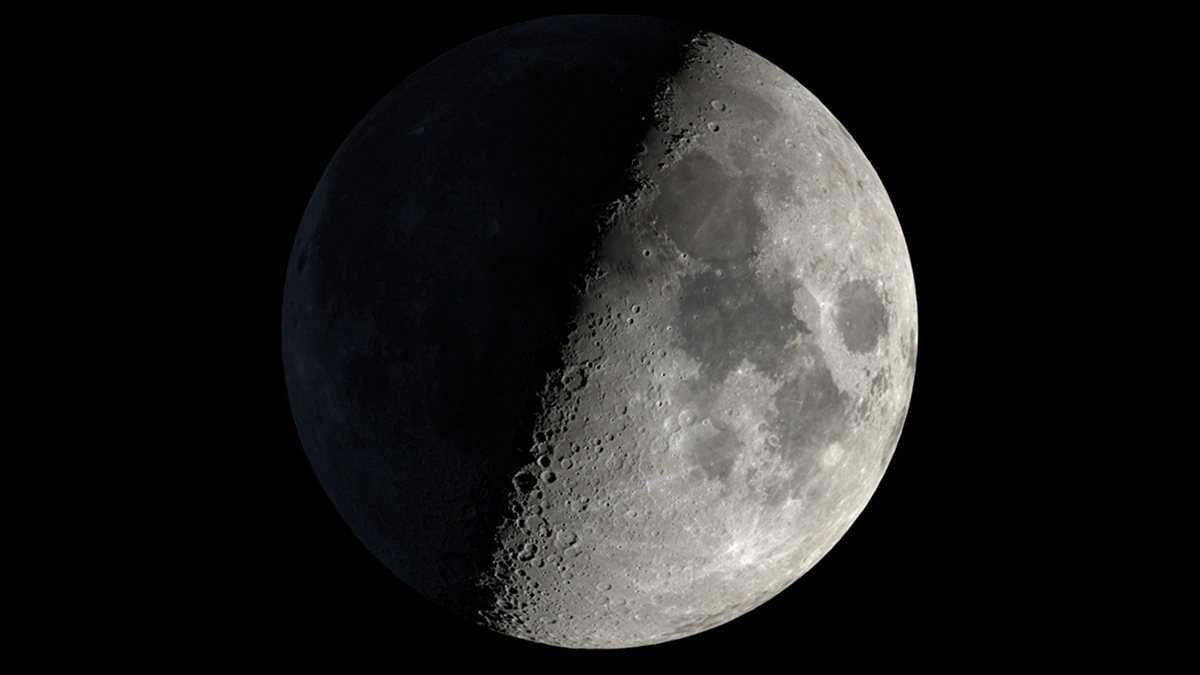
The Giant-Impact Hypothesis has been the leading theory for decades. It explains a lot – the Moon’s relatively large size compared to Earth, its composition (mostly silicate rock, like Earth’s mantle), and even the Earth’s tilt. The problem? The more we look, the more inconsistencies we find. According to thePlanetary Society, the Moon should be made up mostly of the impacting body; “Theia.” Simulations showed about 80% of the Moon should be Theia. But lunar rocks brought back by the Apollo missions show an isotopic composition almost identical to Earth’s. That’s like finding out your sibling, who was supposedly adopted, has the exact same DNA as you. Confusing, right?
And it’s not just isotopes. The abundance of certain elements on the Moon, like volatile elements (think water, zinc, and other easily vaporized stuff), is also different than what the Giant-Impact Hypothesis predicts. Where did these differences come from? Why does the lunar composition differ from what we expected? This is the real puzzle scientists are grappling with, and it’s why we’re starting to question everything.
A New Theory Emerges | The Synestia Hypothesis
Okay, so if the Giant-Impact Hypothesis isn’t a perfect fit, what else is out there? Enter the Synestia Hypothesis. Now, this one’s a bit wild, so hang on. Instead of a clean, planet-smashing impact, this theory suggests that the collision between Earth and Theia was so energetic that it created a giant, spinning, donut-shaped mass of molten and vaporized rock – a synestia. Think of it as a planetary-sized lava lamp. Interesting, isn’t it?
The Moon, in this scenario, formed inside the synestia, slowly condensing from the vaporized rock. This could explain why the Moon and Earth have such similar compositions. Because they both came from the same swirling, molten mess! The synestia eventually cooled and shrank, leaving behind the Earth and the Moon.
I initially thought this was a crazy idea but let me rephrase that for clarity: The Synestia Hypothesis is supported by advanced simulations, could provide an explanation for why the lunar rocks have similar compositions to Earth rocks. So it appears to be a real contender!
What Does This Mean for Our Understanding of Planetary Formation?
But, this isn’t just about the Moon. It’s about how planets, in general, form. If the Synestia Hypothesis gains traction, it could revolutionize our understanding of the early solar system. The planetary formation process may be more violent and chaotic than we previously imagined. Planetary collisions may create synestias and new planetary bodies might form within these short-lived objects.
What fascinates me is that it challenges the idea that planetary formation is a neat, orderly process. Maybe it’s more like a cosmic demolition derby, with planets smashing into each other, merging, and reforming in bizarre ways. Let’s be honest, doesn’t that sound way more exciting?
The Role of Lunar Samples and Future Missions
Of course, we need more evidence. And that’s where lunar samples come in. The Apollo missions were amazing, but they only scratched the surface (pun intended). We need to analyze more samples from different locations on the Moon, particularly from the lunar mantle (the layer beneath the crust). Analyzing the lunar mantle might unlock information about the early Moon. Future missions, like NASA’s Artemis program, are crucial. Bringing back more lunar samples will allow scientists to perform more sophisticated analyses and get a better handle on the Moon’s composition and origin.
Also, future missions that analyze the isotope ratios will be essential. The one thing you absolutely must double-check is that the instrument being used can accurately measure all isotope ratios.
It’s not just about bringing back rocks. It’s about developing new technologies for analyzing those rocks. We need instruments that can measure isotopes with unprecedented precision and probe the mineral composition of lunar samples at the nanoscale. This is where innovation comes in. This is where we push the boundaries of what’s possible. Click here for more information.
The Future of Lunar Research
Ultimately, the quest to understand the early solar system and to uncover the Moon’s origin is a scientific adventure. It’s a journey that will take us to new places, both literally and figuratively. I initially thought that the Giant Impact hypothesis was the one and only hypothesis; that isn’t correct.
So, the next time you look up at the Moon, remember that it’s not just a pretty face in the night sky. It’s a puzzle, a mystery, a key to unlocking the secrets of our solar system. And who knows? Maybe, just maybe, the story we thought we knew about the Moon’s origin is about to be rewritten.
FAQ About the Moon’s Origin
What is the Giant-Impact Hypothesis?
The Giant-Impact Hypothesis states that the Moon formed from the debris of a collision between Earth and a Mars-sized object called Theia.
What is the Synestia Hypothesis?
The Synestia Hypothesis proposes that the Earth and Moon formed from a giant, spinning, donut-shaped mass of molten and vaporized rock called a synestia.
Why are scientists questioning the Giant-Impact Hypothesis?
Scientists are questioning the Giant-Impact Hypothesis because lunar samples have an isotopic composition almost identical to Earth’s, which is not what the hypothesis predicts.
How will future missions help us understand the Moon’s origin?
Future missions, like NASA’s Artemis program, will bring back more lunar samples for analysis, allowing scientists to refine our understanding of the Moon’s composition and origin.
Where can I find more information about the Moon’s origin?
You can find more information about the Moon’s origin on websites like NASA, the Planetary Society, and in scientific journals.
Why is understanding the Moon’s origin important?
Understanding the Moon’s origin helps us understand the formation of planets in general and the early history of our solar system.
About the Author