
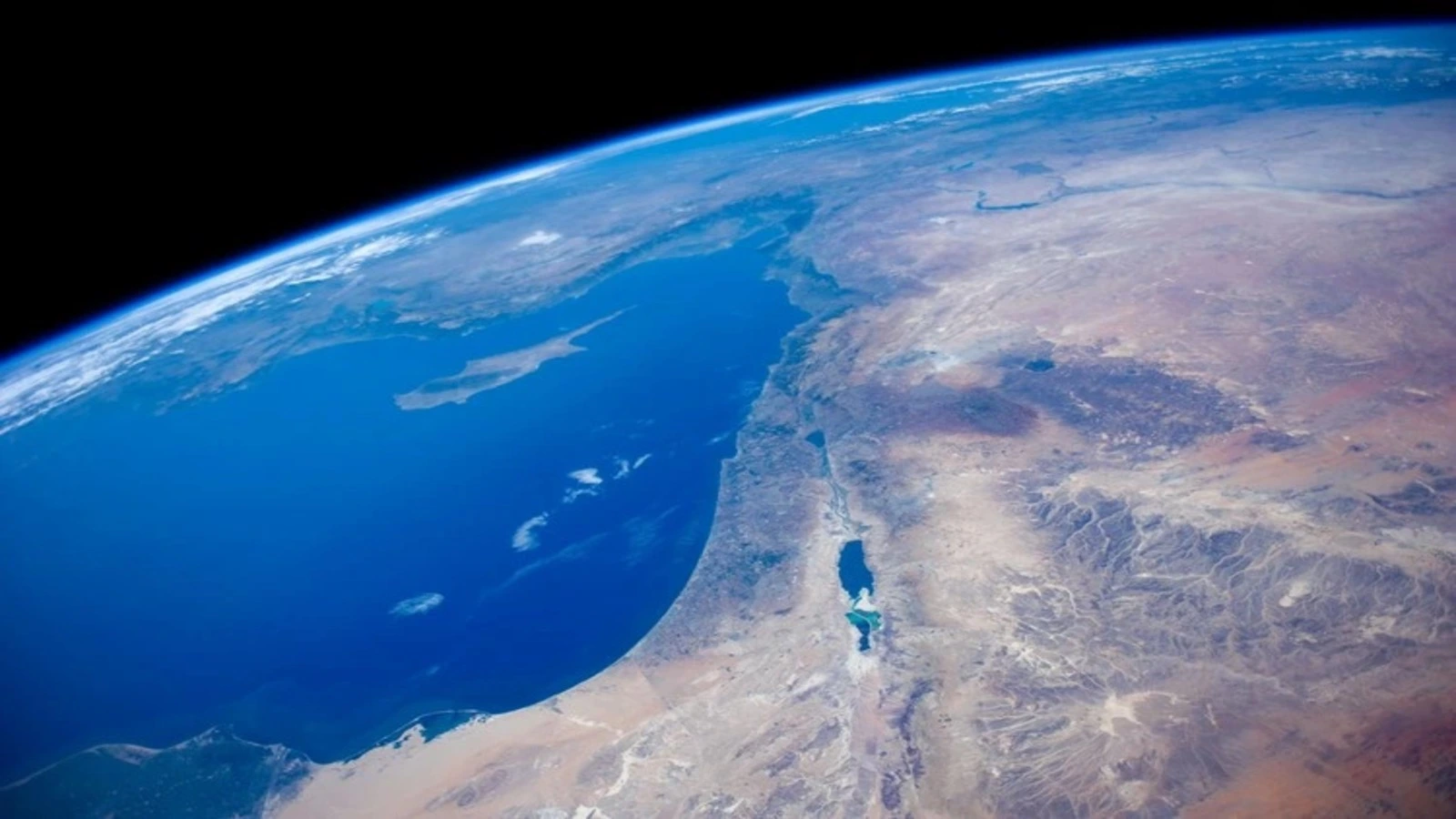
For millennia, humans have seen the earth as an unshakable, solid foundation. We depend on the steady rhythm of the seasons and the reliable rotation of the planet to sustain life as we know it. However, recent scientific breakthroughs have revealed a shocking reality: the earth beneath our feet is changing in ways we never imagined. Specifically, scientists discovered that the earth tilted 31.5 inches (about 80 centimeters) between 1993 and 2010.
This change is not due to any cosmic collision or the gravitational pull of deep space. Instead, it is a direct result of solely human activity, the massive redistribution of water from underground aquifers to the world’s oceans. In this article, we will explore the science behind why the earth tilted 31.5 inches, the environmental implications, and what it tells us about our responsibilities as stewards of this planet.
How did the Earth Tilted 31.5 Inches?
To understand how the earth tilted 31.5 inches, we must first think of the Earth as a spinning top. A top rotates easily when the weight is evenly distributed. If you tie a small weight to one side of the top, it will start to wobble. The axis of rotation will change to compensate for the new mass distribution.
The Earth also behaves in much the same way. The planet’s polar motion is the movement of the rotating pole relative to the Earth’s crust and even the circumference of Earth plays a role in how this shift is measured globally. While the poles naturally move over time due to factors such as melting glaciers and tectonic plate movement, scientists were surprised to discover that groundwater extraction had such a significant impact, serving as a wake-up call for the scientific community.
The research, published in Geophysical Research Letters, confirmed that the redistribution of more than 2,150 gigatonnes of groundwater caused the planet to wobble. When we pump water from deep underground for agriculture and industry, that water eventually flows into the oceans. Because of this movement of mass from the continents to the ocean, the earth tilted 31.5 inches toward longitude 64.2°E.
The role of groundwater in soil instability
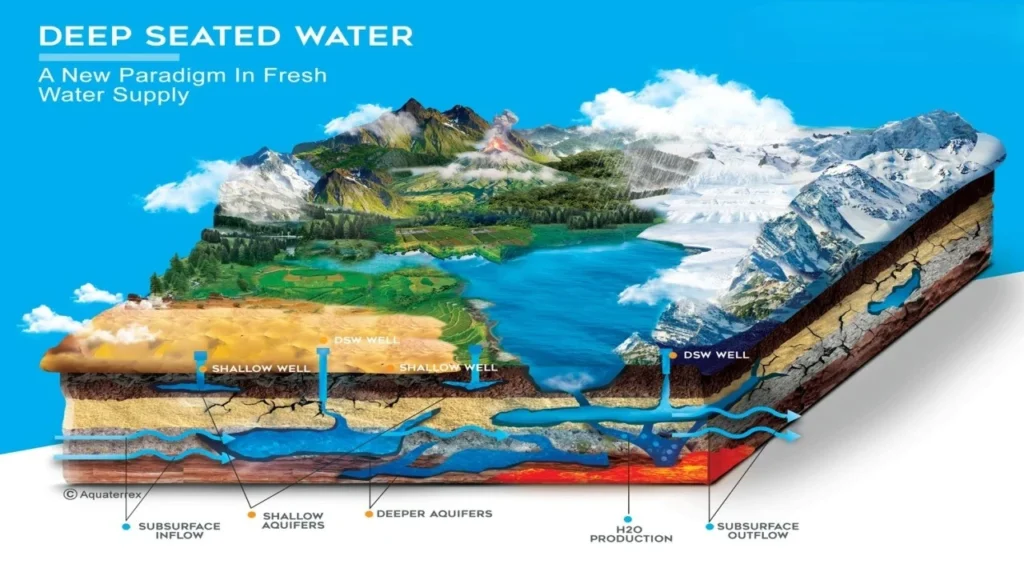
Water is heavy. When we extract trillions of tons from specific geographic locations primarily western North America and northwestern India we are essentially carrying enormous amounts of “ballast” around in the ship called Earth.
The study showed that the location of water matters as much as the quantity. Redistribution of water from mid-latitudes has the greatest effect on the pole of rotation. Because so much pumping occurred in these sensitive areas, the impact was so deep that the earth tilted 31.5 inches.
For many of us, the idea of heaven on earth includes lush green fields and flowing rivers. However, to preserve that beauty, we have extracted large quantities from often hidden underground reserves. This invisible resource, which we rarely see, keeps our planet in balance. When we deplete these reserves, we not only face water shortages; We are literally changing the physical direction of the world.
Environmental consequences of changing the axis
While a 31.5-inch tilt may seem small compared to Earth’s enormous circumference, the implications are far-reaching. The most immediate concern is sea level rise. The same groundwater pumping that caused the earth tilted 31.5 inches also contributed to a global sea level rise of about 6.24 millimeters during the study period.
Furthermore, changes in the Earth’s tilt over very long periods of time can affect our climate, much like insights gained from Comet I-Atlas compositional analysis help scientists understand changes in the solar system. The Earth’s tilt is what gives us our seasons, and while a 31.5-inch shift is not enough to cause sudden changes in winter or summer, it is a measurable indicator of how significantly human activity is altering the planet’s physical systems.
In our pursuit of progress, we have often overlooked the need for a comprehensive earth control measure to control how much of our natural resources we consume. We think of the planet’s crust and its contents as an infinite pantry, but the shifting axis acts as a planetary “check engine light,” signaling that we’re pushing the system beyond its natural limits.
Why Earth tilted 31.5 inches Matters for Future Generations
The fact that the earth tilted 31.5 inches is a testomony to the sheer scale of human commercial power. We are now not simply living at the Earth; we are actively reshaping its bodily residences. This consciousness brings a combination of awe and tension.
If we continue to pump groundwater at present day charges with out replenishing aquifers, the lean will keep. This isn’t only a matter of geography; it’s a depend of survival. Many of the areas currently over-pumping water are the “breadbaskets” of the sector. If these aquifers run dry, the rural fall apart should cause a metaphorical farewell to life on earth as we presently experience it marked by food security and relative stability.
The data displaying the earth tilted 31.5 inches offers a new lens via which we need to view weather exchange. It’s not pretty much carbon within the ecosystem; it’s about the very balance of mass on our planet.
Can we reverse the change?
The news that the earth tilted 31.5 inches raises a common question: Can we fix it? Theoretically, if we stopped groundwater depletion and allowed aquifers to recharge, polar drift could stabilize. But actually “bending it back” would require a herculean effort to move the mass back to where it came from something that is currently beyond our technical and logical capabilities.
The focus should therefore be on mitigating measures. It is necessary to implement global earth control measure for water use. This also includes:
- Sustainable Irrigation: Moving away from flood irrigation toward precision drip systems.
- Aquifer Recharge: Actively pumping treated rainwater or wastewater back into the ground.
- Water Conservation: Reducing the industrial and personal water footprint in mid-latitude regions.
Relationship between groundwater and global sustainability
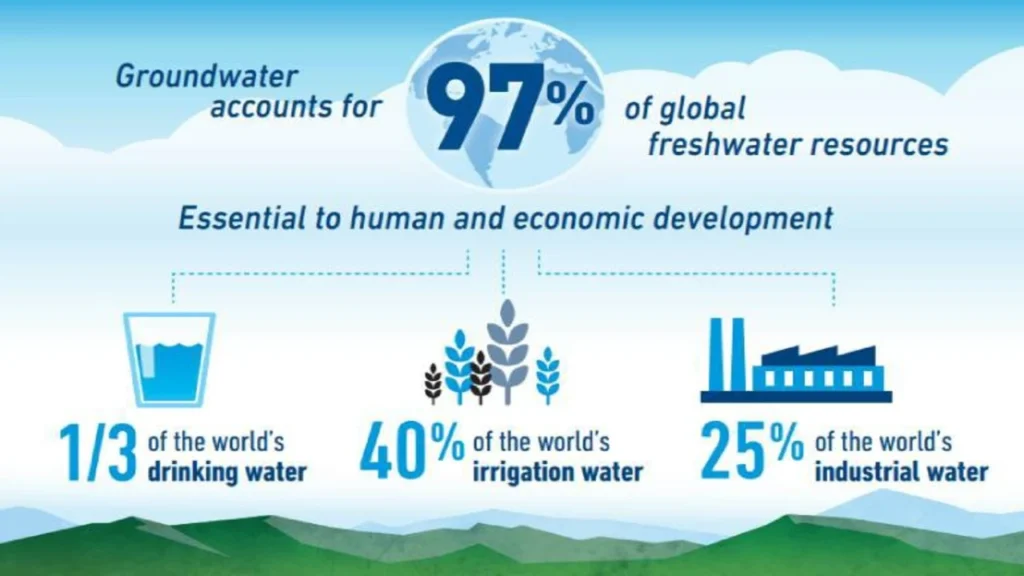
The discovery that the earth tilted 31.5 inches highlights the interconnectedness of Earth’s systems. We often think of “environment” as separate from “the physics of the planet,” but they are one and the same. The water we drink, the tilt of the axis, the height of the tides and the stability of our climate are all linked in a delicate dance.
When we maintain the health of our groundwater systems, we do more than just make sure we have enough water to drink; We maintain the earth’s mechanical stability. To create a true heaven on earth, we must recognize that our resources are limited and that our actions have “weight,” both literally and figuratively.
What the Earth Tilted 31.5 Inches Teaches Us About Responsibility
The primary conclusion from the fact that the earth tilted 31.5 inches is that humans are now a geological force. We have entered the Anthropocene age where human activity has a major impact on the climate and environment.
We have the power to move mountains, change the chemistry of the oceans, and even tilt the planet’s axis. But with that power also comes the great need for knowledge about what is Earth and how its systems work. We cannot continue to treat groundwater as a “free” resource, as it is the literal ballast of our world.
Every time we hear that the earth tilted 31.5 inches, it should serve as a reminder that the consequences of our actions reach from the bottom of the deepest well to the tilt of the stars in the night sky.
Frequently Asked Questions (FAQ)
1. What if the Earth was tilted at 33.5 degrees?
If the earth tilted 31.5 inches the seasons would become more extreme, with hotter summers and colder winters, especially near the poles.
2. What is the normal tilt of the Earth?
The Earth’s normal axial tilt relative to its orbit around the Sun is about 23.5 degrees. This slope is the main reason why we experience changing weather throughout the year.
3. What if Earth’s tilt was 30 degrees?
If the Earth’s tilt were 30 degrees, the seasonal differences around the world would be muchstronger.Summers will be warmer and winters colder, especially at higher latitudes.
4. What exactly caused the news that the earth tilted 31.5 inches?
The discovery that the earth tilted 31.5 inches is primarily related to the massive exploitation of groundwater by humans. Between 1993 and 2010, trillions of tonnes of water were extracted from underground aquifers for agriculture and industry.
5. Will I feel any physical changes now that the earth tilted 31.5 inches?
No, you will not feel any vertigo or physical “wobble” in your daily life because the earth tilted 31.5 inches. While from a scientific point of view, 31.5 inches is an important distance.
About the Author