
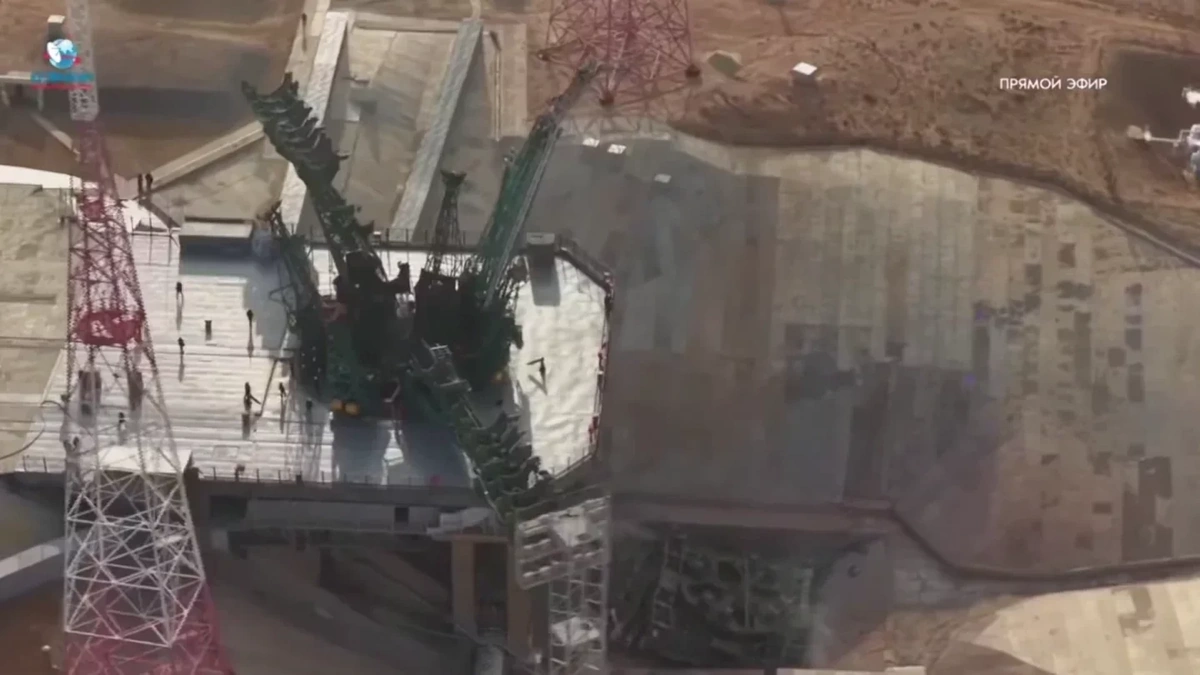
Baikonur Launch Pad | Hidden Damage?!
So, the Baikonur Cosmodrome , a name synonymous with space exploration – from Sputnik to the International Space Station – has taken a bit of a hit. Not a direct hit, mind you, but damage nonetheless. Following a recent Russian Soyuz launch headed for the ISS, reports are surfacing that the launch pad sustained some damage. Now, I initially thought, “Okay, minor scrape, happens all the time.” But the more I dug in, the more I realized this isn’t just about a few cracked tiles. This is about the potential implications for future launches, international relations, and the overall state of the Russian space program.
Why This Baikonur Incident Matters | More Than Just a Damaged Launch Pad
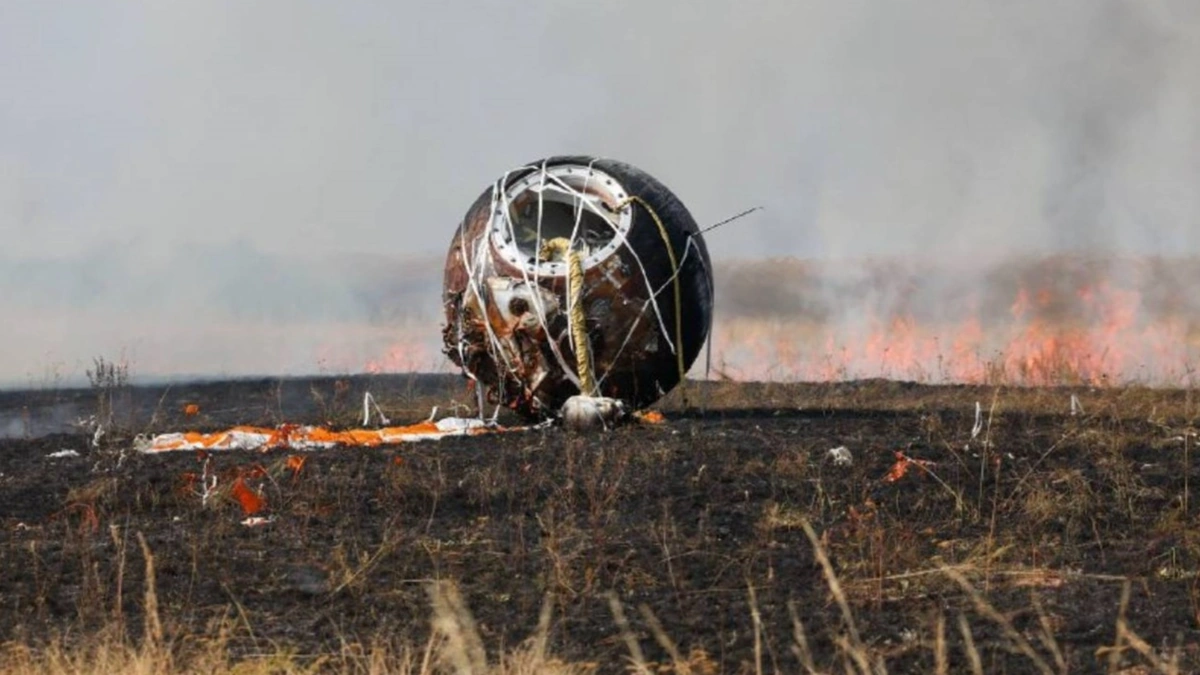
Here’s the thing: space launches are inherently risky. It’s controlled explosions we’re talking about here. But when damage occurs to a launch pad, especially one as historically significant as Baikonur , it raises a few eyebrows. The immediate concern, of course, is safety. Are there structural weaknesses now present in the pad that could compromise future launches? Will there be delays? What fascinates me is the ripple effect. Any delay or perceived risk can impact the confidence of international partners who rely on Baikonur for access to space. The implications are far-reaching , affecting everything from scientific research to commercial satellite deployments. Let’s be honest, this isn’t just about some concrete and metal; it’s about geopolitical strategy.
And let’s not forget the Soyuz rocket. It’s a workhorse, reliable and relatively cost-effective. Any incident that casts a shadow on its reliability is bound to make people nervous. We’re talking about astronauts’ lives and billions of dollars worth of equipment being launched into the cosmos. The incident needs to be thoroughly investigated to determine the root cause and prevent future occurrences. Was it a one-off event, or is there a systemic issue with the launch procedures or the launch pad itself? The world is watching.
Digging Deeper | What Kind of Damage Did the Baikonur Launch Pad Sustain?
Details are still emerging, but early reports suggest that the damage is more than cosmetic. Some sources are indicating damage to the flame deflector – the structure designed to channel the intense heat and pressure of the rocket exhaust away from the launch vehicle and the pad itself. If the flame deflector is compromised, it could lead to uneven distribution of the exhaust, potentially damaging the rocket during liftoff. It’s a delicate balance, this whole getting-into-space thing.
Now, a damaged flame deflector isn’t necessarily a showstopper. Repairs are possible, and launch pads are designed with redundancy in mind. But the extent of the damage will determine the scope and duration of the repairs. I initially thought this was straightforward, but then I realized the political dimension, considering the current geo-political climate, procuring materials and expertise for repairs might be more challenging than usual. The Russian space program faces unique challenges.
Moreover, the investigation itself will take time. Engineers will need to assess the structural integrity of the entire launch pad, analyze the launch data, and potentially conduct simulations to understand what went wrong. All of this adds up to potential delays and increased costs. And in the space industry, time is money, quite literally.
The Future of Baikonur | What Does This Mean for Space Exploration?
The Baikonur Cosmodrome isn’t just a piece of infrastructure; it’s a symbol. A symbol of human ingenuity, international collaboration, and our relentless pursuit of the stars. This incident serves as a stark reminder of the inherent risks and challenges associated with space exploration. What fascinates me is how humanity has always overcome these challenges , pushing the boundaries of what’s possible.
But, and this is a big but, the incident at Baikonur also highlights the need for continued investment in space infrastructure and technology. Aging launch facilities need to be modernized, and new technologies need to be developed to make space launches safer and more reliable. It’s not just about getting to space; it’s about getting there sustainably and responsibly.
Let me rephrase that for clarity – investing in the space industry isn’t a luxury; it’s a necessity. It drives innovation, creates jobs, and fosters international cooperation. And, let’s be honest, it inspires us to dream bigger and reach for the stars. The Soyuz ISS launch is an important event for global space exploration. According to Space.com , the ISS is crucial for scientific research.
Looking Ahead | Potential Scenarios and Outcomes
So, what’s next for Baikonur? Here are a few potential scenarios:
- Scenario 1: Quick Fix. The damage is relatively minor, repairs are completed swiftly, and launches resume within a few weeks. This is the best-case scenario, minimizing disruption to the space program.
- Scenario 2: Moderate Delay. The damage is more extensive, requiring significant repairs and upgrades. Launches are delayed by several months, impacting the schedules of international partners.
- Scenario 3: Long-Term Impact. The incident reveals systemic problems with the launch pad or the Soyuz rocket, leading to a prolonged suspension of launches and a reassessment of the Russian space program.
The reality will likely fall somewhere in between these scenarios. But the key takeaway is that the incident at Baikonur has the potential to reshape the future of space exploration, at least in the short term. The Baikonur launch pad damage creates uncertainty.
Conclusion | A Moment of Reflection and a Call to Action
The damage to the Baikonur launch pad is a setback, no doubt. But it’s also an opportunity. An opportunity to learn from our mistakes, to strengthen our infrastructure, and to reaffirm our commitment to space exploration. As a common mistake, many people think space exploration doesn’t have much value, but it promotes advancements in technology that benefit everyone.
The one thing you absolutely must keep in mind is the human element. Behind every rocket launch, every satellite deployment, every scientific discovery, there are dedicated engineers, scientists, and astronauts who are pushing the boundaries of human knowledge. They deserve our support, our admiration, and our unwavering commitment to their mission.
And so, as we look to the future, let’s not be discouraged by this incident. Let’s instead use it as a catalyst to build a stronger, more resilient, and more collaborative space program – a program that will continue to inspire generations to come.
FAQ Section
What exactly is the Baikonur Cosmodrome?
Baikonur Cosmodrome is a spaceport in Kazakhstan, leased to Russia. It has a rich history, being the site of the first human spaceflight.
Why is Baikonur still used for space launches?
Despite Russia having its own spaceports, Baikonur offers unique geographical advantages and established infrastructure for certain types of launches. It has an ideal location for rocket launches .
What happens now that the launch pad is damaged?
An investigation will take place to assess the extent of the damage. Repairs will be conducted, and launch schedules might be adjusted accordingly.
Could this incident affect the International Space Station (ISS)?
Potentially, yes. Delays in launches to the ISS could impact resupply missions and crew rotations. However, alternative launch options might be available.
Are there alternative launch sites to Baikonur?
Yes, Russia has other spaceports like Vostochny Cosmodrome. Other countries also have launch facilities.
How safe are space launches in general?
Space launches are inherently risky, but significant safety measures are in place. Incidents like this are rare but serve as a reminder of the challenges involved.
About the Author