Saturn Moon Titan | Life's Odd Mix?
Okay, let’s be honest – space can feel really far away. Like, intellectually, we know planets are spinning and moons are orbiting, but it doesn’t always feel relevant to our daily lives here in India. But, what if I told you something happening on Saturn’s largest moon , Titan, could change how we understand life itself? Intrigued? You should be. Because this isn’t just some dry, scientific report. This is about the possibility of life as we don’t know it.
The Weird World of Titan’s Hydrocarbon Seas
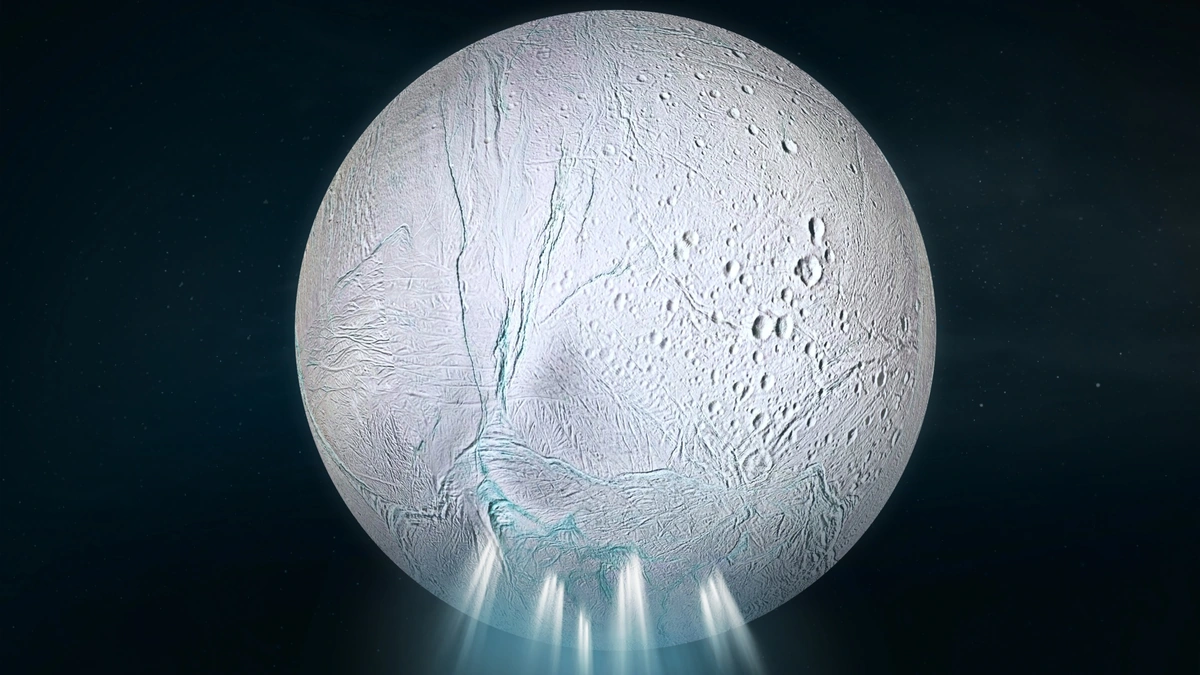
Titan, unlike any other moon we’ve explored, boasts a thick atmosphere and, get this, seas. But not water seas. We’re talking hydrocarbon seas primarily methane and ethane. Imagine gasoline as vast as our oceans! Now, new research has revealed something truly bizarre: water somehow exists within these hydrocarbon seas, creating a volatile mix that enables some seriously exotic chemistry.
What fascinates me is the sheer audacity of it all. The conventional wisdom has always been: water + hydrocarbons = no go. They don’t mix, right? Like oil and vinegar in your salad dressing. But on Titan, under extreme conditions, they are mixing – creating an environment ripe for the development of entirely new types of molecules, possibly even precursors to life. A common mistake I see people make is dismissing these findings as irrelevant to us. But it challenges our fundamental understanding of what is possible.
Why This Matters | The Search for Extraterrestrial Life
Here’s the thing: the presence of both water and hydrocarbons opens up a Pandora’s Box of chemical possibilities. We’re not necessarily talking about little green aliens waving back at us. What’s more likely, and frankly, more profound, is the potential for finding entirely new forms of pre-biological chemistry, or even microbial life adapted to this unique environment. Think of it as a totally different recipe for life, using ingredients we didn’t even know could combine. This is why the exotic chemistry occurring on Titan is not just a quirky discovery – it’s a potential game-changer in the search for life beyond Earth. And that search, believe it or not, has implications for us right here on Earth. According to NASA’s website, understanding how life might arise in such extreme conditions helps us understand the limits of life itself.
Let me rephrase that for clarity: If life can emerge in a place as alien as Titan, it suggests that the conditions necessary for life may be far more varied and widespread throughout the universe than we previously thought. That means the odds of finding life somewhere out there just went up significantly. And that, my friends, is a pretty big deal.
Implications for Future Space Missions
But, this discovery doesn’t just fuel our philosophical musings – it also has very practical implications for future space exploration . Any future mission to Titan will need to consider this water-hydrocarbon interface. A common mistake I see in news reports is overlooking the engineering challenges. We will need to account for the potential reactivity and volatility of these compounds when designing probes and landers.
Imagine sending a probe to Titan, only to have it corroded by some unexpected chemical reaction. Not ideal, right? So, this new understanding of Titan’s chemistry is essential for ensuring the success of future missions aimed at studying this fascinating moon. This also makes Titan’s chemistry all the more interesting. A lot of people might not know, but Titan’s atmosphere is mainly nitrogen, like Earth, but it also has methane clouds and rain.
Titan’s Unique Environment | A Closer Look
Okay, let’s dive a bit deeper into why Titan is so unique. First, there’s the temperature. We’re talking cryogenic cold – around -179 degrees Celsius (-290 degrees Fahrenheit). That’s cold enough to turn methane into a liquid, hence the hydrocarbon seas. But even at these frigid temperatures, chemical reactions are still possible, albeit at a much slower rate. And the presence of liquid water, even in small amounts, acts as a catalyst, speeding up these reactions.
Then there’s the atmosphere. It’s incredibly dense – about 50% denser than Earth’s atmosphere. This dense atmosphere shields Titan’s surface from harmful radiation, creating a relatively benign environment for complex molecules to form. And that’s where the water comes in. Scientists believe that this water is likely present as a super-cooled liquid or even a slush, trapped within layers of ice beneath the hydrocarbon seas. Its interaction with the hydrocarbons at the interface is what drives the complex organic chemistry that has scientists so excited. Remember, the one thing you absolutely must keep in mind is that Titan is unique and there is no other moon like it in the Solar System.
But, how do we know all this? Mostly through data gathered by the Cassini-Huygens mission, which orbited Saturn for 13 years. The Cassini probe provided us with invaluable data about Titan’s atmosphere, surface composition, and chemical processes. And that data continues to be analyzed and re-analyzed, leading to new discoveries like this water-hydrocarbon mixing phenomenon.
And even more surprising, Earth’s lakes are also under this chemistry. But, they are very different than that of Titan’s.
Frequently Asked Questions (FAQ)
What exactly does “exotic chemistry” mean in this context?
It refers to chemical reactions and compounds that are not typically found on Earth due to the unique conditions on Titan (low temperature, hydrocarbon-rich environment).
Could there really be life on Titan?
It’s possible, but any life form would likely be very different from what we know on Earth, adapted to the extreme conditions and using different chemical processes.
How will this discovery affect future space missions?
It will inform the design of future probes and landers, ensuring they can withstand the unique chemical environment on Titan and collect meaningful data.
What was the Cassini-Huygens mission?
It was a joint NASA/ESA mission that orbited Saturn for 13 years, providing a wealth of data about the planet and its moons, including Titan.
Are there any plans for future missions to Titan?
Yes! The Dragonfly mission, scheduled to launch in 2027, will send a rotorcraft lander to explore Titan’s surface.
About the Author