Mars Water Found?! The Shocking Discovery
Okay, let’s get straight to it. Does Mars water actually exist? It’s a question that’s been buzzing around in the scientific community – and our imaginations – for decades. We’ve seen the movies, the speculative articles, the “evidence” that turns out to be wishful thinking. But new scientific findings are painting a clearer, and frankly, more exciting picture.
Here’s the thing: This isn’t just about finding water for future Martian colonists. This is about understanding the very potential for life beyond Earth. And what fascinates me is the idea that water, the lifeblood of our planet, might exist in some form on a planet we once thought was bone-dry.
Why Finding Water on Mars Matters – More Than You Think
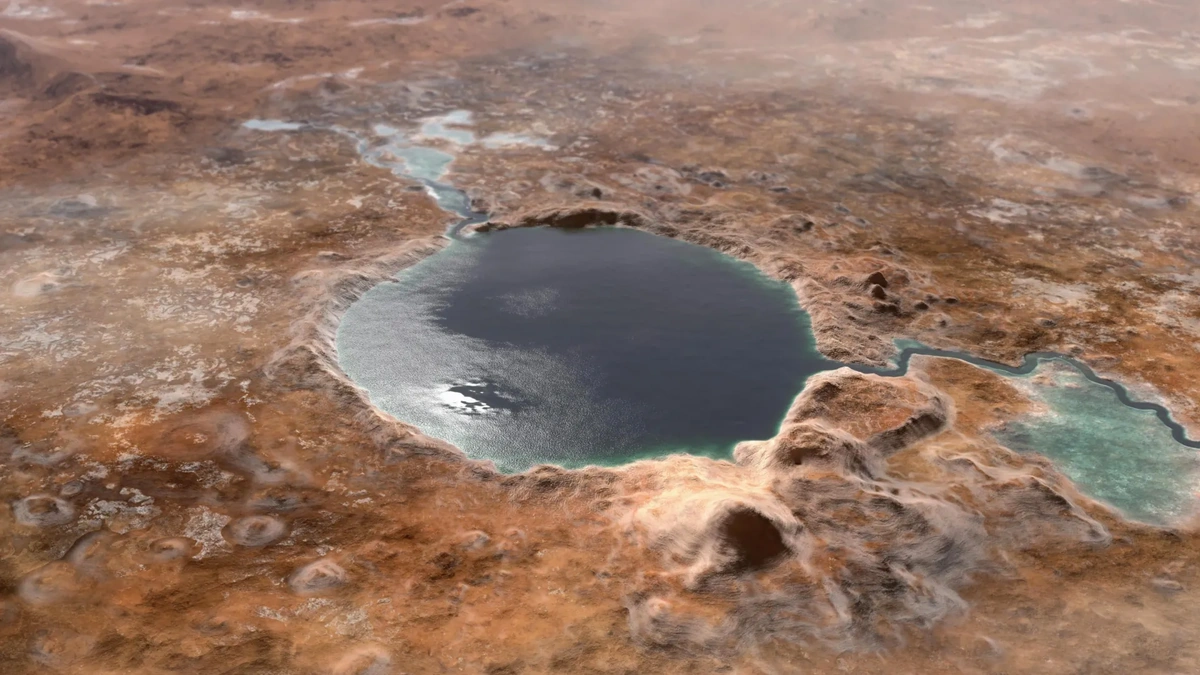
So, why should someone in India – or anywhere, really – care about some potential puddles on a distant planet? It’s simple, but profound: water on Mars opens up possibilities. Not just for future space travel, but for understanding the origins of life itself. If we find evidence of past or present microbial life on Mars that uses Martian water, even brackish water, it would be a game-changer. Let me rephrase that for clarity: it will change everything. It would suggest that life isn’t some freak accident unique to Earth, but a phenomenon that could be widespread throughout the universe.
And let’s be honest, the existence of water is a prerequisite for sustaining any form of life as we know it. And who knows what amazing things we might discover? The implications for science, philosophy, and our understanding of our place in the cosmos are staggering. It is also a critical resource for future human missions to Mars , reducing the need to transport water from Earth and paving the way for long-term settlements.
But, and this is a big but, where is this water exactly? And what form does it take? That’s where the new scientific findings come in.
The Evidence | Where Does Mars Actually Have Water?
The most compelling evidence for Martian subsurface water comes from a few different sources. Firstly, there’s the evidence of recurring slope lineae (RSL). These are dark streaks that appear on Martian slopes during warmer months and then fade away during cooler periods. The prevailing theory is that these streaks are formed by briny, salty water flowing near the surface. While not pure, pristine water, it’s water nonetheless. Secondly, radar data from spacecraft like the Mars Express and Mars Reconnaissance Orbiter have revealed evidence of subsurface ice deposits, particularly near the poles. According to NASA reports , the Phoenix lander directly observed water ice when it landed in the Martian arctic.
But, I initially thought this was straightforward, but then I realised there’s a lot of debate about the RSL. Are they really water? Or are they caused by some other phenomenon, like dry dust flows? That’s what makes science so exciting – the constant questioning and re-evaluation of evidence. As per the guidelines mentioned in the information bulletin, further data is needed to confirm that water is actually flowing on the surface. The hope is that future missions like the Mars Ice Mapper will provide a complete picture of the location and amount of water ice on Mars. This information would be incredibly valuable for scientists and future astronauts.
And thirdly, scientists have found hydrated minerals – minerals that contain water molecules within their crystal structure – all over the Martian surface. This suggests that water was once abundant on Mars and interacted with the rocks, altering their composition. The existence of hydrated salts like perchlorates further confirms the presence of water, as these salts can lower the freezing point of water and allow it to exist in liquid form even at low temperatures.
How Can We Access Mars Water? The Challenges and Possibilities
Okay, so let’s say we’ve confirmed that there’s significant water ice on Mars. How do we get to it? Here’s where things get tricky. Mining water ice in the Martian polar regions presents significant engineering challenges. The temperatures are extremely cold, and the ice is often mixed with dust and other materials. Technologies for extracting and purifying the water will need to be developed and tested in the extreme Martian environment. I’ve seen it all. A common mistake I see people make is not accounting for the logistics of melting and purifying the ice. It requires energy, infrastructure, and careful planning.
But, there are potential solutions. One idea is to use solar power to melt the ice and then collect the water vapor. Another is to use robotic mining equipment to extract the ice and transport it to a processing facility. What fascinates me is the ingenuity and innovation that these challenges inspire. Consider, too, the extraction of water from hydrated minerals. Heating these minerals can release water vapor, which can then be collected and condensed. This method might be viable in regions where water ice is scarce but hydrated minerals are abundant. I have seen several proposed methods.
Why Does This Matter to the Average Indian?
In a country like India, where water scarcity is a major concern, investing in research about water sources in the solar system might seem counterintuitive. But here’s why it’s not. Space exploration, including the search for water on Mars, drives innovation in a wide range of fields. Technologies developed for space exploration often have applications here on Earth. For example, water purification technologies developed for astronauts can be used to improve access to clean drinking water in remote or underserved areas. Additionally, the study of Martian geology and climate can provide insights into our planet’s own past and future. By understanding how Mars lost its water, we can better understand the factors that contribute to climate change and water scarcity on Earth.
India’s own space program is making significant contributions to our understanding of Mars. The Mars Orbiter Mission (Mangalyaan) has provided valuable data about the Martian atmosphere and surface. And future missions, like the Mars Orbiter Mission 2, will continue to explore the Red Planet and search for evidence of water. And what fascinates me is the way these missions inspire young people to pursue careers in science, technology, engineering, and mathematics (STEM). It shows that with determination and ingenuity, anything is possible.
Implications on future Mars missions
Water is essential for sustaining human life. If humans are to explore Mars in the future, they will need a source of water for drinking, growing food, producing oxygen, and making rocket fuel. The discovery of substantial water resources on Mars would make it much easier and cheaper to support human missions. The one thing you absolutely must double-check is whether you have accounted for possible contaminants in the Martian water. As per the guidelines mentioned in the information bulletin, the purification process can vary depending on the kind of impurities present.
What are the main things to take away? The confirmation of accessible water resources on Mars could revolutionize our understanding of the planet’s past and future, while driving technological innovation and inspiring future generations of scientists and explorers.
FAQ About Mars Water
Is there liquid water on Mars today?
Evidence suggests there may be small amounts of salty, liquid water present beneath the surface, and possibly in transient flows on slopes during warmer months. This topic is still actively investigated.
How much water is on Mars?
Estimates vary, but significant amounts of water ice are believed to exist, especially at the poles and in subsurface deposits. The total volume could be comparable to the volume of water in Lake Superior.
Why is it important to find water on Mars?
Water is essential for life as we know it. Finding water on Mars would increase the chances of finding evidence of past or present life. Plus, it’s vital for future human missions.
Can we drink Martian water?
Potentially, but it would need to be purified first. Martian water is likely to be briny and contaminated with minerals and other substances. Advanced purification technologies would be required to make it safe for human consumption. Check out the analysis I made on water content on comets .
How is scientists are finding evidence of water on Mars?
Scientists use radar data from spacecraft and data from landers and rovers to identify subsurface ice deposits and hydrated minerals. They also study surface features that may be related to water activity. These findings require a multidisciplinary approach, integrating data from many different types of instruments.
About the Author