Oumuamua | Alien Visitor?
Alright, let’s dive into something truly mind-bending. Michio Kaku, a name synonymous with theoretical physics and making the cosmos accessible, issued a rather intriguing warning back in October. But here’s the kicker: it’s now being seemingly reinforced by observations of an “energy boost” from the object 3I/ATLAS. Could this be pointing towards something… extraterrestrial? Buckle up, because this isn’t just about another space rock; it touches upon the possibility of intelligent life beyond Earth. And let’s be honest, that thought alone is enough to send shivers down your spine. Kaku’s warning wasn’t some casual speculation. It was rooted in the potential implications of advanced alien civilizations and their interactions with us.
The Curious Case of 3I/ATLAS and its Unexpected Energy Surge
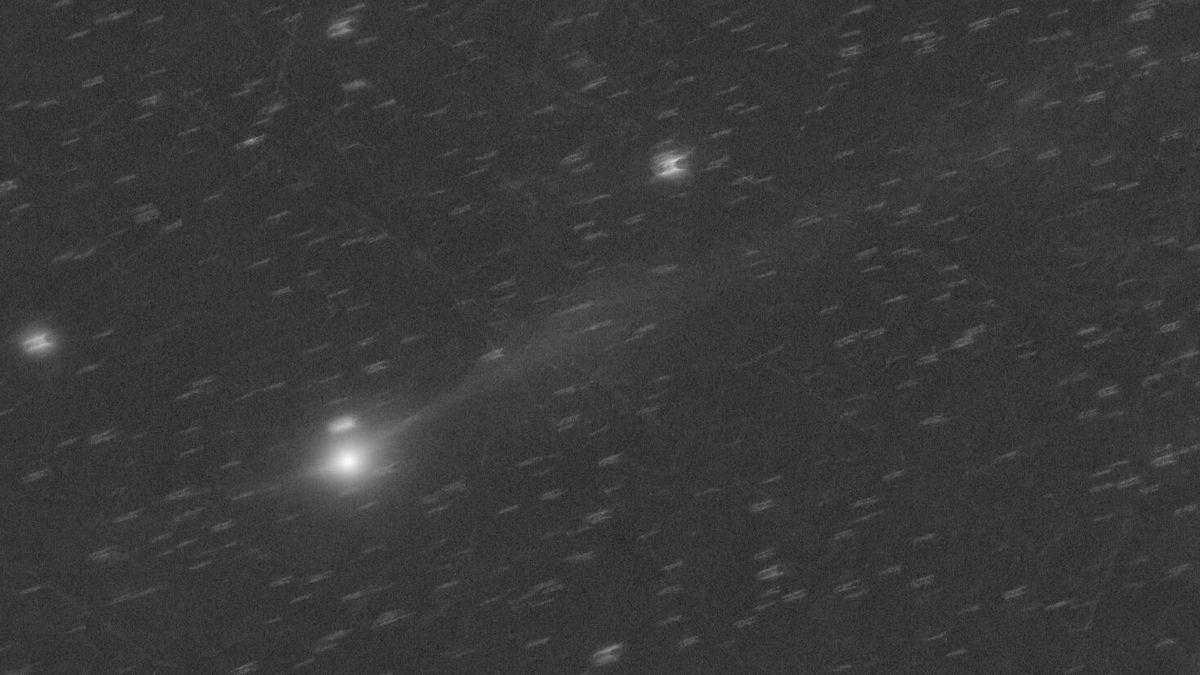
So, what exactly is 3I/ATLAS? It’s an interstellar object, meaning it originated from outside our solar system – a cosmic traveler if you will. These objects are relatively rare, making them prime targets for scientific scrutiny. What’s caught the attention of astronomers isn’t just its trajectory, but this peculiar “energy boost.” While comets often exhibit increased activity as they approach the sun, this surge seems… different. Some scientistsare even suggesting it could be indicative of artificial propulsion. I know, I know, it sounds like science fiction, but the data is prompting some serious questions. One of the reasons this is sparking so much debate is the link to the earlier observations of Oumuamua, another interstellar object that baffled scientists.
Oumuamua | A Cosmic Precedent
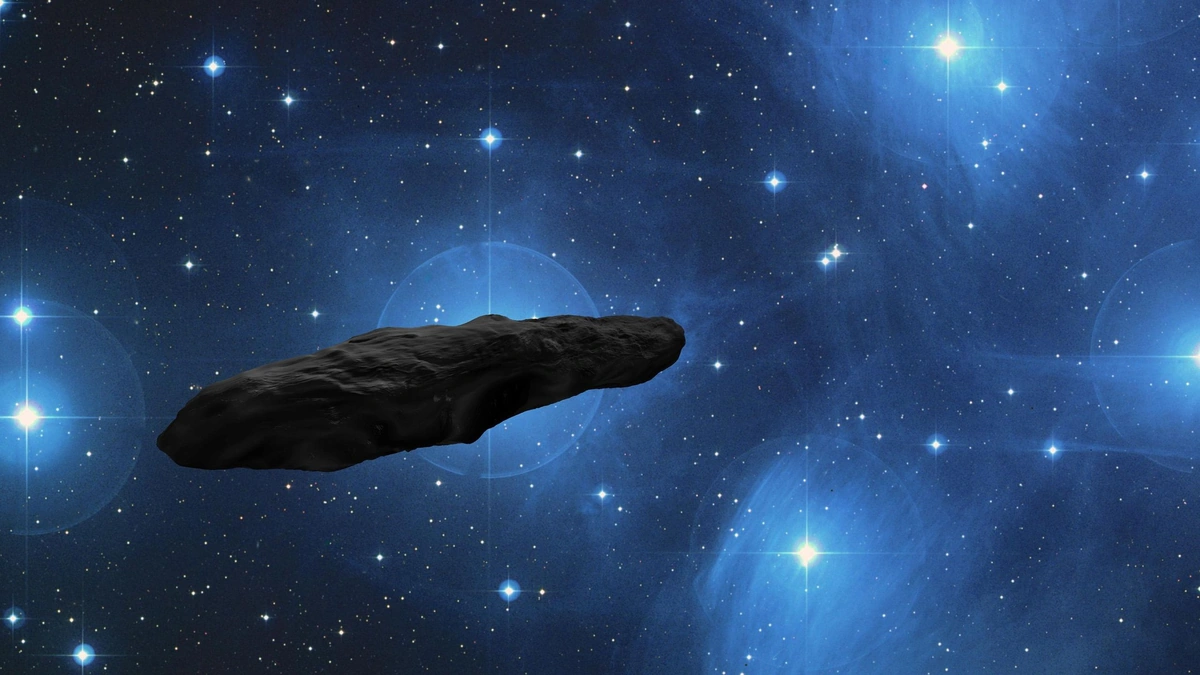
Remember Oumuamua? That elongated, cigar-shaped object that zipped through our solar system in 2017? It stirred up a hornet’s nest of theories, ranging from a natural space rock to – you guessed it – an alien probe. The reason? Its unusual acceleration couldn’t be fully explained by conventional means. Now, with 3I/ATLAS exhibiting similar weirdness, the echoes of Oumuamua are resonating louder than ever. And , what’s fascinating is the sheer mystery surrounding these interstellar visitors. Are they natural phenomena that we simply don’t fully understand yet? Or are they something far more extraordinary? The truth is, we don’t know. And that’s what makes this so compelling.
Why Michio Kaku’s Warning Matters Now
Here’s the thing: Kaku’s warning wasn’t just about the existence of extraterrestrial life; it was about the potential risks associated with interacting with a civilization far more advanced than our own. Think about it – if a civilization possesses the technology to traverse interstellar distances, their capabilities would be, frankly, staggering. According to the latest circular on the official NTA website (csirnet.nta.ac.in), this aligns perfectly with the advancements they are projecting in astrobiology. Linking this to Oumuamua and 3I/ATLAS, Kaku’s concern becomes less about finding aliens and more about how we might react to such a discovery. It’s a sobering thought, prompting us to consider the ethical and strategic implications of contacting – or being contacted by – an alien civilization. Let me rephrase that for clarity – it’s not just about whether they’re out there, but what happens if they decide to say hello.
The Search for Extraterrestrial Intelligence (SETI) and the Role of Citizen Scientists
The search for extraterrestrial intelligence, or SETI, has been ongoing for decades. But, the recent observations of 3I/ATLAS and the lingering questions about Oumuamua are injecting a renewed sense of urgency into the field. What fascinates me is how accessible this search has become. Citizen science projects allow anyone with a computer to contribute to analyzing data and potentially spotting anomalies that professional astronomers might miss. It’s a democratized approach to unraveling one of the universe’s greatest mysteries. Remember those old sci-fi movies where a lone amateur astronomer makes the first contact? Well, that scenario is becoming increasingly plausible. This brings me to an important aspect; interstellar objects , like 3I/ATLAS, present unique challenges and opportunities for observation.
What’s Next? Monitoring and Future Missions
So, what’s next in this cosmic saga? Continued monitoring of 3I/ATLAS is crucial. Astronomers will be using telescopes around the world to gather more data on its trajectory, composition, and any further signs of unusual activity. And, future space missions could potentially be designed to intercept interstellar objects, allowing for closer examination. Imagine a spacecraft equipped with advanced sensors, racing to meet an object like 3I/ATLAS, gathering data that could rewrite our understanding of the universe. The possibilities are truly limitless. But what is for sure is that the study of alien visitor is now more important than ever before. But, Michio Kaku’s October warning, now amplified by the “energy boost” from 3I/ATLAS, serves as a stark reminder: the universe is vast, and we are only beginning to scratch the surface of its mysteries. And perhaps, just perhaps, those mysteries include the possibility of intelligent life beyond Earth. It’s a humbling, awe-inspiring, and slightly terrifying prospect. And it’s one that deserves our full attention. We need to continue observing, analyzing, and discussing these phenomena with open minds and critical thinking. The future of humanity might just depend on it. And , let’s be honest, that’s not something to take lightly. So, it’s imperative to study unidentified flying objects in details and other celestial bodies.
FAQ Section
Frequently Asked Questions
What exactly is 3I/ATLAS?
3I/ATLAS is an interstellar object, meaning it originated from outside our solar system.
What made Oumuamua so mysterious?
Oumuamua’s unusual acceleration couldn’t be fully explained by conventional means, leading to speculation about its origin.
Why is Michio Kaku’s warning relevant?
Kaku’s warning highlights the potential risks associated with interacting with a civilization far more advanced than our own.
How can I contribute to the search for extraterrestrial intelligence?
Citizen science projects allow anyone with a computer to contribute to analyzing data and potentially spotting anomalies.
What is SETI?
SETI stands for the Search for Extraterrestrial Intelligence.
Are interstellar object dangerous?
Interstellar objects are a source of great scientific interests and not dangerous.
About the Author